Risk is the most difficult concept for many investors to grasp, and yet much of the mutual fund investment decision depends on an understanding of risk. There are many different ways to categorize investment risk and numerous approaches to the measurement of risk. If we can assume that the volatility of the return on your mutual fund investment is the concern you grapple with when you think of risk, the task of making decisions about risk becomes easier.
Questions about how much value a mutual fund is likely to lose in a down market or how certain it is that a fund will be worth a given amount at the end of the year are the same concerns as volatility of return. Changes in the domestic and international economies, interest rates, exchange rates, corporate profits, consumer confidence, and general expectations all combine to move markets up and down, creating volatility, or risk.
Total risk for a mutual fund measures variation in return from all sources. As an example, variation in return for common stocks is caused by factors unique to the firm, industry variables, and conditions affecting all stocks.
Market risk refers to the variables such as interest rates, inflation, and the business cycle that affect all stocks to some degree. In well-diversified portfolios of common stock, the firm and industry risk of the various stocks in the portfolio offset each other; thus, these portfolios tend to have lower total risk, and this total risk is usually composed almost entirely of market risk. For less diversified portfolios, funds that hold very few stocks, or sector funds that concentrate investment in one industry, total risk is usually higher and is composed of firm and industry risk in addition to market risk.
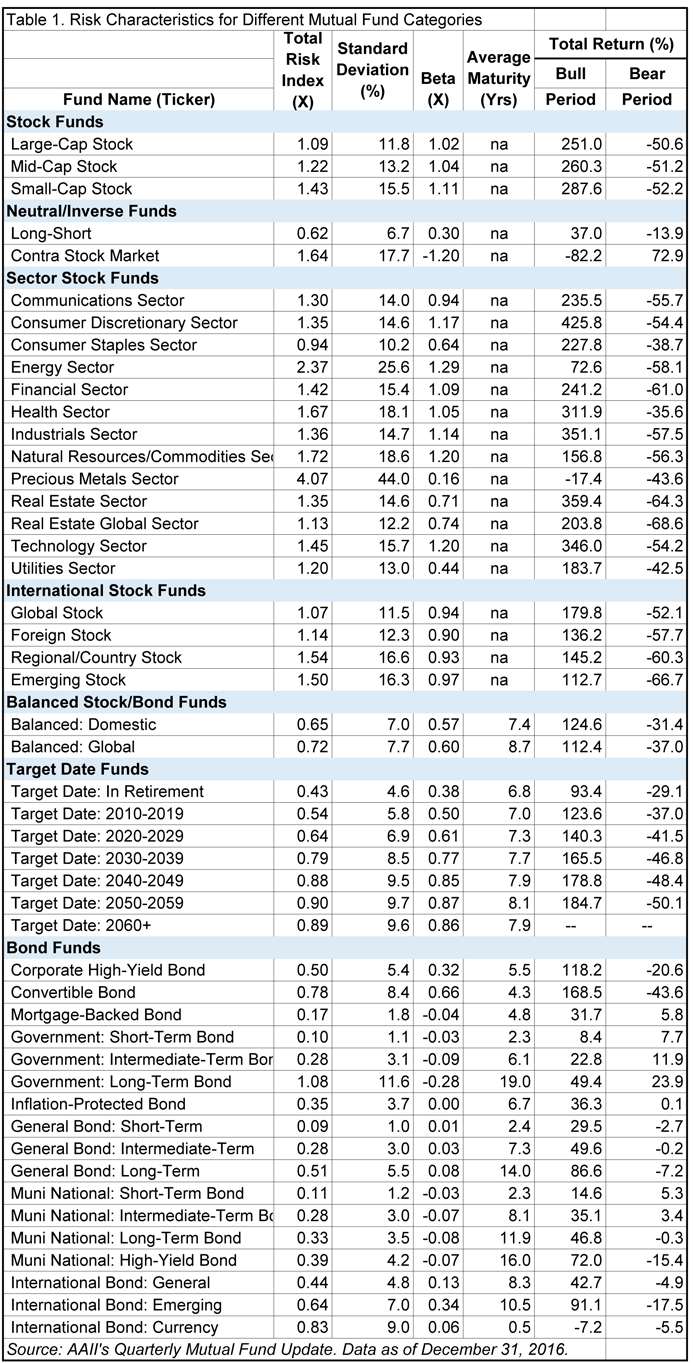
The Total Risk Index in Table 1 serves as a way to compare the risk inherent in common stock funds, international funds, sector funds, bond funds, or any type of mutual fund. Shorter- term bond funds would be expected to have relatively low total risk while some of the concentrated, less-diversified, small-cap stock funds would likely have higher total risk.
Checking the total risk measure of funds you are considering will enable you to construct a portfolio that reflects your risk tolerance and the holding period you anticipate for your portfolio. Portfolios for individuals with low risk tolerance and short holding periods should be composed predominantly of funds that are less volatile, with lower total risk. Individuals with high risk tolerances and longer holding periods can form appropriate portfolios by combining mutual funds with higher total risk.
Total risk is measured by the standard deviation statistic, a numerical measure of how much the return on a mutual fund has varied, no matter what the cause, from the historical average return of the fund. Higher standard deviations indicate higher total risk.
You should also compare the total risk of a prospective fund to the total risk for all funds in the same investment category. AAII's Top Funds Guide provides a category risk index for all funds. A value of 1.00 denotes average risk. Values above 1.00 indicate greater risk than average, while values below 1.00 indicate less than average risk.
Continue to Step 3 »