The bottom line to all investors is what's left after taxes. The level at which you are taxed will have a big impact on the kinds of investments that will provide you with the best aftertax return.
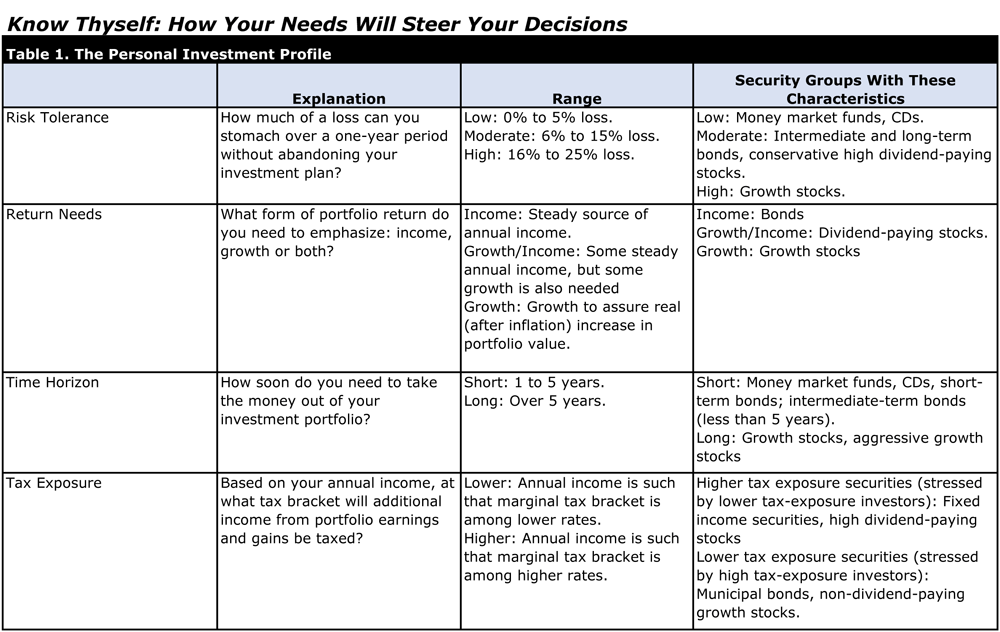
Investors who are in higher income tax brackets need to be concerned with the tax implications of their investments. For instance, part of the return from a high dividend-paying stock is in the form of an annual dividend that is taxed each year. High tax exposure investors would want to avoid or shelter in a tax-exempt account, such as an IRA, investments that generate high annual income, and stress those that offer long-term growth, where taxes can be deferred until the investment is sold. If these investors need fixed-income securities, they would probably prefer those that offer some tax exemption, such as municipal securities.
Investors who are in lower income tax brackets need to worry less about the tax implications of their investments. Conversely, they should avoid securities that benefit high tax-exposure investors. For instance, the yields paid on municipal securities are usually attractive only for investors in the top tax brackets.
With the tax laws changing regularly, it is difficult to quantify what constitutes "lower" and "higher" tax exposure (perhaps the terms "high" and "even higher" would be more accurate). However, if your annual income level puts you within the top federal income tax categories, you fall within the "higher" category, and if your income level puts you in the lower federal tax categories, you are in the "lower" category.
Table 1 summarizes the four aspects of the personal investment profile.
Continue to Step 6 »