


Learn more about whether RTX Corporation is a good stock to buy or sell based on recent news as well as its key financial metrics. Read on to find out how  (RTX) grades on certain investment factors and determine whether it meets your investment needs.
Latest RTX Corporation Stock News
As of March 31, 2026, RTX Corporation had a $259.6 billion market capitalization, putting it in the 99th percentile of companies in the Aerospace & Defense industry.
Currently, RTX Corporation’s price-earnings ratio is 38.9. RTX Corporation’s trailing 12-month revenue is $88.6 billion with a 7.6% profit margin. Year-over-year quarterly sales growth most recently was 12.1%. Analysts expect adjusted earnings to reach $6.815 per share for the current fiscal year. RTX Corporation currently has a 1.4% dividend yield.
Sign Up to Receive a Free Special Report That Shows How A+ Investor Grades Can Help You Make Investment Decisions
Grading RTX Corporation Stock
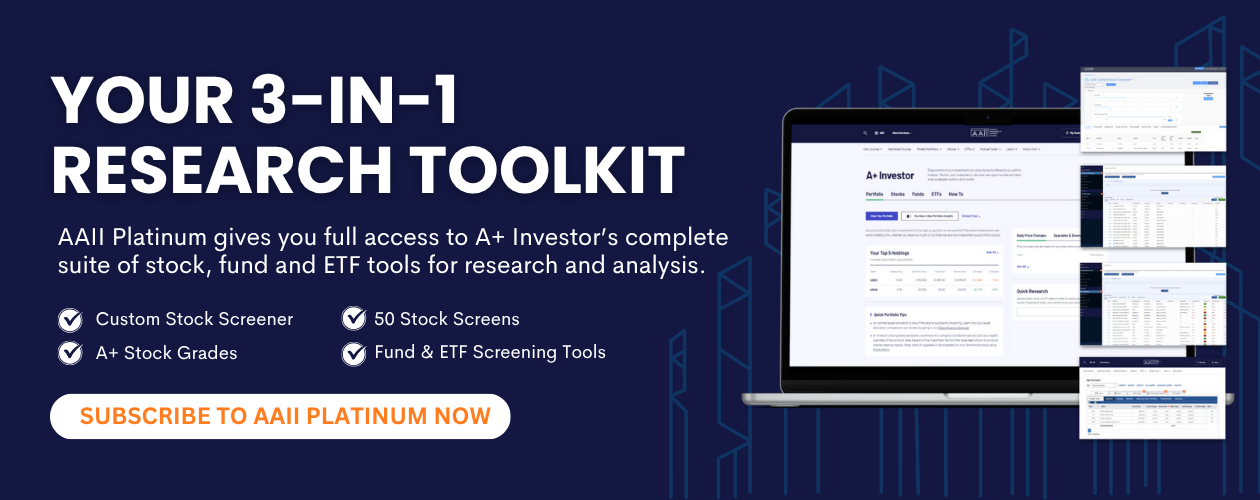
Before you choose to buy, sell or hold RTX Corporation stock, you’ll want to analyze how it has been graded. Stock evaluation requires access to huge amounts of data and the knowledge and time to sift through it all, making sense of financial ratios, reading income statements and analyzing recent stock movement. To help individual investors decide whether or not to buy (RTX) stock, AAII created A+ Investor, a robust data suite that condenses data research in an actionable and customizable way that is suitable for investors of all knowledge levels.
AAII’s proprietary stock grades come with A+ Investor. These offer intuitive A‐F grades for each of five key investing factors: value, growth, momentum, earnings revisions and quality. Here, we’ll take a closer look at RTX Corporation’s stock grades for value, growth and quality.
Learn more about A+ Investor here!
Other RTX Corporation Stock Grades
In addition to , A+ Investor also provides grades for Value, Growth, Momentum, Estimate Revisions and Quality.
The Momentum Grade helps uncover stocks experiencing anomalously high rates of return; research finds that stocks with high relative levels of momentum tend to outperform, whereas those with low levels of momentum tend to continue underperforming.
The Earnings Estimate Revisions Grade takes into account the magnitude of a company’s earnings surprise in its last two reported fiscal quarters. Often, surprises beget further surprises‐or at least continued sales growth (the exact opposite is generally true, too). AAII’s stock screen that follows the companies with the highest earnings estimate revisions (i.e., the best grades) has a 23.3% backtested annual return since inception, whereas an example screen following those with the worst revisions has a backtested annual return since inception of under 5%.
Growth investing builds on the idea that stocks of companies exhibiting strong, consistent and prolonged growth outperform those of slower—growth companies. AAII measures several dimensions of growth in its Growth Grade, including year—over—year increases in sales and earnings, long(er)—term historical sales and earnings growth rates and analyst‐forecasted long—term earnings growth.
Successful stock investing involves buying low and selling high, so stock valuation is an important consideration for stock selection. Buying stocks that are going to go up typically means buying stocks that are undervalued in the first place, although momentum investors may argue that point.
AAII’s A+ Investor Quality Grade comes from the ranking of key metrics. Specifically, the Quality Grade is the percentile rank of the composite return on assets (ROA), return on invested capital (ROIC), gross profit relative to assets, buyback yield, change in total liabilities to assets, accruals, Z double prime bankruptcy risk (Z) score and F—Score.
These 5 key factors, when combined with the above, provide a holistic view into a stock. Further, by joining A+ Investor you can see whether RTX Corporation’s stock passes any of our 60+ stock screens that have outperformed the market since their creation.

Should I Buy RTX Corporation Stock?
Overall, RTX Corporation stock has a .
Whether or not you should buy RTX Corporation stock will ultimately depend on your individual goals, risk tolerance and allocation. AAII can help you figure these out and identify which investments align with what works best for you.
Lastly, it’s important to evaluate a stock by comparing it against others in the same industry. Review the table below to see how RTX Corporation stock stands up against its competitors. Click into any of the below tickers to see their stock grades for value, momentum, quality and EPS revisions.
RTX Corporation (RTX) Competitors
Companies similar to RTX Corporation in the Aerospace & Defense industry.
| Company name | Ticker | Market Cap |
| The Boeing Company | BA | $156.41Bil |
| Airbus SE | EADSY | $148.92Bil |
| Lockheed Martin Corporation | LMT | $139.29Bil |
| Rolls-Royce Holdings plc | RYCEY | $122.45Bil |
| General Electric Company | GE | $296.49Bil |
RTX Corporation Stock: Bottom Line
You can use the information about how RTX Corporation is graded to determine if you should invest in this stock. However, you should decide whether RTX Corporation’s stock is a buy, sell or hold based on a combination of grades, metrics, ratios and U.S. Securities and Exchange Commission (SEC) reports.
Investors are encouraged to do their own due diligence and research. In this way, individuals can effectively become managers of their own assets—without having to rely on others for financial independence. You can count on AAII for timeless articles on financial planning and stock-picking, unbiased research and actionable analysis.
So, if you’re still on the fence about whether RTX Corporation is a buy, sell or hold, you can utilize AAII’s expansive and robust screening tools like A+ Investor to help with your decision.
A+ Investor adds to its qualitative teaching by giving you a powerful data suite that helps you whittle down investment decisions, find stocks, exchange-traded funds (ETFs) or mutual funds that meet your needs.

 Included With AAII Platinum
Yield Screen: 8.7% Compared to S&P 500
at only 6.9%
Since Inception. Data as of 12/31/2024.

769.3% Stock Superstars Portfolio Total Return Since Inception

U.S. Index ETF (IYY)
SSR Group 3 O'Shaughnessy portfolio has a 411.2% gain since inception performance compared to IYY at only 119.1%% Performance as of 11/29/24.



FREE REPORT

BECOME A MEMBER FOR ONLY $2
Get access to powerful investment discovery tools and a wealth of investment education to help you achieve your financial goals.