

Related

First Cut Stocks
Stocks With the Largest Percentage Change in Earnings Estimates


Stock Strategies
Institutional investors tend to pay more attention to which stocks they are buying than the stocks they are choosing to sell, to the detriment of their portfolios’ returns.
by Anine Sus | March 2019

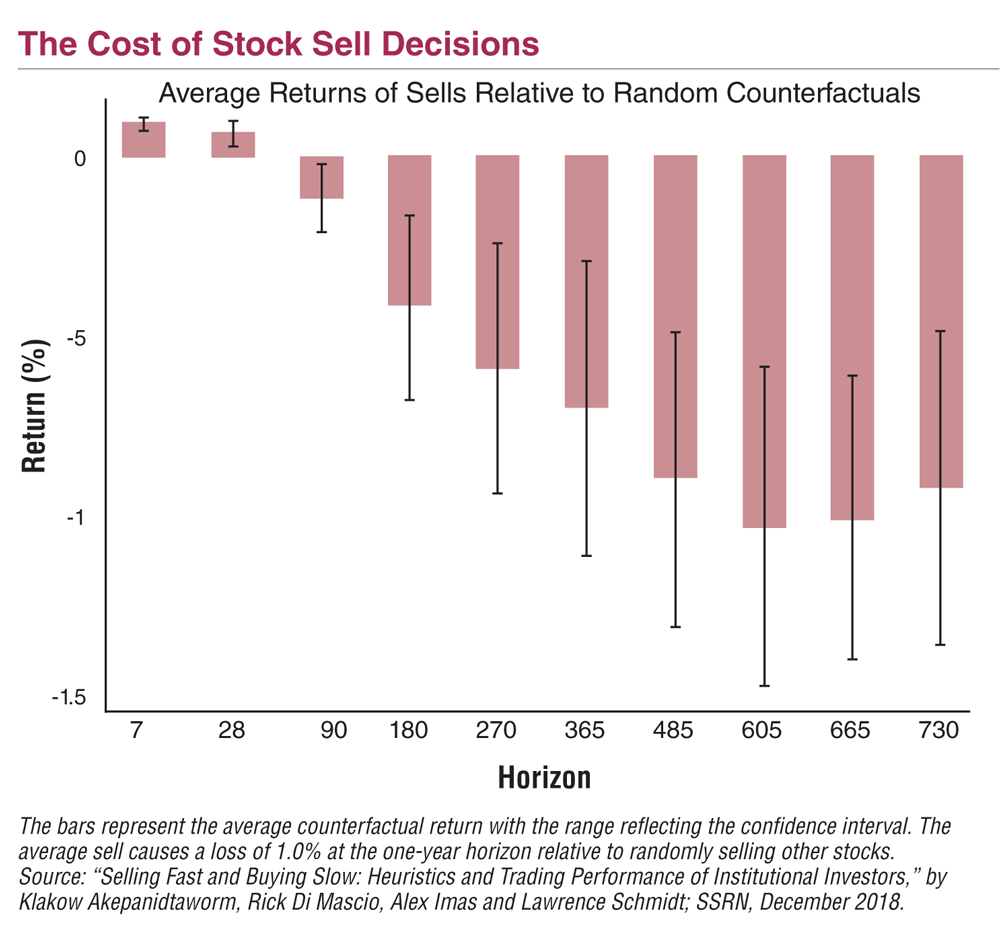
Institutional investors tend to pay more attention to which stocks they are buying than the stocks they are choosing to sell, to the detriment of their portfolios’ returns. A study looked at portfolio managers with an average portfolio value of $573 million. It was discovered that “selling decisions not only fail to beat a no-skill strategy of selling another randomly chosen asset from the portfolio, they consistently underperform it by substantial amounts.” It was found that managers using hands-on selling techniques are giving up between 0.5% and 1.0% of returns per year.
However, if the managers had chosen to sell a stock at random, they would not have missed out on these returns. The study also found that when a stock shows “extreme returns” (either worst- or best-performing), it is sold at a rate over 50% higher than a stock with minor under- or overperformance.
Research has found that the decision to buy a stock and the decision to sell require different ways of thinking. One such study by Brad Barber and Terrance Odean (interviewed in the November 2014 AAII Journal, “Trading More Frequently Leads to Worse Returns”) purports that buying decisions are forward-looking and selling is backward-looking. When asked, some portfolio managers described selling as “simply a cash raising exercise for the next buying idea.” Another sees buying as “an investment decision, selling is something else.”
Many institutional investors focus on finding a new profitable position for their portfolios. Many make sell decisions only when they find their next buys, leaving the sell decision to the last minute but still using a specific method for removal. Especially in these instances, it would be more profitable to choose a random stock to sell.
The one exception to this data is the incorporation of earnings announcements into sell decisions. When a company has announced earnings, institutional investors who use this information when removing a stock from their portfolio outperform a random selling strategy.
Source: “Selling Fast and Buying Slow: Heuristics and Trading Performance of Institutional Investors,” by Klakow Akepanidtaworm, Rick Di Mascio, Alex Imas and Lawrence Schmidt; SSRN, December 2018.
First Cut Stocks
Stock Strategies

No comments have been added yet. Add your thoughts to the discussion!
You need to log in as a registered AAII user before commenting.
Log InCreate an account