

Charles Rotblut leads a class in AAII's new Essential Investing Video Course. Go to https://www.aaii.com/ves for more information and to subscribe.
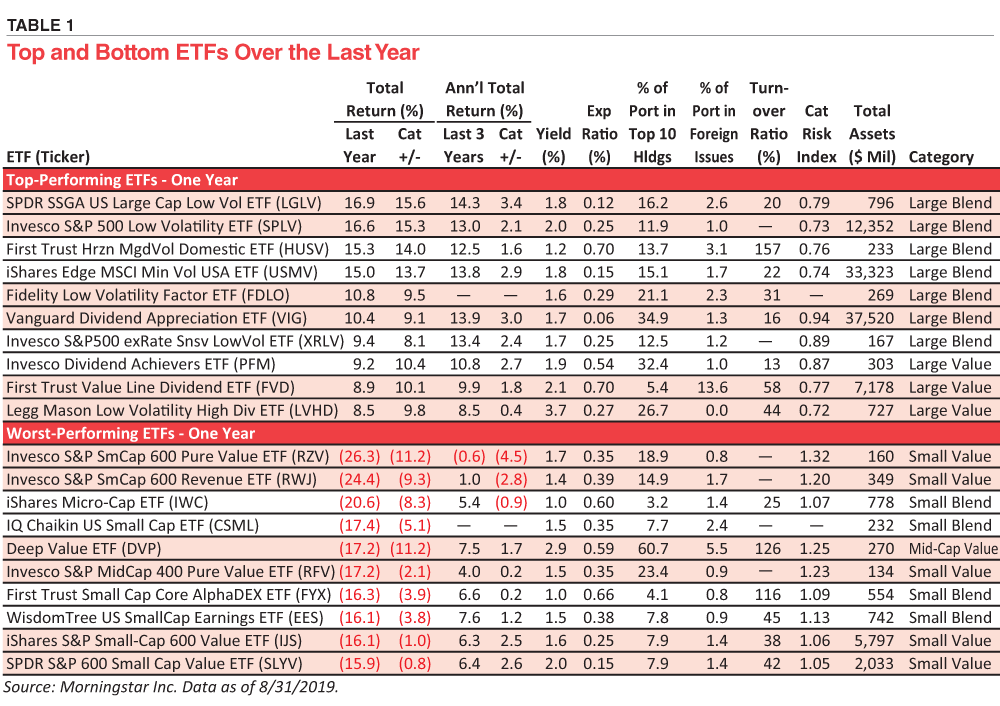
Our first exchange-traded fund (ETF) First Cut looks at the opposite ends of the return spectrum: the exchange-traded funds with the highest 12-month returns and the funds with the worst 12-month returns. “The winners” mostly track indexes (strategies) currently in favor; the losers track indexes (strategies) currently out of favor.
We used as our universe domestic equity exchange-traded funds. These funds invest in U.S. companies of all sizes. Leverage and inverse funds were excluded because they are specifically designed for short-term speculation.
Since ETFs are bought and sold on the open markets, just like stocks, the passing funds were required to have a minimum average volume of 10,000 shares per day. We further required a minimum of $100 million in assets under management (AUM). While there isn’t a precise threshold at which the risk of closure rises significantly, requiring a minimum of $100 million in AUM provides a good margin of safety.
All the ETFs listed in Table 1 have been in existence for at least one year.
—Charles Rotblut, CFA, AAII Journal editor
Discussion
FREE REPORT

Phil from NY posted over 7 years ago:
Frank from TX posted over 7 years ago:
You need to log in as a registered AAII user before commenting.
Log InCreate an account