

Related

Portfolio Strategies
The Impact of Saving Versus Return on Wealth


Financial Planning
Four aspects of the U.S. retirement system make it difficult for employees to achieve their potential retirement plan accumulation by the time they are ready to retire.
by AAII Staff | December 2019

The typical 60-year-old approaching retirement in 2016 with a 401(k) plan had less than $100,000 saved, compared to a 25-year-old median earner in 1981 making regular contributions who accumulated $364,000 by the time they reached age 60.
Using data from the Survey of Income and Program Participation that included tax records of earnings from all jobs in a given year from 1957–2014 and all deferred contributions to a retirement plan from 1990–2014, the researchers focused on workers who were ages 55 to 64 in 2014, had a 401(k) account, worked between when they were 55 and 64 and contributed to their retirement accounts over their career. They identified the causes behind why less money was actually saved versus the potential amount over a worker’s life as non-contribution during their younger years, lack of universal participation and coverage, fees and leakages—four aspects of the U.S. retirement system that make it difficult to achieve their potential accumulation.
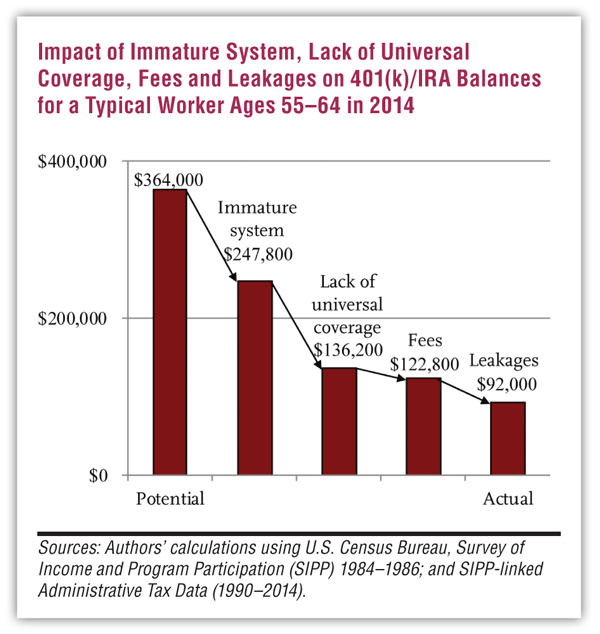 Looking at an alternative model, the researchers found that in a system where workers participated in a retirement plan for the duration of their career, paid zero fees on account balances and did not withdraw prematurely from their accounts, the overall amount would be closer to their potential savings.
Source: “Why Are 401(K)/IRA Balances Substantially Below Potential?,” by Andrew G. Biggs, Alicia H. Munnell and Anqi Chen; Center for Retirement Research at Boston College, November 2019.
Portfolio Strategies
Financial Planning

No comments have been added yet. Add your thoughts to the discussion!
You need to log in as a registered AAII user before commenting.
Log InCreate an account