The Investment Company Institute looked into how individual retirement accounts (IRAs) contribute to retirement saving in the U.S. The study found that 36% of U.S. households owned IRAs in mid-2019. More specifically, 28% of U.S. households owned traditional IRAs. Of these traditional IRA-owning households, about six in 10 had accounts that had rollovers from previous employer-sponsored retirement plans. When prompted about why they chose to roll over their IRAs, 25% said they did not want to leave their assets behind, 17% said they wanted to preserve how taxes were applied to their savings in their account and another 17% said they chose to consolidate their assets.
The study found that rollover activity “has fueled recent IRA growth. The most recent available data show that households transferred $431 billion from employer-sponsored retirement plans to traditional IRAs in 2016.” It was also noted that 59% of U.S. households with traditional IRAs contained rollover assets. When rolling over their assets, traditional IRA-owning households researched their decision. Many chose to look at multiple sources of information—62% consulted a professional financial adviser, 38% used the information from their employers, 30% used the printed materials provided by their employers and 19% looked at online material from their employers.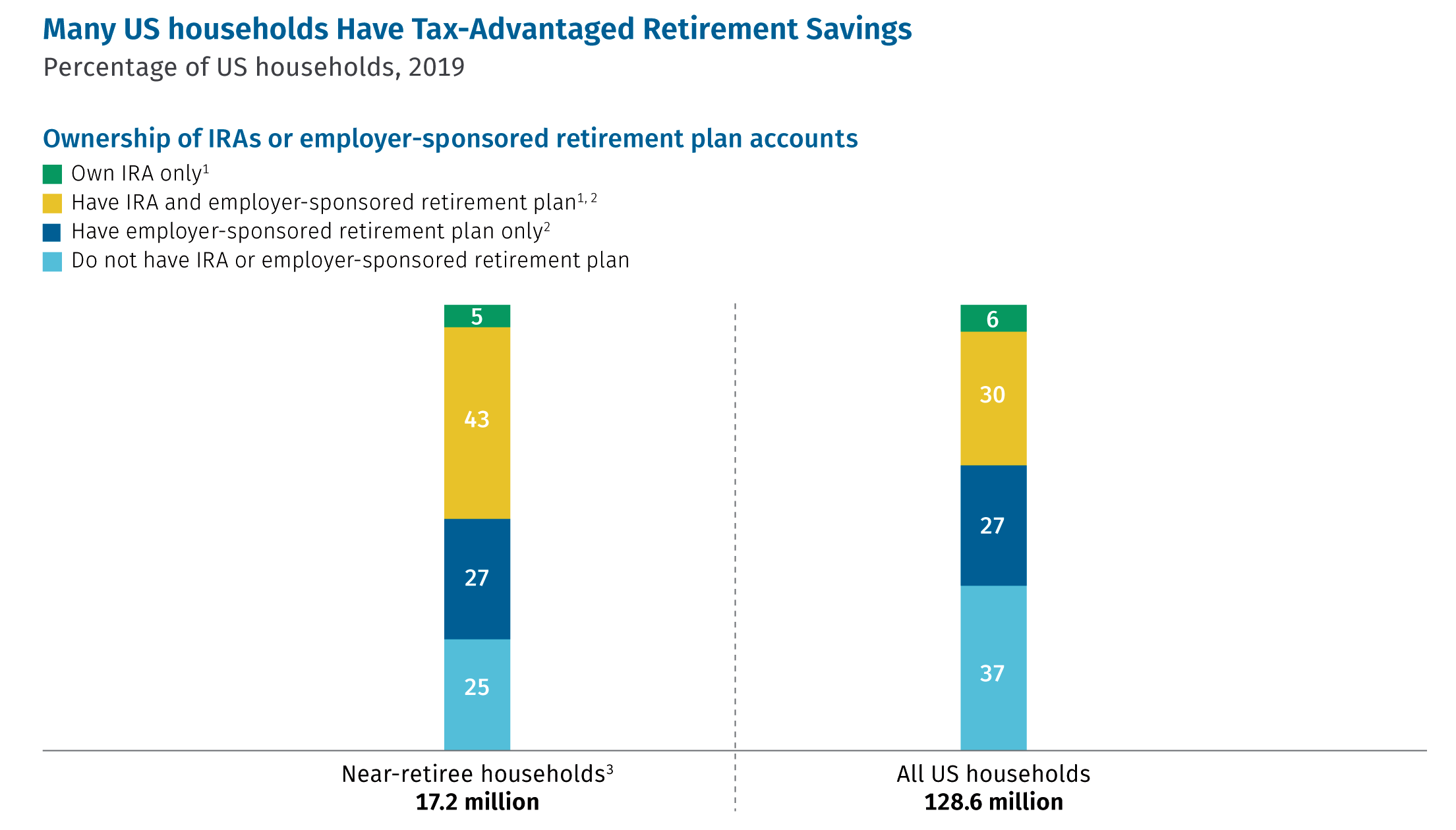
When it came to withdrawals, the study discovered that in households where one person was retired, 44% “reported using traditional IRA withdrawals to pay for living expenses.” In addition, 40% of retired households that took withdrawals from traditional IRAs in the 2018 tax year chose to reinvest or save some of the withdrawn funds in another account; 13% used their withdrawals for home purchase, repair or remodeling; and 6% used their withdrawals for health care expenses. In contrast, traditional IRA-owning households that were nonretired used their 2018 tax-year withdrawals for different reasons: 17% were less likely to use their withdrawal for living expenses and “were six times as likely to indicate they used the funds for emergencies” (27%).
In comparing traditional IRA owners and Roth IRA owners, the study found that traditional IRA owners were less likely than Roth IRA owners to make contributions. According to the study, 36% of households with Roth IRAs in mid-2019 made contributions in the 2018 tax year. However, only 25% of households with traditional IRAs made contributions during the same period.
Source: “The role of IRAs in US households’ Saving for Retirement, 2019”; Investment Company Institute, December 2019.






henriettah from KS posted over 6 years ago:
You need to log in as a registered AAII user before commenting.
Log InCreate an account