



Related

Beginning Investor
A simple screen targeting large diversified equity funds with low initial purchase minimums that may be of interest to investors who are just starting out.
Charles Rotblut leads a class in AAII's new Essential Investing Video Course. Go to https://www.aaii.com/ves for more information and to subscribe.
The challenge for any investor just starting out is to build a diversified portfolio with a limited amount of money. Mutual funds can work well for such investors. They typically offer professionally managed portfolios diversified across many holdings. Shares can be purchased and reinvested in fractional amounts. Some funds also have low initial minimums.
To help AAII members identify funds fulfilling the dual goals of a diversified portfolio of stocks and a low minimum initial purchase amount, this month’s mutual funds First Cut screened large blend equity funds. These funds tilt toward large-cap stocks but, depending on the fund, may also hold mid-cap and even small-cap stocks too. [An argument for using small-cap funds instead could be made, but three funds match our requirements: Fidelity Small Cap Value (FCPVX), Goldman Sachs Small Cap Value Insights (GTTTX) and VALIC Company I Small Cap Special Value (VSSVX).]
A low minimum investment was required. The highest minimum purchase amount of the passing funds is $1,000. The majority of the passing funds have a minimum purchase amount of $100 or less. Depending on the fund family, the minimum purchase amount may be waived if automatic contributions are set up. Check with the family of the fund you are interested in. We purposely excluded load funds as loads will reduce what would already be a potentially small starting investment.
All passing funds are open and can be purchased directly by individual investors. Institutional funds and those sold specifically through advisers or retirement plans were excluded. Leveraged and inverse funds were also excluded as these are not suitable for new investors.
In terms of past performance, we required passing funds to rank in the top half of their category over the past five years. To increase the odds of such comparative performance being sustainable, expense ratios were required to be below the category average.
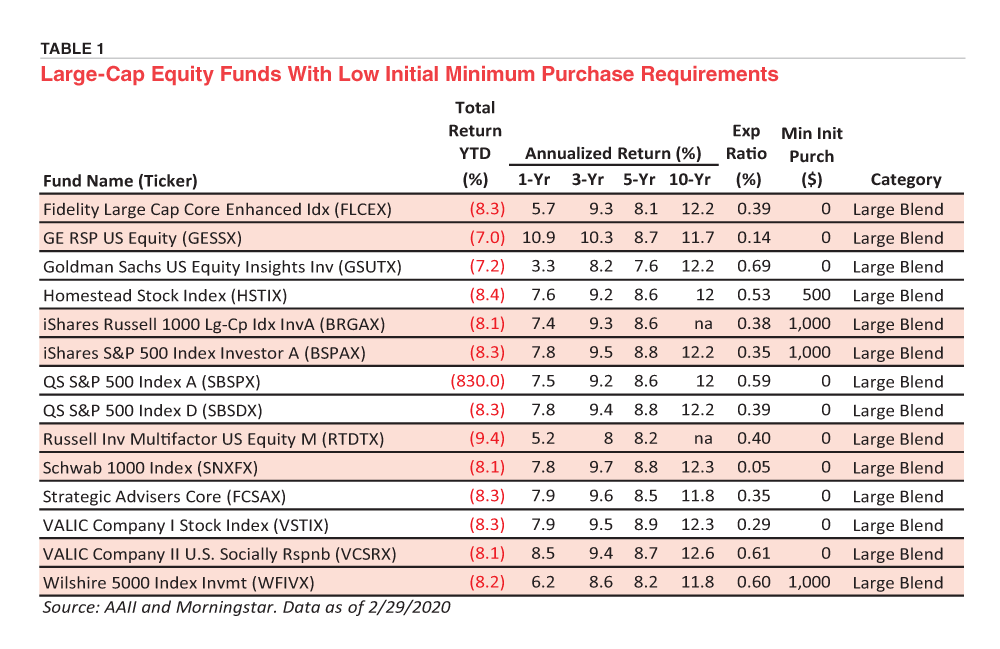
The 14 diversified funds with low minimum purchase amounts are shown below.
Global Asset Class > Equity
Fund Group > U.S. Equity
Category > Large Blend
5-Year Category Rank: 50 - 100
Load Funds > No-load funds only
Expense Ratio Category Rank > 0-40
Leveraged > No
Inverse > No
Open to New Investors > Yes
Minimum Initial Purchase (≤) $1,000 Max.
Availability > No Institutional Funds
Exclude Share Class Type > Adv, Other, Retirement, S
Get monthly updates of this screen at the First Cut Fund Screens archive, where you can also view monthly updates for the collection of First Cut fund screens. If you’d like to modify this screen or build your own fund screens, consider subscribing to A+ Investor.
Beginning Investor

Beginning Investor

Beginning Investor

John Simson from Kentucky posted over 6 years ago:
Mark from New Hampshire posted over 6 years ago:
Charles Rotblut from IL posted over 6 years ago:
You need to log in as a registered AAII user before commenting.
Log InCreate an account