


A study found that riskier companies that hire retirement-age CEOs are more likely to increase their performance when those CEOs are hired in distressed times. The authors looked at chief executive officers who were near or above the retirement age of 65 years old. They found that 10.05% of the companies on the S&P 1500 index “have appointed new CEOs who are near or have passed the retirement age of 65.” A few of these companies include Delta Air Lines Inc. (DAL), American International Group Inc.  (AIG), CSX Corp. (CSX) and Yum Brands Inc. (YUM).
Although the study discovered that companies have been hiring retiring CEOs “across all industries” and that this practice has persisted over time, it happened more frequently following the financial crisis. In 2012, 10.18% of all new CEOs were around retirement age. Given this, the research suggested that “firms are more likely to hire retiring CEOs when the CEO job risk is high and when the firm is in distress.” Many companies chose a retiring CEO to replace their previous CEO because they tend to take on less risky projects and end up cutting spending to help the company.
The authors noted that a few specific characteristics played a part: “past stock return volatility, ROA-based distress and past CEO tenure are significantly related to appointing a retiring CEO.” Another benefit to the company is that retiring CEOs don’t have the same career concerns as someone younger might have, so they may accept a lower salary than a CEO who is earlier in their career.
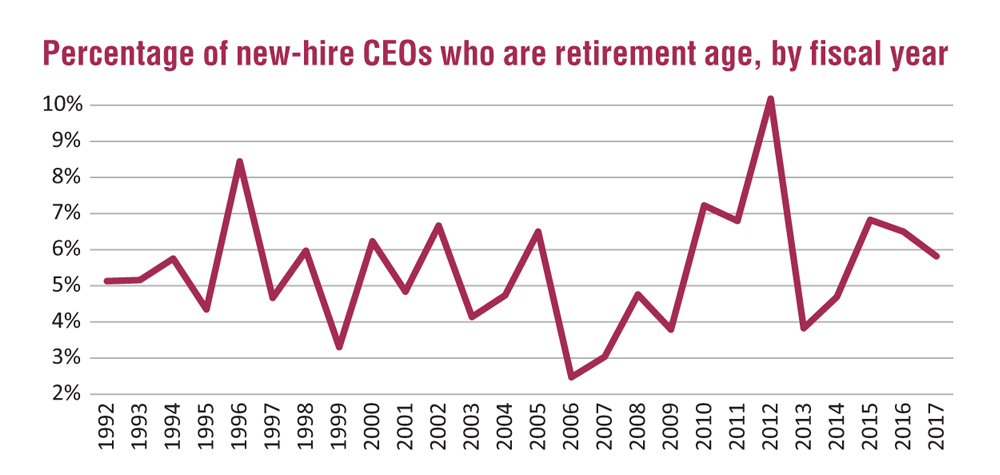
For these riskier companies that are in distress, retiring CEOs act as “problem-solvers,” using their expertise gained from a longer career to handle the company’s finances objectively—even if this means laying off workers. The study concludes that retiring CEOs are most successful with companies that need extra help, which could contribute to retiring CEOs having a shorter tenure once they are hired.
Source: “Hiring Retiring-Age CEOs,” by Ye Wang and David Yin; SSRN, April 2020.
Discussion
FREE REPORT

No comments have been added yet. Add your thoughts to the discussion!
You need to log in as a registered AAII user before commenting.
Log InCreate an account