

Related

Beginning Investor
Participants in 401(k) plans become more attentive to expense ratios and their portfolio allocations after fee and performance statements were provided directly to them.
by AAII Staff | September 2020

Participants in 401(k) plans become more attentive to expense ratios and their portfolio allocations after fee and performance statements were provided directly to them.
The change in how disclosures were provided was due to a 2012 change by the U.S. Department of Labor (DOL). The reform required fiduciaries to provide expense- and performance-related summary statements directly to plan participants. Notably, this information was available before the 2012 DOL rule, but it was buried in fund prospectuses and regulatory filings.
Comparing data from before the reform in 2010 and 2011 and post-reform in 2012 and 2013, the study’s authors found that participants became more sensitive to fee increases and actively moved away from allocating to expensive funds post-reform. Additionally, more investors allocated more in index funds post-reform since these funds tend to be cheaper offerings among plan choices. Trends were stronger among young men.
Previous studies suggested that pension participants are passive and don’t react to new information. However, putting fee and short-term performance information “in sight” made participants more attentive to their plans. The change also supported other research that individual investing decisions are influenced when financial information is better surfaced.
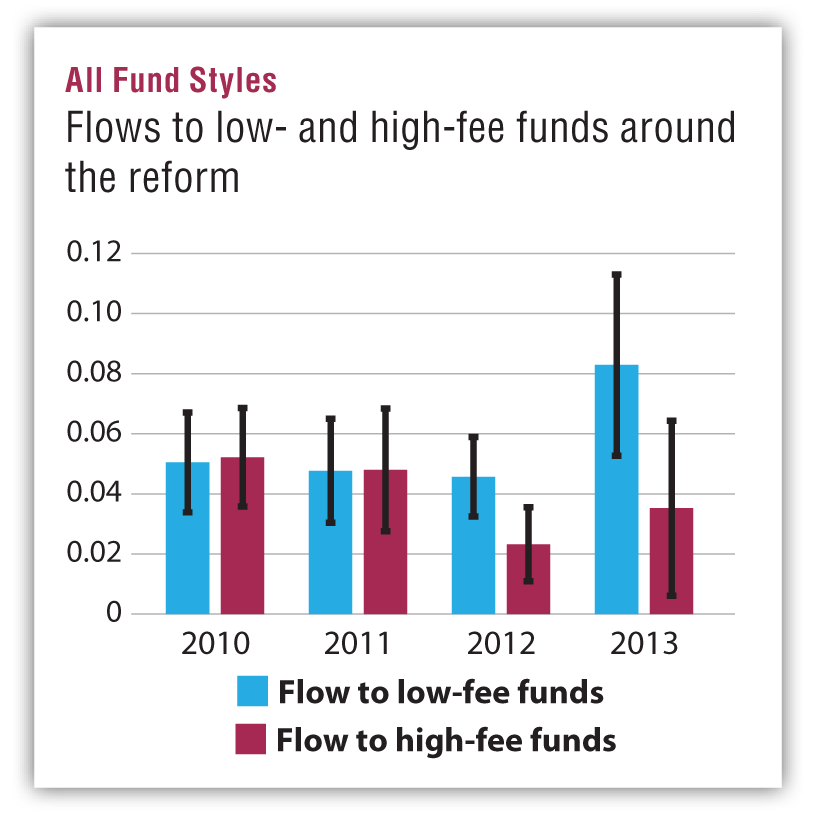 The researchers also reviewed whether the 2012 reform caused plan providers and sponsors to change the menus in 401(k) plans to encourage employees to invest in cheaper funds (such as making them the default investment option). While the reform did make plan sponsors more likely to delete more expensive fund options, it did not necessarily cause a stronger sensitivity to fees.
The study’s results imply that regular disclosure promotes passively managed funds and makes indexing more popular. The authors concluded that while “participants in defined-contribution pension plans have been shown to be inert and to rarely change their investment allocations … this inertia can be mitigated by providing more salient fee and performance information to plan participants.”
Source: “Out of Sight No More? The Effect of Fee Disclosures on 401(k) Investment Allocations,” by Mathias Kronlund, Veronika K. Pool, Clemens Sialm and Irina Stefanescu; SSRN, July 2020.
Beginning Investor


No comments have been added yet. Add your thoughts to the discussion!
You need to log in as a registered AAII user before commenting.
Log InCreate an account