

Related

Portfolio Strategies
The Impact of Saving Versus Return on Wealth


Financial Planning
The coronavirus pandemic has changed the timing and savings of retirement for tens of millions of Americans in the last year.
by Adam Scheg | December 2021

The coronavirus pandemic has changed the timing and savings of retirement for tens of millions of Americans in the last year. Retirees and pre-retirees have felt the effects across what Edward Jones and Age Wave frame as the four pillars of retirement. The four pillars are health, family, purpose and finances. Each of these contribute to what the two organizations describe as an ideal retirement.
This conclusion is based on an investigation that began in November 2019 regarding what it means to live well in retirement. Three online surveys were conducted in the U.S. from May 2020 to March 2021. The surveys spanned five generations of U.S. adults.
The pandemic reshaped retirement timing and savings for many. One in three respondents to the survey said they will now retire later than they previously thought because of the pandemic. About 70% of respondents described the pandemic as a financial wake-up call. Retirement savings were disrupted during this time—in December 2020, 22 million people stopped contributing to their retirement accounts. Although contributions have resumed, it is being done in a reserved manner. People are committed to securing future finances, but now realize they must always prepare for the worst.
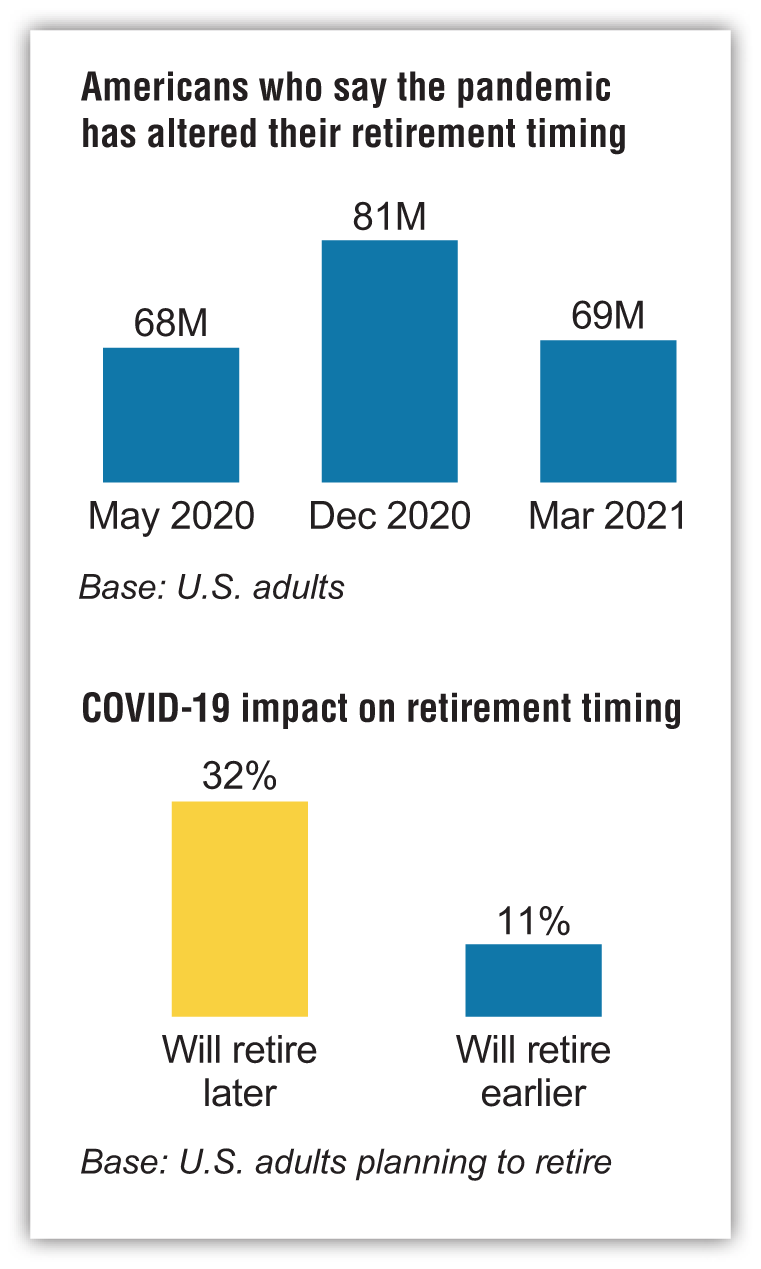 The largest worries were health care and long-term care costs, with 66% of pre-retirees citing it as their greatest financial worry. Over the last year, pre-retirees’ worries have only grown as they consider unexpected expenses, outliving their savings and increases in inflation and taxes. Concerns about these expenses are warranted because while Medicare pays for a great deal of health care expenses in retirement, it is not all-inclusive and does not cover most long-term care services.
The study found a larger financial impact among pre-retirees than retirees, cited by 44% and 22% of respondents in these respective groups. Additionally, women’s financial security was hit harder than men’s. While men have been able to regain some confidence in retirement savings, women’s confidence has remained stagnant.
There are two key takeaways from this study. The first is that the majority of pre-retirees wish they had done a better job in preparing for the financial and non-financial aspects of retirement. The second is that the four pillars of retirement are interdependent and are essential to optimal well-being.
Source: “The Four Pillars of the New Retirement: What a Difference a Year Makes;” Edward Jones and Age Wave, June 2021.
Portfolio Strategies
Financial Planning

No comments have been added yet. Add your thoughts to the discussion!
You need to log in as a registered AAII user before commenting.
Log InCreate an account