


Charles Rotblut leads a class in AAII's new Essential Investing Video Course. Go to https://www.aaii.com/ves for more information and to subscribe.
My mother-in-law died last month at the age of 92. Lila enjoyed movies, was a longtime season ticket holder at the Alley Theatre in Houston, Texas, and traveled to many countries. She also loved Frank Sinatra.

I started managing Lila’s finances after my father-in-law passed. At first, it was very collaborative, with my wife and I automating some of her bills and me taking care of her taxes. After she moved into an independent living retirement community, I began paying her credit card bills and balancing her accounts. I’d go over the account statements with her each month and her tax return at the start of every year.
As her cognitive decline progressed, Lila became less and less involved in the process. This progression is typical.
Lila trusted my wife and me to do the right thing—which we did. It was always her money.
Not everyone is in such a situation. Personal finances can be much more complicated. Some people do not want their children and/or other would-be heirs to know the details of their finances. Others may not have children who can or are willing to help.
This is where a daily money manager can help. Daily money managers assist with bill paying, balancing checkbooks, reviewing bills and related tasks. Their role is to assist you with the various tasks of personal finance.
I realize that writing about daily money managers to an organization of mostly self-directed investors may seem like a contradiction. After all, if you can manage a portfolio then surely you can pay your credit card bill every month. We encourage you to think about the future and plan for it. What you can do now may not be what you can do in the future.
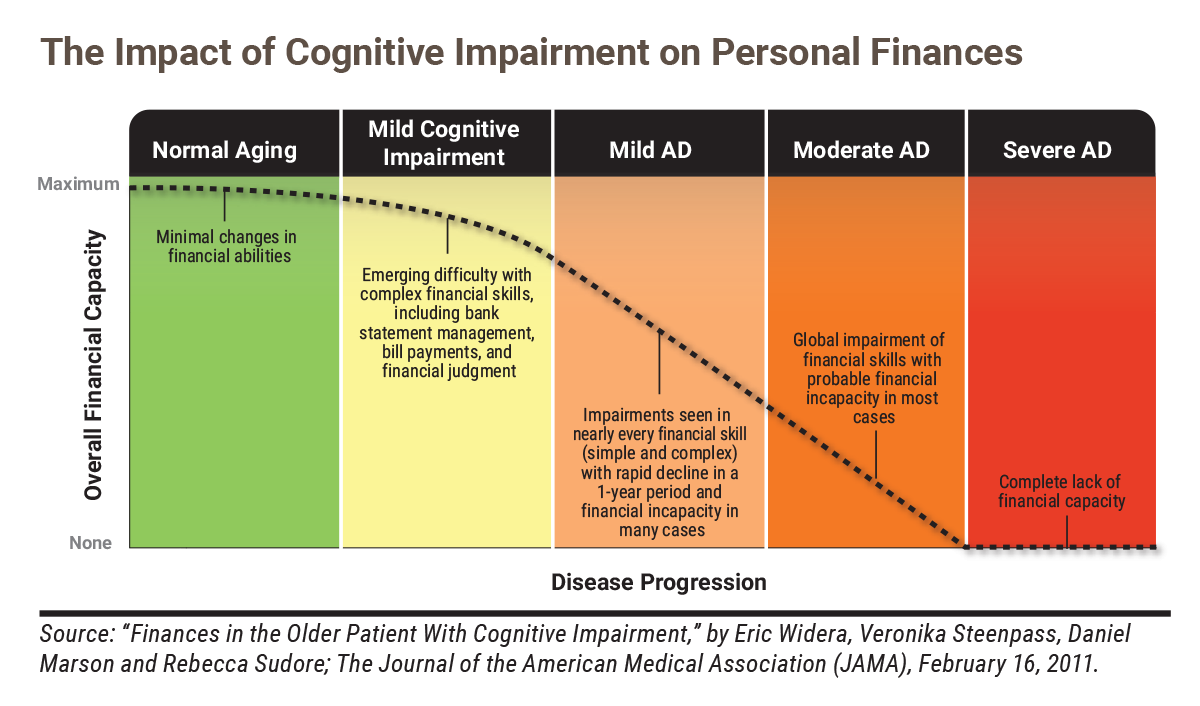
One of the first signs of cognitive decline is the inability to manage your finances. Even mild cognitive impairment can cause difficulties with balancing a checkbook, paying bills and exercising sound financial judgment, as the chart here shows. Late payment notices, bills left unopened and unusual spending frequently signal the presence of Alzheimer’s disease or other dementia-related ailments.
If you have children or someone else you trust and feel comfortable including in the day-to-day management of your finances, do so. One way to start is to talk with them about how you are doing financially and what companies you have accounts with. Allowing them to monitor your accounts or at least periodically go over your typical expenditures is a good next step.
Since October is National Financial Planning Month, Cynthia McLaughlin and I reached out to Susie Marbury to explain the role daily money managers can fulfill. Marbury is the president of the American Association of Daily Money Managers (AADMM) and founder of daily money management firm Checks & Balances for You LLC. Our conversation focuses not only on daily money managers but also on signs that someone may need help and how to approach them if they do. If you find the article helpful, I encourage you to go to AAII Retirement Investing, where our conversation continues.
Wishing you prosperity and good health,

Discussion
FREE REPORT

JESSE M from FL posted over 2 years ago:
P H from IL posted over 2 years ago:
DAVID P from FL posted over 2 years ago:
THOMAS S from OR posted over 2 years ago:
ROBERT A from NC posted over 2 years ago:
You need to log in as a registered AAII user before commenting.
Log InCreate an account