


- Common 1099 forms and their purpose in reporting income sources like interest, dividends and capital gains
- Where to find Form 1099 online and how different financial institutions provide access to tax documents
- How to correctly report income from various 1099 forms, including new reporting rules for digital assets and cryptocurrency transactions
The Internal Revenue Service (IRS) requires taxpayers to report earnings from interest, dividends and capital gains via 1099 tax forms. Depending on your sources of income and realized gains, you may receive one or more of these forms. In this article, I explain the most common 1099 forms to help you better understand what is being reported and how it affects your taxes.
What Is the Purpose of Form 1099?
Form 1099 is a tax document used to report various types of income not reported on Form W-2. Income sources including distributions from tax-deferred retirement accounts, interest, dividends, rental income and income from freelance work are reported on Form 1099. There are several versions; the Form 1099 you receive depends on the nature of the income generated.
A Form 1099 is generated for each source of income when the calendar-year income is above a certain amount—generally $10 or $600, depending on the type of income.
One form for each income source is provided when multiple accounts are held at the same financial institution, such as multiple certificates of deposit (CDs). Most financial institutions also send account holders a composite report detailing information from each Form 1099 filed with the IRS. This additional information is a resource for completing your tax returns. For example, Charles Schwab provides a 1099 Composite and Year-End Summary, which consolidates all of an account holder’s 1099 forms into one document.
Where to Find Your Form 1099
Form 1099s are generally available online from financial institutions where you have an account by January 31 following the end of the calendar year.
If you receive account statements electronically, look in the Statements and Tax Forms area of your brokerage firm’s website for Form 1099s. Another place to look is in the Documents area of your financial institution’s website.
TreasuryDirect.gov provides instructions on their website for accessing your Form 1099. After logging in to your account, click on the ManageDirect tab at the top of the screen and then find the applicable tax year under Manage my Taxes.
What Is on Each Type of Form 1099?
The following describes the most common 1099 forms received by AAII members and where the information should be entered on your tax return.
1099-INT
Banks, credit unions and other financial institutions issue this form if you earned at least $10 in interest. Total interest earned, taxable interest, tax-exempt interest and any federal or state tax withholding is reported (Figure 1). Interest under $10 still needs to be reported even though a Form 1099-INT was not issued.
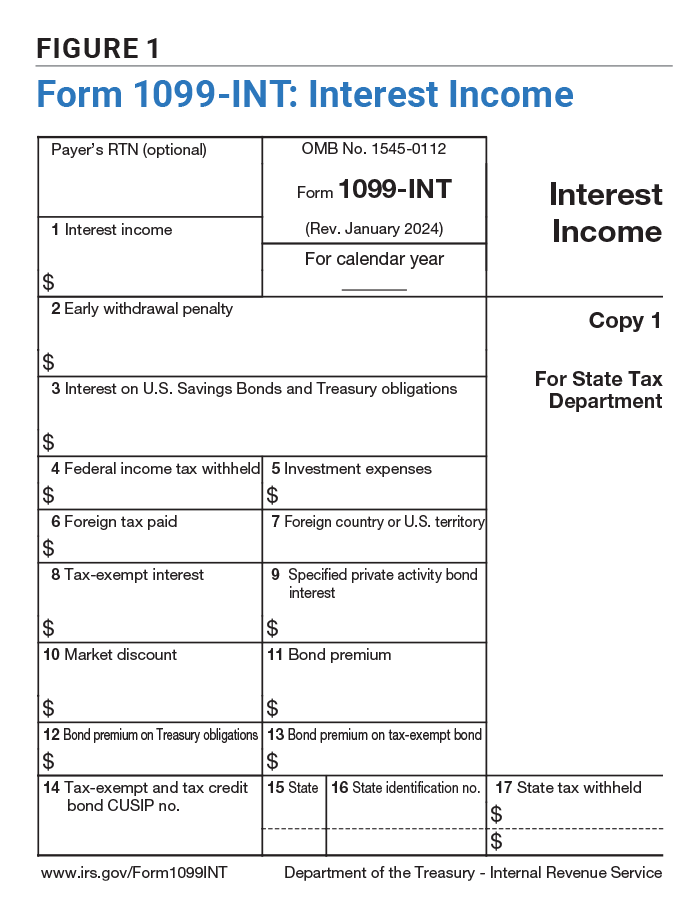
Enter taxable interest on Schedule B (Form 1040). Tax-exempt interest (e.g., municipal bonds) is reported on Form 1040 but not taxed at the federal level.
1099-OID
This form is used to report the annual taxable portion of the imputed interest on original issue discount bonds. Imputed interest is the excess of a debt instrument’s stated redemption price at maturity over its issue price.
Imputed interest is also entered on Schedule B.
1099-DIV
Investment firms, brokerage accounts and mutual fund companies issue this form if you earned at least $10 in dividends or other distributions. Dividends and capital gains distributions from stocks, mutual funds and exchange-traded funds (ETFs) are reported.
Total ordinary dividends over $1,500 are reported on Schedule B (Form 1040). This includes net short-term capital gains from mutual funds, as well as other distributions on stock, reinvested dividends and Section 404(k) dividends paid directly from the corporation as part of an employee stock ownership plan (ESOP).
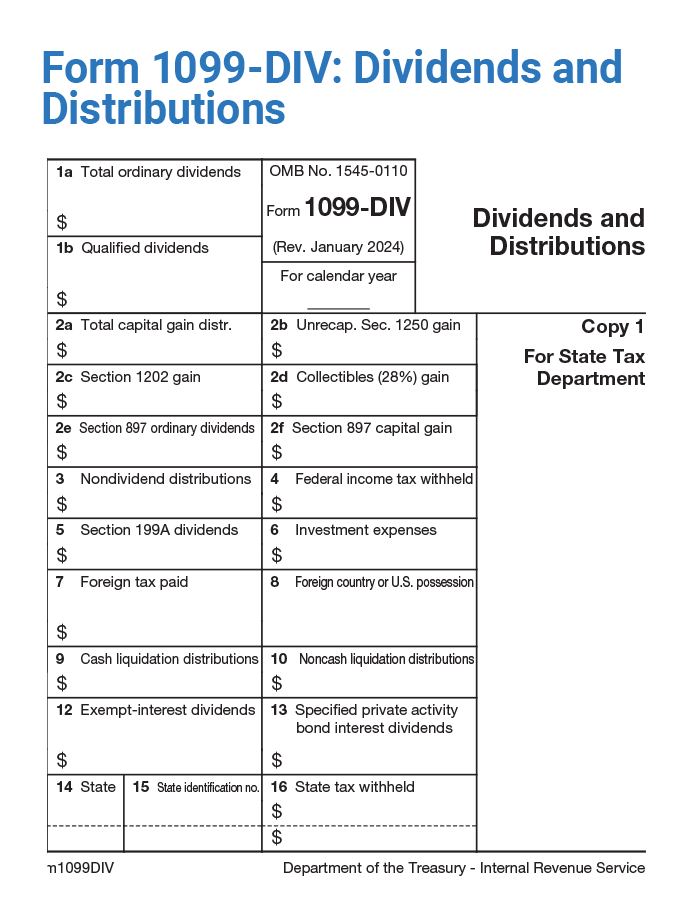
You will receive a Form 1099-DIV for each mutual fund you hold. Mutual fund dividend or capital gains distributions declared within the last three months of the year but paid the following January are taxable as though they were paid on December 31 of the year declared.
Qualified dividends are shown in box 1b of your Form 1099-DIV. Qualified dividends taxed at lower capital gains rates are entered on Form 1040, line 3a. Capital gains distributions are reported on Schedule D.
1099-B
This 1099 form lists proceeds from selling investments—including stocks, bonds and mutual funds—along with cost basis information. Brokers are required to report the cost basis for stocks purchased after January 1, 2011, on Form 1099-B along with the proceeds from all your sales of stocks purchased before January 1, 2011, and sold during the applicable tax year based on the trade date.
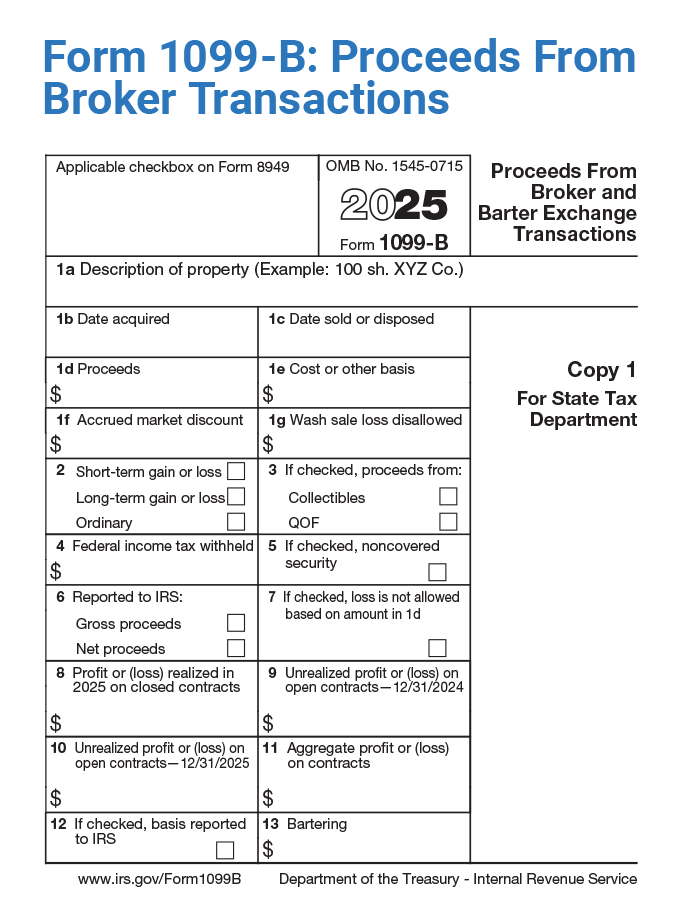
Your broker or mutual fund firm will commonly also provide Form 8949, which itemizes each sale and calculates gains/losses. These totals transfer to Schedule D (Form 1040). Gains or losses on the sale or exchange of an asset subtract an asset’s “basis” from the sales proceeds. (Tax software and applications will do this for you.)
1099-R
This form is used to report distributions from pensions, annuities, retirement plans, profit-sharing plans and insurance contacts.
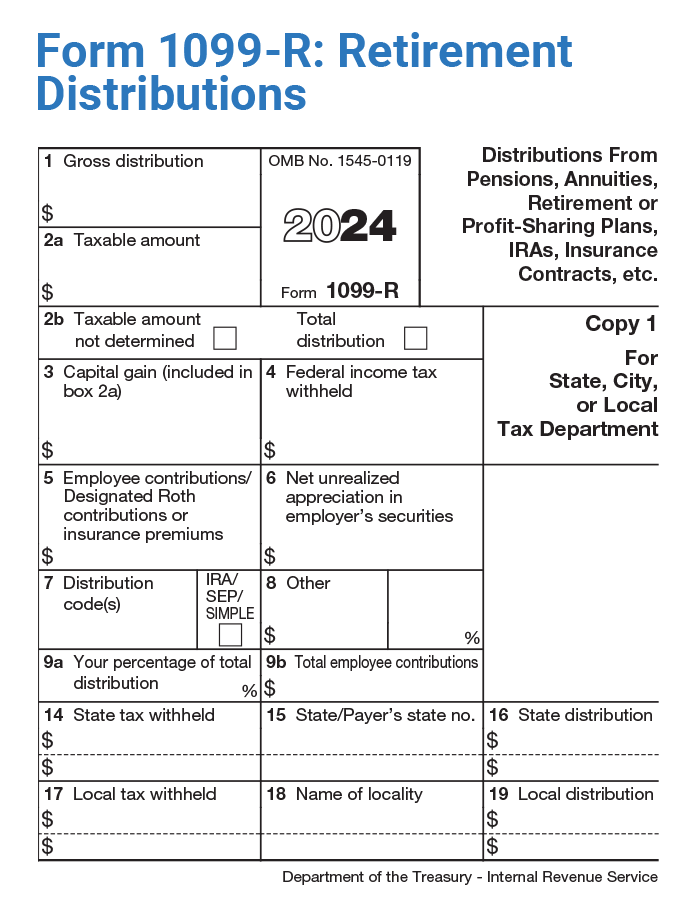
Individual retirement account (IRA) distributions are entered on lines 4a and 4b in Form 1040 and Form 1040-SR for seniors, while pensions and annuities are reported on lines 5a and 5b. The gross distribution is entered on the ‘a’ line, and the taxable amount is entered on the ‘b’ line on the right-hand side of the form.
SSA-1099
Retirees and other recipients of Social Security benefits will receive SSA-1099. This form reports the total amount of benefits paid to you over the course of the calendar year.
Depending on the amount and type of income you receive, up to 50% or 85% of your benefits may be taxed.
Reporting Income From Digital Assets
Capital gains and losses on sales and exchanges of cryptocurrency, nonfungible tokens (NFTs) and related digital assets are currently entered on Schedule D (Form 1040).
Use Form 8949 to determine the gain or loss. Sales and exchanges of these assets will be reported on the new Form 1099-DA for transactions occurring on or after January 1, 2025.
Tools and Resources on AAII.com
AAII’s “Individual Investor’s Guide to Personal Tax Planning 2024” and the accompanying “Guide to Tax on Your Personal Investments” in the December 2024 AAII Journal provide more information about the tax rules and rates.
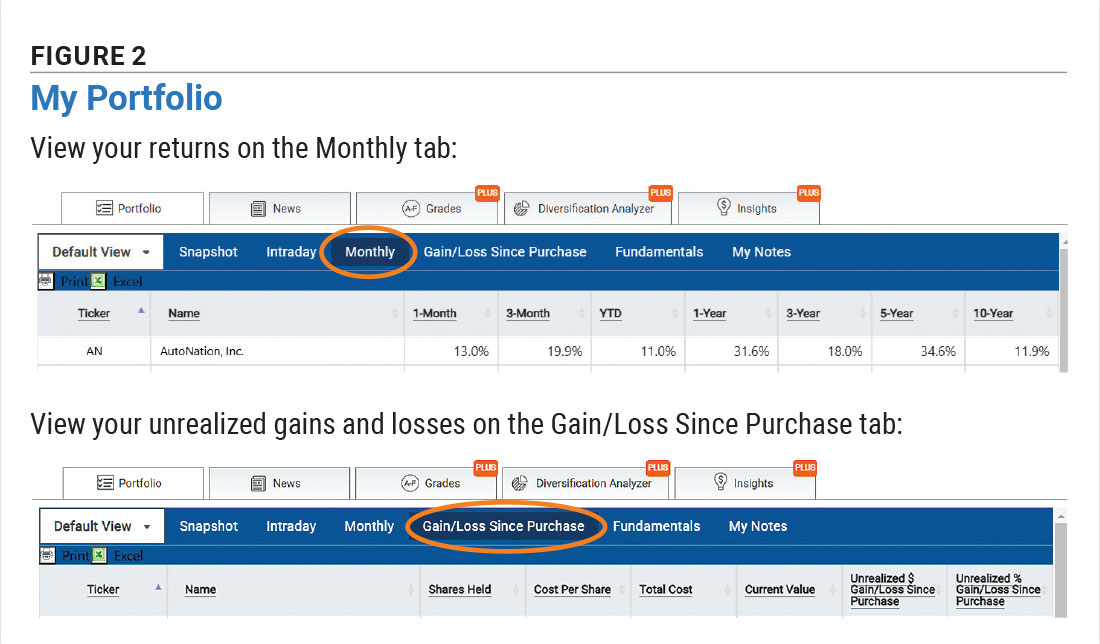
AAII A+ Investor subscribers can use the My Portfolio tool to review their returns over multiple periods and to view realized and unrealized gains and losses in a portfolio since purchase (Figure 2).
Conclusion
Understanding how to correctly use 1099 tax forms ensures that you accurately report interest, dividends and capital gains while minimizing tax liabilities. Properly categorizing investment income can help optimize your tax situation.
Discussion
FREE REPORT

DAVE G from TX posted over 1 year ago:
You need to log in as a registered AAII user before commenting.
Log InCreate an account