

Related

Portfolio Strategies
Following these nine guidelines can help reduce your financial stress and increase the odds of enjoying a successful retirement.
We all know that “retirement” no longer means just one thing.
Some may stop working altogether, but many others will continue to work in some capacity—whether or not that includes receiving a paycheck. Many of us will choose to seize these years as a time to try something new, to follow a long-held passion.
Regardless of the lifestyle choices you make, you’re part of the smart minority who have crunched the numbers and followed a plan. You understand how the financial markets work, and you’ve built a well-diversified portfolio. In short, you’ve done everything right.
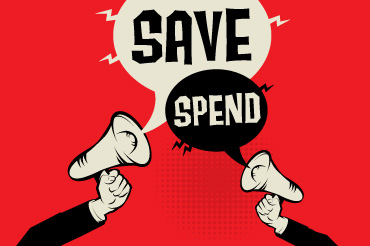
But now that your once-distant dream of retirement is at hand, what surprises you is how unsettling it can feel to switch from being a saver to being a spender. All the pie charts and spreadsheets in the world can’t necessarily alleviate your fears about outliving your money or maintaining your lifestyle.
I’ve been in this business long enough to know that these feelings are pretty much universal. Becoming a spender after a lifetime of saving means having an entirely new approach to your money. It can be tough regardless of your financial expertise or the size of your portfolio.
To ease this transition, my colleagues at the Schwab Center for Financial Research have come up with some pretty straightforward guidelines. They aren’t intended to be rigid directives, but our experience has shown us that these fundamentals can help reduce your financial stress and give you the upper hand as you move into retirement.
At this point, I’d also like to mention the benefit of consulting with an objective financial planner. Even if you’ve been successfully managing your money on your own for decades, the transition into retirement is one of those times in your life when a little personal guidance can go a long way, even if means simply confirming what you already know.
Make sure you know exactly where you stand. Gather the latest statements from all of your accounts to create a net worth statement (your assets minus your debts). Then take a look at your cash flow (money in, money out) for the last couple of years, and use this information to create a projection for the future.
Tip: Review your budget at least once a year, reassessing whether each expense is discretionary or non-discretionary.
Set aside enough cash to cover at least one year of spending. This is the amount that you’ll need to supplement the income you can count on—for example, from Social Security, a pension, or real estate investments.
Tip: Before you file for Social Security, crunch the numbers! Far too many people leave money on the table because they haven’t done the math. In general, it’s best to wait until age 70 to file in order to maximize your lifetime benefit, but every person has to consider their own circumstances.
Table 1 shows some good places to keep your cash. None will provide a great return, but that’s okay. This is about safety and liquidity, not income.
| Investment | Withdrawals | Market Value | Credit Quality |
| Checking and savings accounts(preferably interest-bearing) | Immediate | Stable | FDIC-insured |
| Money market funds* | Generally immediate(limits on writingchecks may exist) | Generally stable,but could fluctuate | Not FDIC-insured |
| Treasury bills | At maturity | Fluctuates priorto maturity | Backed by U.S. Treasury |
| Certificates of deposit (CDs)(perhaps laddered with three-,six-, and nine-month maturities) | Bank CDs mayhave penalties forearly withdrawal | Stable | FDIC-insured |
| *Money market funds are neither insured nor guaranteed by the Federal Deposit Insurance Corporation (FDIC) or any other government agency. Although these funds seek to preserve the value of your investment at $1.00 per share, it is possible to lose money by investing in them. | |||
Realize, too, that this is the minimum amount of cash you should have. If possible, you’ll also want to have enough cash to cover an additional one to four years in your portfolio. See guideline #4 below for details.
Combine all of your non-portfolio income—which could come from Social Security, a pension, an annuity, whatever—into one account. You can also put portfolio income—for example, interest and dividends—into this account. This account will be your primary source of cash, allowing you to more easily track your income and spending over time.
As an experienced investor, you understand the importance of selecting a mix of investments in keeping with your personal goals, time frame, and risk tolerance. For most people this means gradually moving away from stocks and toward bonds and other fixed income as well as cash. But it’s important not to abandon stocks altogether so that your portfolio can keep up with inflation. Bonds will not only provide you with income, but will also act as a buffer against market volatility. Cash investments protect you from having to sell stocks at a bad time.
For example, you might follow the allocation path in Table 2.
| Pre- | Early | Late | |
| Retirement | Retirement | Retirement | |
| Portfolio |
Moderate
|
Moderately Conservative
|
Conservative
|
| Percentage Allocation | |||
| Stocks |
60%
|
40%
|
20%
|
| Fixed income |
35%
|
50%
|
50%
|
| Cash |
5%
|
10%
|
30%
|
Guideline #1 recommended reviewing your income and expenses. Now divide your expenses according to whether they’re essential or discretionary. Ideally you’ll be able to cover all of your essentials with predictable income. That way you can cut back on non-essentials in a lean year.
Tip: Don’t have enough predictable income to cover your essentials? Consider purchasing an immediate fixed annuity.
It’s the rare individual whose portfolio is large enough to allow them to live off of the dividends and interest alone. Your goal isn’t to avoid tapping into your principal at all, but to do it in a prudent way.
First, review the 4% guideline (in the box below). As an example, if you want to withdraw $40,000 a year from your portfolio (and then increase that amount each year for inflation), you’ll need a portfolio of about $1 million. Sticking to this guideline can give you 90% certainty that this cash flow will last for 30 years—provided that at least 20% to 60% of your money is invested in a well-diversified mix of stocks.
Tip: If you have mutual funds in taxable accounts, consider having the distributions automatically swept into a money market fund. You may not have to sell as many shares this way.
As a general rule of thumb, plan to withdraw no more than 4% of your portfolio’s value in the first year of retirement. This 4% guideline allows you to increase that amount every year for inflation and have a 90% level of confidence that you won’t run out of money for 30 years. It also assumes that you’ll have anywhere from 20% to 60% of your money invested in a mix of stocks.
When it comes to creating a “paycheck” in retirement, tax-efficiency is king. But because you may have a variety of accounts—ranging from your 401(k), your IRA, and your Roth IRA to your brokerage account—and because each account may hold a variety of investments—ranging from individual stocks and bonds to mutual funds and exchange-traded funds (ETFs)—it can be very confusing to know what to take from where.
To help you make the smartest decisions, my colleagues at the Schwab Center for Financial Research have created the following priority system. The rationale behind this order is that withdrawals from traditional IRAs and 401(k)s are taxed as ordinary income, typically at a higher rate than the long-term capital gains rate that you’d pay when you sell investments held for more than one year from your taxable accounts. Also, leaving more money in your IRA or 401(k) provides more time for tax-deferred compound growth.
• First, draw down your principal from maturing bonds and CDs. I give an example of how to create a short-term ladder of bonds or CDs in the box below. If you’ve done this, your first step can be to tap the principal of each bond as it matures. If this is enough to supplement your other income—congratulations, you’re done. Chances are, though, that you’ll need to continue on.
• Second, if you’re 70½ or older, take your RMDs. You likely know that once you reach the age of 70½, the IRS requires you to take a yearly required minimum distribution RMD from all of your retirement accounts except a Roth IRA. [Note: A Roth 401(k) and a Roth 403(b) have RMDs that kick in at age 70½ unless you’re still working.] Whether you need this money or not, you’ve still got to take it.
Your strategy should always be to sell the lowest-rated securities in your overweighted asset classes. If your RMD satisfies your income needs, you won’t have to tap into your taxable accounts. Nonetheless, your decision on what to sell should be made in the context of all of your accounts. In other words, before you decide what to sell from your IRA, look to where you’re overweighted in your entire portfolio.
For example, let’s say that your required minimum distribution is $25,000, which covers all the additional income you need. After reviewing the breakdown of all of your accounts, you see that you are overweighted in large-cap domestic stocks and international stocks, and underweighted in bonds. By selling your lower-rated large-cap and international stocks from your IRA, you get your entire portfolio back to your target allocation.
• Third, sell overweighted and lower-rated assets from your taxable accounts. If you need to withdraw more than your required minimum distribution, look to your taxable accounts next. Sales within taxable accounts are taxed as capital gains rather than as ordinary income, with a preferential rate for gains on investments you’ve owned for more than a year. Of course, if you’ve lost confidence in any of your investments, they are also good sell candidates.
If you do have to sell highly rated securities, you can minimize your tax bill by starting with those that will generate a loss before you sell those that will generate a gain. Also, whenever you’re considering selling an investment in a taxable account, think about matching gains to losses as a way to control your taxes.
• Fourth, sell overweighted and lower-rated assets from your tax-deferred accounts. Generally, your tax-deferred accounts will be your last place to look for income, starting with outsized asset classes and lower-rated securities. If you’re 70½ or older, you know that you have to withdraw your required minimum distribution. But you can take more if you need to. Or, if you’re younger than 70½, you may still want to tap your tax-deferred account despite the fact that you will be paying taxes at your ordinary income tax rate.
It’s often smart to tap your Roth IRA last. Not only can it continue to grow without taxes, but you’ll be able to withdraw that money tax-free at a later date. Roth IRAs are also a great way to pass on money tax-free to your heirs.
A short-term ladder (maturities of one to four years) of CDs, Treasuries, or the highest-rated bonds can be a sound way to cover your living expenses for the next several years. (A ladder is made up of individual securities with a sequence of maturities over a series of years. This way, some will always be maturing while others invested for the longer-term generate higher income.)
For example, you could create a ladder something like the following:
| Amount Invested | Maturity | Type | Other Considerations |
| Two to four years of expenses |
• 6 months • 1 year • 1 year, 6 months • 2 years • 2 years, 6 months • 3 years • 3 years, 6 months • 4 years |
Mix of FDIC-insured CDs, Treasury bills and notes, and municipal bonds | A ladder can include multiple CD or bond types, depending on interest rates. Also consider municipal bonds rated AA or higher by Moody’s and Standard & Poor’s, but only in taxable accounts. |
As you probably know, it’s important to review your portfolio’s asset allocation at least annually. If one asset class has grown beyond your plan, it’s time to pare it back. Once you’re retired, this can be a prime opportunity to sell assets to generate cash.
Example: Let’s say that your target asset allocation is 40% stocks and 60% bonds, but your portfolio has drifted to 45% stocks and 55% bonds. You can sell some stocks to generate income, and reallocate anything that’s left over to bonds until you’re back on target.
As I explained, it’s often possible to rebalance your portfolio at the same time that you make your annual withdrawals. But keep in mind that rebalancing does not protect against losses, nor does it guarantee your goals will be met.
Life doesn’t just stop changing once you’re retired. Let’s say you want to sell your house and travel the world. Perhaps you’ve received an inheritance. Or maybe you’re starting a business or going back to work. As your needs change or your feelings about risk change, your portfolio and the amount you withdraw should reflect your new realities.
As an experienced investor, you likely have the drive and knowledge to follow these guidelines and manage your money wisely. However, as you keep an eye on your accounts, don’t forget about the rest of your financial life.
Ask yourself: Do you have the appropriate insurance coverage? Have you thought about when to file for Social Security? Do you understand what Medicare won’t cover and how you’ll cover the difference? Have you created an estate plan? These are all crucial issues and important pieces of your financial life.
And finally, I hope that you have included your spouse or significant other in both your day-to-day and long-term financial planning. Certainly every couple has their own way of divvying up responsibilities according to their skills and preferences. But when it comes to your money, I believe that it is essential for both partners to participate fully and have complete knowledge of their accounts and investments.
So please, don’t keep money in the closet. Share your thoughts and concerns and educate each other. If you work as a team, you’ll both be better off.
Important Disclosures: This article is no substitute for an individualized recommendation, tax, legal or personalized investment advice. Please consult a qualified tax adviser, CPA, financial planner, or investment manager where necessary and appropriate.
Investing involves risk, including possible loss of principal. Fixed-income investments are subject to various risks, including changes in interest rates, credit quality, market valuations, liquidity, prepayments, corporate events, tax ramifications, and other factors. The Schwab Center for Financial Research is a division of Charles Schwab & Co., Inc.
Portfolio Strategies

Financial Planning

Robert Mount from MD posted over 12 years ago:
Jim Y from FL posted over 12 years ago:
Ken from TX posted over 12 years ago:
Dave Gilmer from WA posted over 12 years ago:
Leon Taterus from PA posted over 12 years ago:
Pete B from NJ posted over 12 years ago:
Richard Halberg from NY posted over 12 years ago:
Stephen Menninger from VA posted over 11 years ago:
Joseph Gal from CA posted over 11 years ago:
Victor Stankevich from NC posted over 11 years ago:
Paul from CA posted over 11 years ago:
Robert Adams from IL posted over 11 years ago:
Charles Rotblut from IL posted over 11 years ago:
Michael Arighi from CA posted over 10 years ago:
Sanford Levey from MA posted over 10 years ago:
Michael Skinner from CA posted over 10 years ago:
Victor Stankevich from NC posted over 10 years ago:
Bud from Nevada posted over 10 years ago:
X from Va posted over 8 years ago:
Jay from MN posted over 8 years ago:
Joe from VA posted over 7 years ago:
You need to log in as a registered AAII user before commenting.
Log InCreate an account