AAII founder James Cloonan had two simple rules for achieving investment success. Rule #1 was “develop a consistent, well-defined approach to investing.” Rule #2 was “stick to rule #1.”
Telling you to follow a rules-based approach is one thing. Equipping you with the tools to do so is another. The Individual Investor’s Wealth-Building Process is that set of tools. It will help you and your fellow AAII members create a comprehensive plan that can be your personalized investing guide.
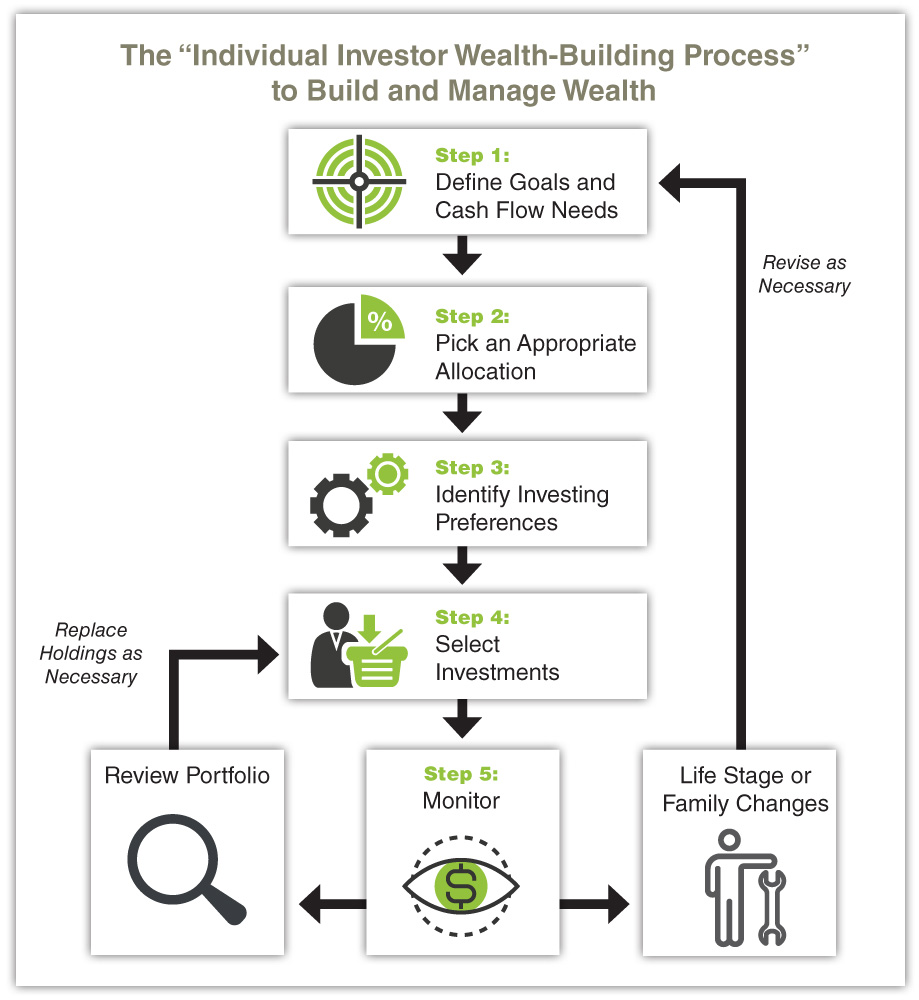
The Individual Investor Wealth Building Process comprises five steps. They are dependent, meaning one step must be done before moving onto the next, and a change at the top or bottom can lead to a comprehensive review. Picking an allocation strategy without knowing what you’re investing for can leave you holding a portfolio unsuited to achieving your goals. Similarly, it doesn’t make sense to select specific investments without first identifying what your investing preferences are.
Here are the five primary steps that should guide your investing plan.
Why are you investing? When will you need the cash? How much will you need to withdraw? Answering these three questions will guide all of your other wealth-management decisions. The answers determine your investing timeline and your tolerance for risk. The first question identifies your goals. The second question defines the length of time you plan to invest. The third question defines the amount of cash you will need to pull out of your portfolio.
Whereas defining goals and cash flow needs clarifies why you are investing, asset allocation is the framework for how you are going to achieve them. The asset classes you choose to invest in—and the proportionate amount of savings allocated to them—will significantly determine whether your goals are reached and your needs are fulfilled. Asset allocation also governs all of your other investing decisions. It enables you to narrow your focus, identify when to make portfolio adjustments and to create a portfolio that’s tailored to your financial and psychological tolerances for risk.
How involved do you want to be in the process of managing your portfolio? How much complexity are you willing to tolerate? Is minimizing costs and taxes key or are you willing to incur some higher (but not excessive) costs to pursue a more active strategy and/or have a professional make the investment decisions/provide guidance? Give those questions serious thought as the answers will vary by person. Some individual investors enjoy rolling up their sleeves and analyzing individual securities. Some find comfort in working with a financial planner or adviser. Others sleep well at night knowing their entire portfolio is invested in traditional index funds. It’s possible to be a blend of all three. Your personality, interest, time and comfort level determine what makes sense for you.
Your asset allocation strategy and investing preferences guide the decisions made here. Asset allocation determines whether you should be looking at equity, fixed-income or cash investment vehicles. (Since most of you reading this already have a portfolio, the decision about what to look at depends on the changes you will need to make to your portfolio to bring it in line with your new investing plan.) Your investing preferences will determine the types of investments you are seeking out, whether they are individual funds, mutual funds, exchange-traded funds (ETFs) or a combination of all three. You may even instruct your adviser or planner to assist you if your preferences call for working with one.
The final step is reviewing your portfolio and your investing plan for changes. The portfolio review involves monitoring your investments to ensure they are not violating your sell rules. (If one or more investment violates a sell rule, go back to the previous step and find a replacement.) Periodically check your allocation to ensure it hasn’t gone too far astray from your targets. If retired, ensure your required minimum distributions (RMDs) have been taken (RMDs are suspended for 2020) and that your portfolio is still on track to provide income for the remainder of your life. Finally, take note of any life or family changes. Retirement, marriage, the birth of a new child or grandchild or a significant change in health warrant revisiting your goals and cash flow needs to see if they are still valid. If a change needs to be made, go back to the first step and revise your investing plan accordingly.