Since they are different from stocks, mutual funds and exchange-traded funds (ETFs) require their own form of analysis. Reflecting these needs, AAII has two specific evaluators for individual mutual funds and ETFs that give you all the data and performance figures you need.
To access either of the evaluators, just type the fund name or ticker into the search box at the top left of the AAII website and watch for the fund name to appear in the autofill drop-down menu. Click on the fund name from the drop-down list.
Once you are at the Fund (or ETF) Evaluator, you will notice two tabs: Overview and Insights. Both can help you quickly assess a fund’s attractiveness.
Clicking on the Insights tab gives A+ subscribers an exclusive qualitative analysis summary of the fund. It tells you areas where the fund has fared strongly as well as highlights how consistently it has performed over the past 10 years.
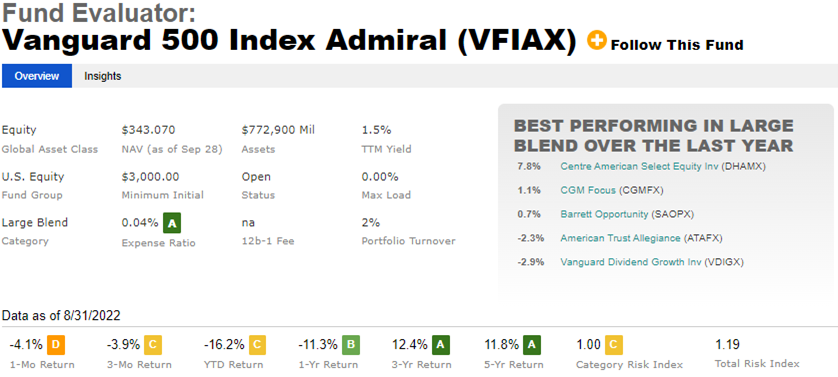
The Overview tab, as the name describes, gives you information about the fund. Here, you will find important statistics such as the fund’s size, its yield, expense ratio and—for mutual funds—the minimum initial purchase amount. You’ll also notice the fund’s grades. These proprietary AAII grades measure a fund’s returns and risk against its peers. Grades of A or B signal that the fund is better than its category peers for a specific statistic, such as three-year return. Grades of D or F signal that the fund is worse than its category peers.
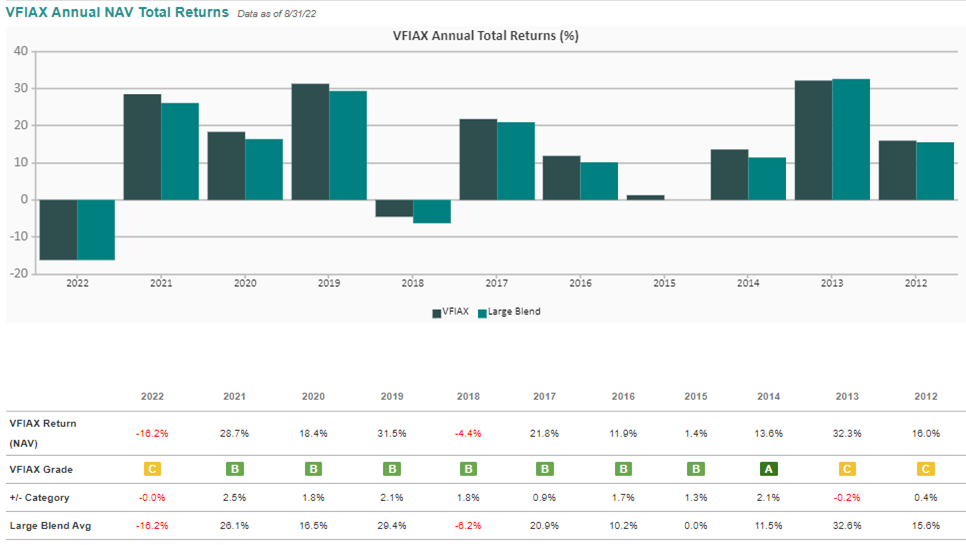
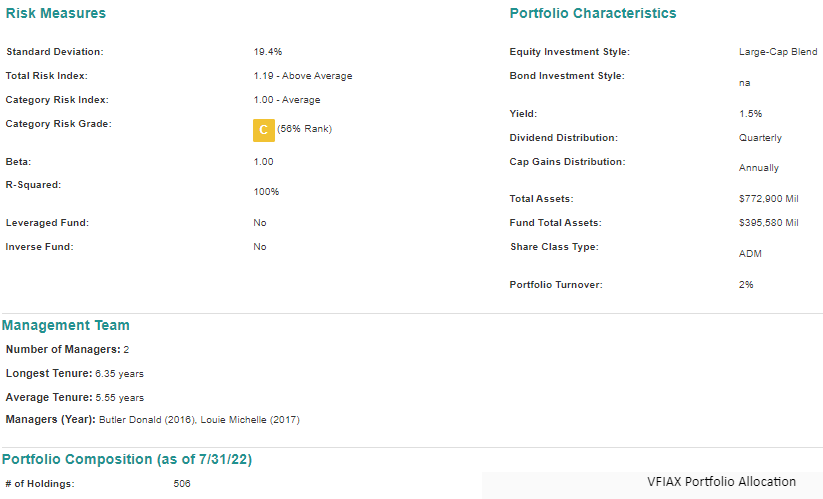
As you scroll down through the overview, you will find that it offers trailing and annual performance figures for up to 10 years. AAII grades show how the fund compares to others in its category for each year’s performance. Further down you will find information about the fund’s risk profile, its portfolio composition and its expenses. This data helps you determine whether the fund possesses the characteristics you seek.