A 12b-1 fee is a distribution and service fee charged annually to investors in a mutual fund. The fee is named for section 12 of the Investment Company Act of 1940, which is part of the U.S. financial regulation backbone as the primary source of mutual fund regulation. On the investor side, the 12b-1 fee adds to expenses. On the fund side, there has been growing skepticism about the benefit of a 12b-1 fee.
The 12b-1 fee consists of two separate charges: one is a distribution and marketing fee, and the other is a service fee. As an operational expense, the 12b-1 fee is included in the calculation of a fund’s expense ratio. Total 12b-1 fees charged by a fund are limited to 1% annually. When mutual funds were nascent, it was believed that marketing a fund would increase assets under management (AUM), which would lower expenses through economies of scale when trading.
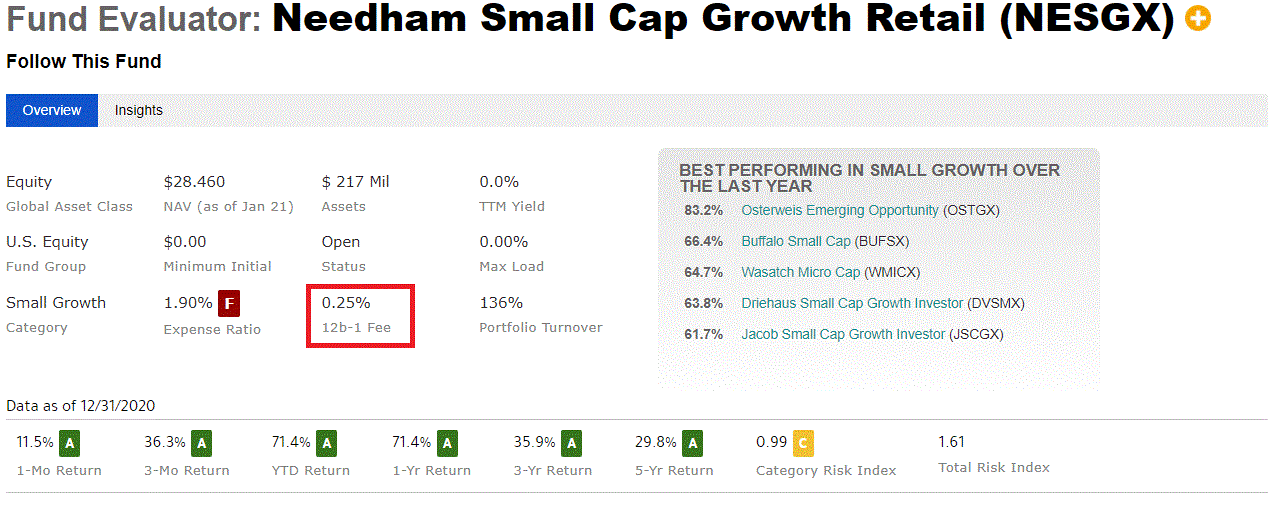
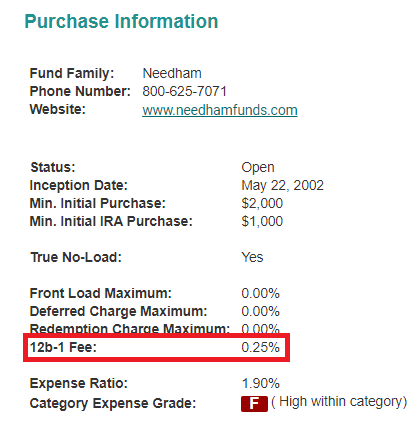
To find out whether a fund charges a 12b-1 fee and, if so, the amount of the fee, type the fund’s name or ticker into the search box at the top of any AAII.com webpage and click on the name of the fund when it appears. Alternatively, click on any linked fund ticker you see on AAII.com. At the Fund Evaluator page, the 12b-1 fee is shown in two places: at the top of the Overview tab in the summary section and also near the bottom of the Overview page under Purchase Information.
As mutual funds have become a popular and readily accessible investment option over the last half-century, accounting for trillions of dollars in assets today, there has been growing skepticism about the 12b-1 fee. How efficient or beneficial are marketing expenses to investors now due to the internet? From this point of view, investors may want to avoid funds with a 12b-1 fee—especially if the fund is large and well-known. Any expense that detracts from return significantly impacts long-term performance. A thousand small cuts compound over time.
Skepticism noted, the presence of a 12b-1 fee is not automatically an indication to avoid a fund. However, understanding the meaning of the fee may lead you to ask more nuanced questions when comparing the expense ratios of category peers. The difference in how management handles expenses is important.
Whether or not you pay a 12b-1 fee may depend on the share class of the fund you are investing in. Class C shares have the greatest likelihood of having a 12b-1 fee, followed by Class B and then Class A, the latter of which typically carries a lower fee percentage if it charges a 12b-1 fee.

