Mutual funds and exchange-traded funds (ETFs) are professionally managed portfolios of securities and, their performance is subject to the abilities of the person or team managing them. Because of this, it is important to note the management team’s tenure when considering funds for investment. This is key for actively managed funds more than for passive or index funds, though still worth paying attention to regardless.
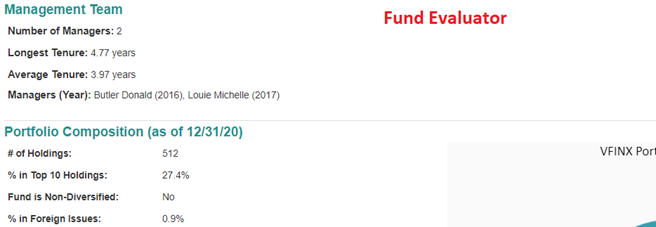
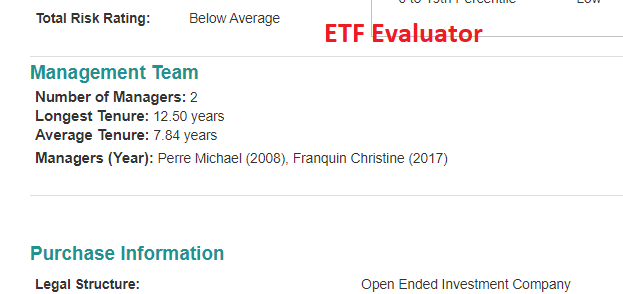
When researching a particular fund or ETF on AAII.com, you can find management tenure on the fund’s Evaluator page. Use the Search tool at the top of any AAII.com page to type in the fund’s ticker or name. When you choose the fund’s name from the resulting drop-down list, you are taken to the Evaluator’s Overview page. Scroll down this page until you see the Management Team heading. For mutual funds, this information will appear above the Portfolio Composition and Allocation graph. For ETFs, it will appear beneath the Risk Measures section.
Most fund managers are attempting to outperform the market or their fund’s category peers. Research into the impact of management on fund performance has shown that the decision-makers behind portfolios have a hard time maintaining consistent performance that beats a fund’s risk-adjusted benchmark in the long term.
With that in mind, you’ll want to note management tenure when looking into a fund’s long-term performance. How long has the current manager, or managers, been in charge of the fund? If a fund has good long-term performance but its management has recently changed, that past performance may no longer be a useful indicator of future performance. A solid record covering five to 10 years of management is considered to be indicative of a manager’s competence.
Management tenure is especially important for actively managed funds since they carry higher expense ratios to compensate for the additional value that managers hope to provide from their decisions. Although a fund’s strategy may remain unchanged from one manager to the next, there may be different interpretations as to how to carry out the objective outlined in the prospectus. This is also why it is important to compare funds and ETFs to their category peers. How are portfolios that follow the same strategies or benchmarks faring compared to each other?
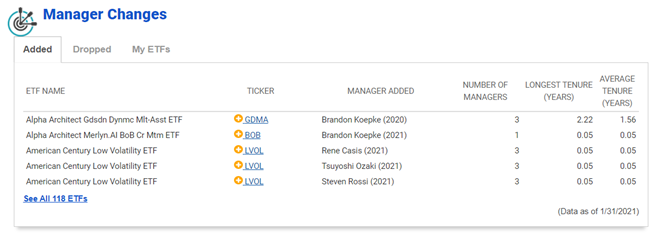
Both the Funds area and the ETFs area offer a quick stop to see which portfolios have had recent management changes. At either area, scroll down to the section with the heading Manager Changes. You will see a preview of funds that have had a manger added or dropped as of the last month-end, and you can expand that list to see all funds where managers have been added or dropped. There is also a My Funds tab where you can see whether any of the funds or ETFs that you follow in My Portfolio have had a recent manager change.