When looking at an exchange-traded fund (ETF) within AAII’s ETF Evaluator, you’ll notice two different return figures. One return is based on price and the other is based on net asset value (NAV). What can you tell by comparing the two?
Unlike mutual funds, ETFs are marketable securities with share prices that fluctuate all day according to the buying and selling habits of investors. Because of their tradeable nature, the price paid per share may not match the underlying valuation of the ETF’s net assets, which is the assets of a fund minus its liabilities. The NAV is calculated once per day after the market close.
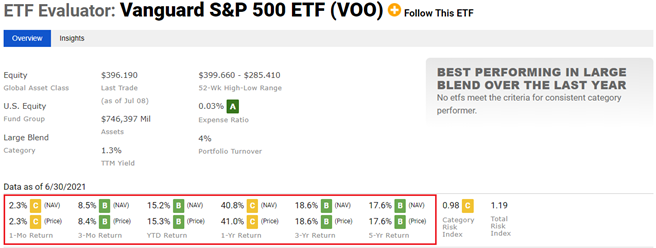
Over the long term, an ETF’s price return and NAV return will track closely together. However, a spread between the price and NAV returns may indicate either a buying or selling opportunity, depending on whether the ETF is trading at a price that is a discount or premium to its NAV.
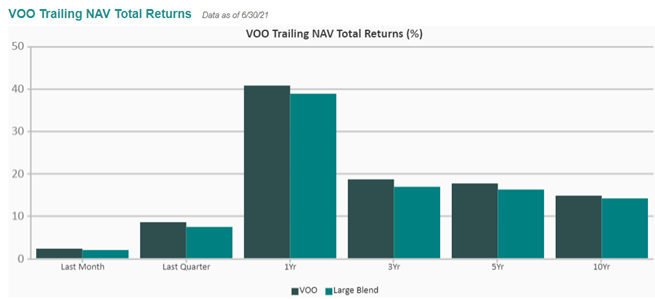
An ETF’s price return can deviate from its NAV return for several reasons. Within a given day, investors can sour on a particular stock, sector, commodity, investment strategy or even the issuing fund parent company itself. Investor sentiment in reaction to news related to a particular stock or set of stocks can have bullish and bearish implications on an ETF’s price, even though the underlying NAV hasn’t changed.
Although individual investors may not have the resources to aggressively take advantage of these premium and discount spreads on particular ETFs the way an institution may be able to, a spread can indicate a broader market trend worth noting.
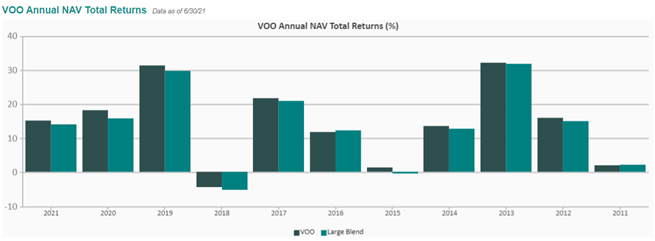
The diversity of an ETF’s assets also plays a role in the potential spread between its price and NAV. ETFs with exposure to a large array of investments may be subject to different types of investor sentiment at the same time. The composition of an ETF is available near the bottom of each ETF’s Evaluator page.
You can find more ETF resources on the A+ Investor Toolkit page. ETF Tools are at the bottom of the page, under the mutual fund tools.

