Some investment strategies work equally well if the total assets under management (AUM) is small or grows to many billions. Specialized approaches such as actively managed small-cap value mutual funds can become difficult to manage effectively if assets grow too large. Hence, managers may close to investors and then reopen at a later date. Recent fund closings and reopenings are reported to A+ Investors to keep you up to date.
A fund management company may decide to close the fund to new investors when it determines that it can no longer effectively maintain its investment style and flexibility. That is normally good news for the investors holding the fund, as it is placing the interests of the investors over the advisory fees collected from a larger fund.
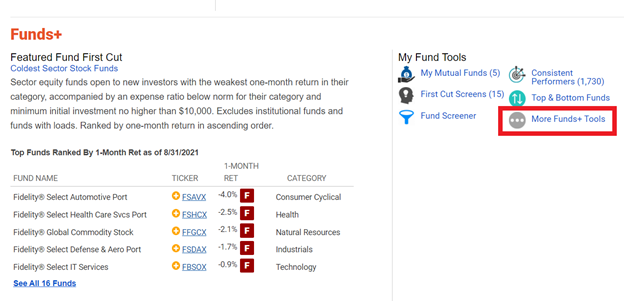
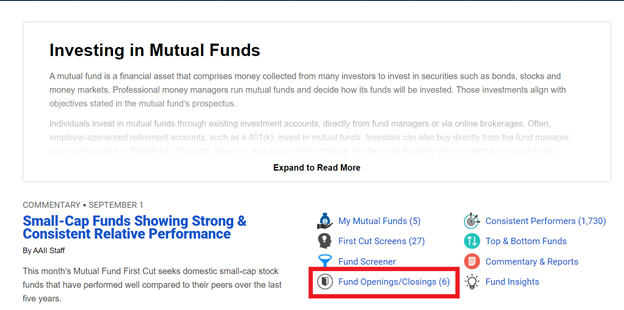
A+ Investor subscribers can quickly see if any fund has recently been closed or reopened to new investors at https://www.aaii.com/funds/openclose. To navigate to this page from the A+ Investor dashboard, click on More Fund Tools and choose the Fund Openings/Closing table from the list on the Funds page.
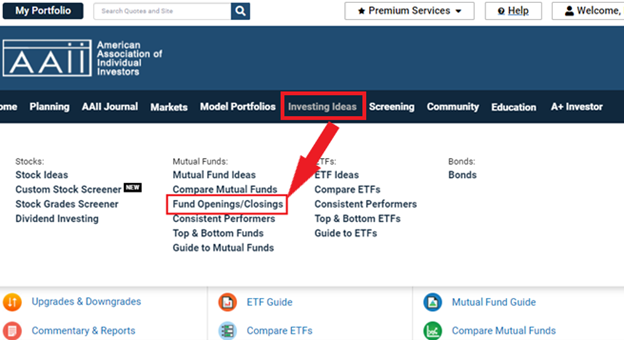
Alternatively, you can choose Fund Openings/Closings from the drop-down menu of the Investing Ideas tab found on the main navigation ribbon at any AAII.com page.
Investors in traditional open-end mutual funds are buying and redeeming shares directly with the fund. The fund advisers are normally paid an advisory fee on a sliding percentage scale that may decrease as assets under management increase, but the total fees collected grows. Occasionally, some portion of the fund adviser’s fees is subject to the fund’s performance relative to the market.
While advisers collect greater fees if assets under management grow, larger funds are not always in the best interest of the mutual fund investor. So fund size matters, but whether larger is better than smaller depends upon the investment objective of the fund. With a large stock index fund, the more dollars under management the better. This is because it operates in a very liquid segment of the market, where large transactions are less likely to impact share prices. Furthermore, since some fund expenses are fixed, spreading these expenses over more investment dollars should reduce expenses as a percentage of fund assets.
On the other hand, funds with investment objectives that cover less liquid market segments (small stocks or emerging markets) can grow too large. Transacting into and out of securities in these segments can take time and be costly, making portfolio changes difficult to accomplish. It is common to see small-cap funds move into the mid-cap segment if assets under management grow too much. This is especially true with actively managed funds where the managers are picking specific stocks and sectors and changing their investments more frequently.
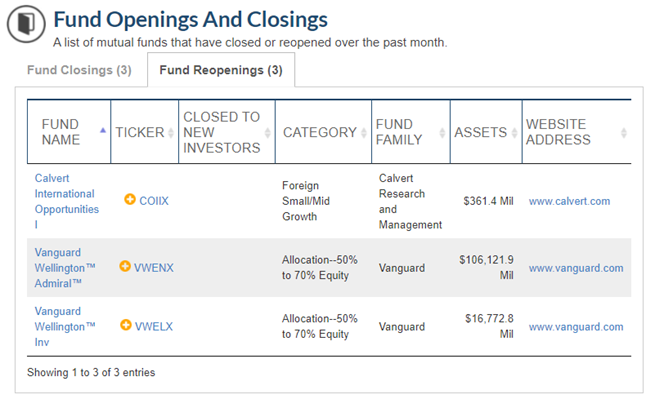
At the Fund Openings/Closings link, you’ll see separate tabs listing the funds that have closed to new investors in the last month and the funds that have reopened in the last month. The lists can be sorted by any column by clicking on the up/down arrows in the column heading.
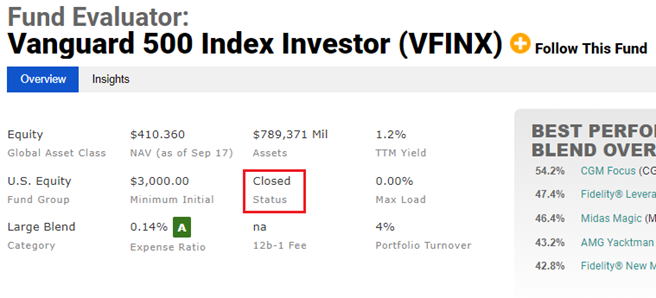
To check the status of an individual fund, type the fund name or ticker in the Search box at the top of any AAII.com page and select the stock from the drop-down list to open the Fund Evaluator. The first section of the fund overview notes the open or closed status of any fund.