Emotions affect the decisions we individual investors make despite our best intentions to eliminate what appear to be mundane, identifiable biases. Research shows that the pain experienced from a loss is psychologically greater than the satisfaction or pleasure of an equivalent gain. However, a quantifiable system for grading stocks lays the base for executing a selection strategy free from our emotional biases.
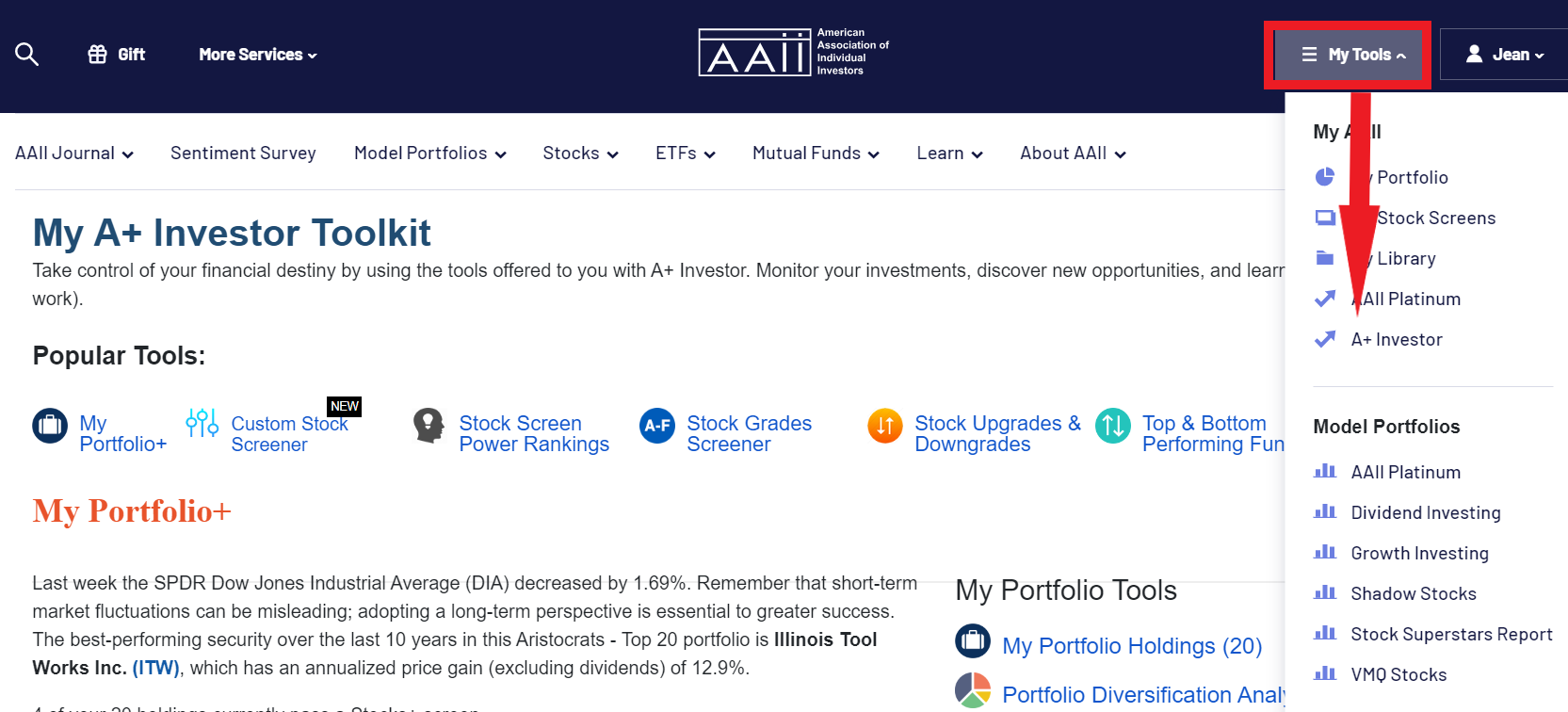
The A+ Stock Grades system is a grading tool based on percentile rankings of multiple key metrics within five investment factors: value, growth, momentum, earnings estimate revisions and quality. They represent a summary of a company’s fundamentals and give you a quick overview of how a stock rates based on the five investment factors that have been shown to produce market-beating results. A+ Investor subscribers can access tools using the stock grades from the A+ Investor Toolkit page (click on A+ Investor from the My Tools menu at the far right on AAII.com).
According to investment theory, stock prices in an efficient market reflect all publicly available information concerning that stock. The price of a stock in an efficient market reflects, on average, its true value. Any variability in price is attributable to a stock’s “random walk,” or the short-term fluctuations up and down that are inherently unpredictable.
However, adherents to the view that markets are inefficient believe that variations in the ways people receive and evaluate information cause the prices of some stocks to deviate significantly from their true value. Psychological factors impact perceptions of data, compromising an essential component of efficient market theory—a rational decision-maker.
Emotions affect the decisions investors make despite our best intentions to eliminate what appear to be mundane, identifiable biases. Research shows that the pain experienced from a loss is psychologically greater than the satisfaction or pleasure of an equivalent gain. For example, think about how you would react to a loss of $10,000 compared to a gain of $10,000.
Loss aversion makes it difficult for investors to come to terms with an investment that has run its course. Overlapping this bias is the endowment effect: the tendency to overvalue assets already owned. Investors cling to assets because of familiarity, comfort or emotional attachment, making a decision to separate from an investment difficult. Investors may also prefer to hold on to investments they already have based on the assumption that another choice is likely to be inferior or disrupt their portfolio, also known as the status quo bias.
Accumulating losses and viewing them personally can lead to regret aversion, wherein investors fail to take action due to the fear of experiencing bad outcomes. This bias stems from the desire to avoid feeling responsible for a poor result. Your brain seeks a rational explanation for the pain of your loss, which can in turn cripple your needed confidence to be decisive.
With the A+ Stock Grades system, not only do you get a letter grade for each of the five investment factors, but you can also see the percentile rankings of the underlying data points for each grade. We also provide a list of the company’s competitors and their letter grades for comparison. These grades are calculated and updated daily.
This grading system is woven into A+ Investor resources. There are several tools that enable you to compare and select stocks with the A+ Stock Grades system:
You can access these tools from your A+ Investor Toolkit page.

