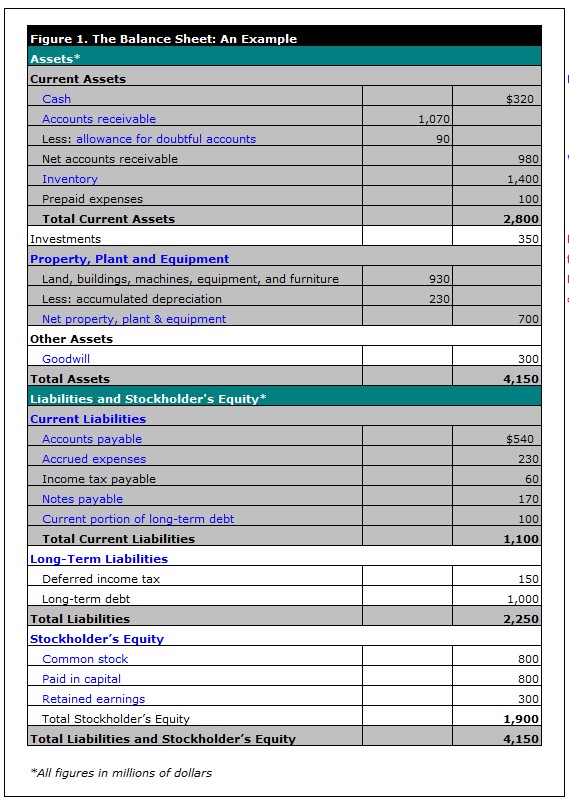
The balance sheet of a firm represents the financial history of a firm at one point in time—normally the end of a company's fiscal quarter or year. The income and cash flow that occurs during the period into and out of the accounts represented on the balance sheet are not reported, but the end-of-period account balances reflect a summary of all transactions. It is best to think of the balance sheet as a single snapshot at the end of the quarter or year, while looking at the income and cash flow statements as photo albums that capture events over a period of time.
While the balance sheet is also called the statement of financial position or statement of financial condition, the term balance sheet indicates an important characteristic—the balance sheet must balance. Asset values must equal the sum of liabilities and owner's interest (or equity).
Assets = Liabilities + Equity
The assets consist of the items owned by the firm and used to conduct business. The liabilities and equity represent the claims against the value of the assets. Liabilities are what the company owes to others, while the owner's interest or equity essentially is what is left over. Equity is the value of all your assets less all your debts, similar to your personal net worth.
A typical, if simplified, balance sheet is presented in Figure 1. The complexity and detail of the balance sheet presentation varies from company to company and industry to industry. Companies also publish notes to accompany the financial statement, which help to explain the construction of the various accounts listed in the balance sheet as well as some of the assumptions made by management when presenting the figures. While we will not cover these notes, they are an important element that should be examined during the analysis process.
The balance sheet format is relatively standardized, although due to the unique nature of some industries, such as banks, the format does differ. Standardization makes it easier to become familiar with the statements, allowing investors to identify key elements and compare company performance.
Within the balance sheet, various accounts are placed in standard classes and presented in order of liquidity. More liquid short-term assets and current liabilities are placed first. A brief examination of each account should help bring the balance sheet into focus.
Continue to Step 3 »