

Related

Behavioral Finance
Grasshoppers and Ants in Retirement


Financial Planning
A study looking at levels of happiness among retirees when engaged in various activities found that retirees are happier when they engage in active activities over passive activities.
by Anine Sus | April 2019

A study looked at how retirees are spending their time in retirement and their reported levels of happiness. Using data from the Health and Retirement Study (HRS), which surveyed Americans age 51 and older, it was found that retirees are happier when they engage in “active activities”—including being social, walking or another form of exercise—over passive activities like being at home or watching TV. Even though retirees find themselves to be happier when being active, they tend to spend more of their time participating in the designated passive activities.
Prior research has discovered that retirees who spend most of their time in “social isolation” exhibit signs of worse health in the long run. One study even found that being isolated increases the risk of early death. In addition to a decrease in cognitive ability, high blood pressure and lack of immunity were also cited as issues that can arise from primarily staying at home in retirement.
Those who were surveyed, on average, were retirees age 71 who reported two medical conditions. The average annual household income was $80,501 and the average household wealth of those who responded was $630,304. No correlation was found between household wealth and how retirees chose to spend their time.
The average retiree spent three hours a day watching TV in addition to three hours staying at home. These yielded some of the lowest measures of happiness, as did health-related activities like doctor visits. On the active side, retirees spent less than two hours a day socializing and less than an hour exercising. They reported much higher levels of happiness for these activities even though less time was spent on them than passive activities.
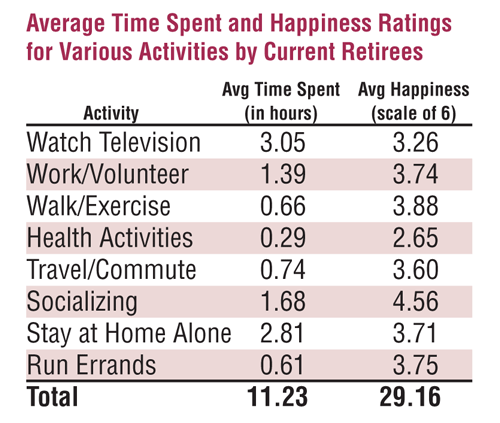
This gap that the study’s authors found between “actual time spent” and “optimal time spent,” they believe, could “lead to reduced happiness, loneliness, or even depression.” They suggest that financial advisers integrate a form of counseling into their client services for retirees, or at least have a referral program in place to ensure that those in retirement can allocate their time to the benefit of their overall health.
Source: “Time Allocations and Self-Reported Happiness of Retirees: An Exploratory Study,” by Tao Guo, Ph.D., CFP, Yuanshan Cheng, Ph.D., CFP, Philip Gibson, Ph.D., CFP, and Louis J. Pantuosco, Ph.D.; Journal of Financial Planning, March 2019.
Behavioral Finance
Financial Planning

No comments have been added yet. Add your thoughts to the discussion!
You need to log in as a registered AAII user before commenting.
Log InCreate an account