A research review found no lasting improvement in the operating performance of companies targeted by hedge fund intervention.
Hedge fund intervention is the practice of activist investors seeking corporate control in companies in order to change operations in hopes of gaining larger returns and yields for shareholders. The ethics behind this practice are debated, as hedge fund investors are viewed by some as engaged shareholders that aid company success and by others as only affecting temporary price gains that hurts long-term shareholders.
After reviewing the academic literature, researchers found the long-term performance of stocks targeted by activist investors to be mixed more than previously reported. They further found no lasting improvement in the operating performance of these companies. The study covered a sample of 1,964 activist interventions during the period of 1994 through 2011.
Cumulative equal-weighted returns averaged 6.8% and 5.9% on a one- and two-year basis, respectively, on a pre- to post-activism basis. Though “significantly positive,” these average returns mask what actually occurred on a per-stock basis. The returns “are primarily driven by the smallest 20% of targets, with an average market value of just $22 million. Equal-weighted average returns for the larger 80% of targets are initially positive but become insignificant within three months of activism and become an insignificantly negative 1.6% at the end of two years.”
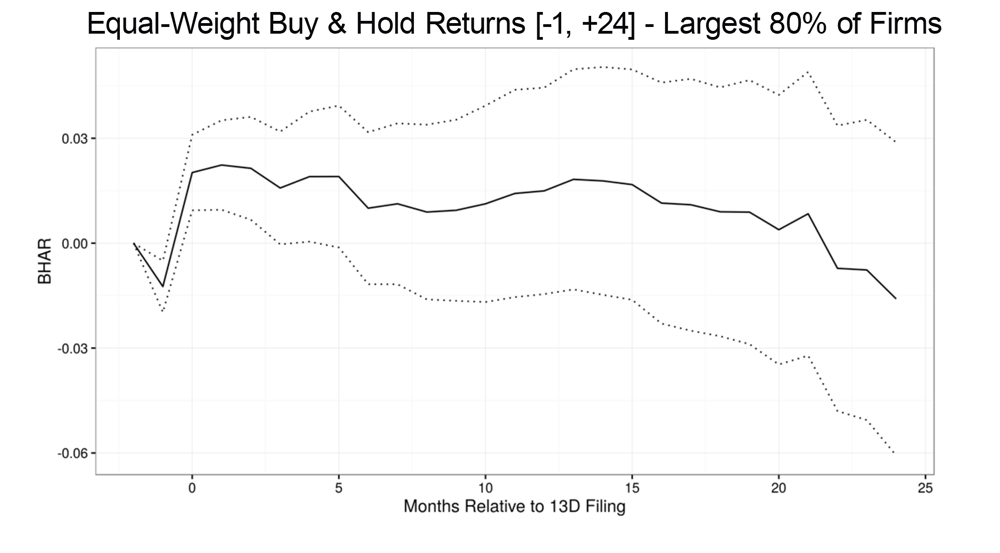 Changes in operating performance were assessed using a few different measures. No “consistent evidence” was found to show that return on assets (ROA) significantly changed following activist campaigns. Tests of asset turnover led to no findings of any significant change in aggregate. Changes in financial leverage ratios were also mixed, leading to no clear indication of any trend associated with activist interventions. Capital expenditures declined for the largest companies, but the changes were otherwise insignificant when measured on a median and equal-weighted basis. Even analysts’ consensus earnings forecasts were not found to undergo any clear change in response to activist campaigns.
The researchers concluded that although there are studies that support the benefits of hedge fund activism, activism interventions do not drive long-term wealth for the average investor. However, there is no support that intervention destroys value either, which fails to support critics’ proposals to restrict activism.
Source: “Long-Term Economic Consequences of Hedge Fund Activist Interventions,” by Ed deHaan, David Larcker and Charles McClure; ECGI, December 2018.







No comments have been added yet. Add your thoughts to the discussion!
You need to log in as a registered AAII user before commenting.
Log InCreate an account