

Related

AAII Stock Ideas
The idea of being a more active stock investor boils down to honestly evaluating your portfolio and removing weaklings at the earliest possible date.

The world is moving faster by the day. Not just technological change ... but the speed in which industry peers find ways to beat their competitors. For some of you, this has made a more active approach an option over traditional buy-and-hold investing. As stocks that once looked fundamentally promising can sour quickly and become a drain on your portfolio, it makes sense to monitor your portfolio closely and continuously purge weak stocks at the earliest possible stage to avoid undue harm.
Note that I am drawing a clear distinction between active investing and active trading. This article is not a call to becoming a day trader ... or a slave to the market, guzzling Red Bull all day long while watching eight computer monitors.
Rather, it is about proactively making sure that you stay in the healthiest fundamental stocks to give yourself the best chance to outperform. That’s because at the end of the day fundamentals are what truly drives stock prices. Why? Because we are actually buying an ownership stake in a company (not just random stats or a chart pattern on a screen, but a real living/breathing entity with a clearly definable value).
My goal for this article is twofold. First, to discuss the advantages of a more active investing approach. Second, to show you easy ways to become more active, including a method that takes only 10 minutes a month.
Some investors are more focused on preserving capital, while most have their eyes on outperforming the market. I believe that the only way to accomplish the latter task is to have timely stocks. The number one ingredient of timely stocks is improving fundamentals, which lead more investors to bid up shares.
The main fundamental criterion that matters is quarterly earnings. It truly is like having a final exam every three months. You should only keep those stocks scoring the highest grades in terms of earnings beats and raised guidance that point to improving earnings prospects ahead. Those stocks that fail the exam need to be sold, as investors will continue to run away and drive down the price. Plus, those companies that have missed expectations in the past are more likely to miss again in the future. That’s how a 10% loser becomes a 30% loser and can become a 50% loser over time.
The proof of the above statements goes all the way back to the late 1960s with the academic work on the post-earnings-announcement drift. That was later refined by Len Zacks in the Zacks Rank system, which focused on earnings estimate revisions. [Editor’s note: Earnings estimate revisions are one of the five factors that are given grades by AAII’s new A+ Investor: www.aaii.com/plus.]
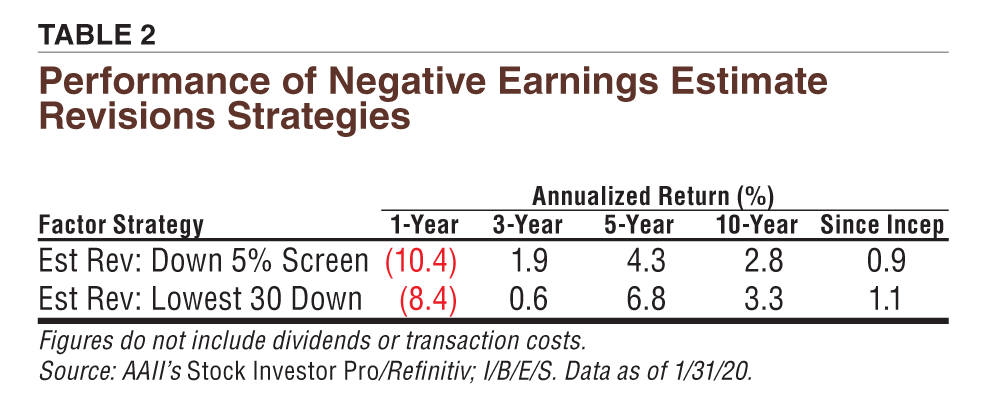
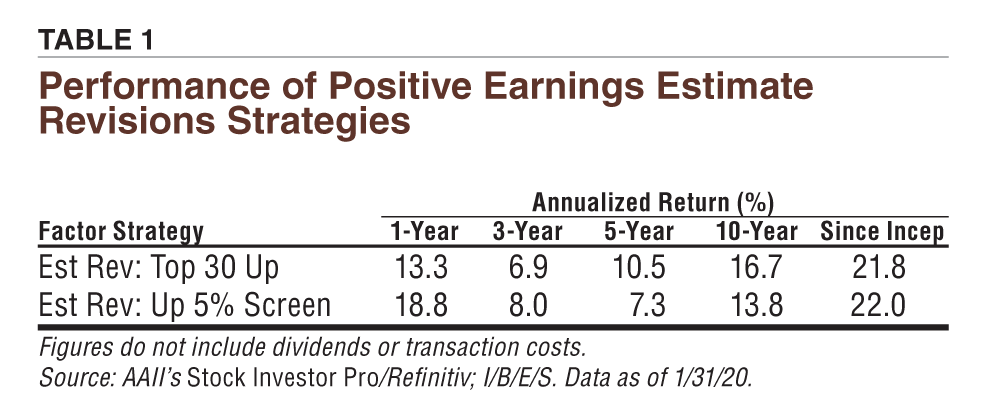
The power of earnings estimate revisions shows up with flying colors through the two AAII factor strategies with the best consistent returns, as shown in Table 1. It also shows up in the two worst-performing factor screens, as shown in Table 2. These latter screens identify stocks with the most negative earnings estimate revisions.
Do not gloss over this information too fast. The gap between the stocks with the best earnings outlook and those with the worst outlook cannot be overstated and calls on each of us to shed those stocks that falter during any earnings season.
So, yes, most of us climb on board a stock with long-term aspirations. However, once the fundamental story sours, likely because of an earnings disappointment, we need to sell our shares and walk away. If not, then you risk being in untimely shares that erode your annual return.
The date that it sours will vary. It truly could be two months, two years or even two decades after purchase. But no matter when it happens, you need to be prepared to take immediate action to purge fundamental weaklings before they steal too much performance from your portfolio.
Some of you have very strict rules to select your stocks. Often that comes from using tried-and-true strategies with proven outperformance (no shortage of those on AAII.com—more on that below). Others have more of a set of guidelines that points them in the right direction.

Unfortunately, the same high standards used to add the stock go often by the wayside as time rolls on. This leads to being in stocks with less-than-stellar fundamentals and thus a less-than-stellar chance to outperform.
The easiest way to solve that is to ask yourself this simple, yet powerful question:
Would you buy the stock again today?
If the answer is no, you wouldn’t buy it again today, then take that as a sign to sell your shares. The reason is because whatever catalysts first drew you to the shares are now missing. So it’s better to sell the stock and move that money to new positions with the right fundamental drivers in place.
Here is another way to look at the situation. Likely you own a portfolio with between 10 and 30 stocks. Yet remember there are approximately 6,000 exchange-listed stocks you could choose from. So, when you are narrowing down to such a small group to own, why would you keep any that you know don’t make the grade?
Our previous examples were more about noting the difference between good and bad stocks. Now we get into the tougher territory of the difference between good and better stocks. And, yes, we want the better ones in our portfolio.
Imagine that your research process unearths a stock worth $75 that is only priced at $50. Gladly, you already have some cash on hand in your portfolio and you snap up shares immediately.
As time rolls on this stock proves you right. Week by week and month by month, it carves out extra gains over and above the market averages. By this stage, the stock has risen to $70.
All the while, you continue to research to find more opportunities. Lo and behold, you discover another stock with 50% upside potential. But unfortunately, all of the stocks currently in your portfolio have healthy earnings and still have attractive fundamental qualities that would compel you to buy them again today.
What should you do?
In this case, you should be willing to sell a still-attractive stock for one that just happens to be more attractive. So, there should be no shame in taking your profits on that original stock that made it from $50 to $70.
Sure, you can make a good argument that it is still under fair value at $75. But that is only 7% above current levels. It is much better to use that cash in the new position that your process says has the more appealing 50% upside potential.
Another way to state this is not to fall in love with your stocks. Objectively measure their merit over time and only keep those in your portfolio that have the best chance to outperform. This includes rotating money from a good opportunity to a better one when that trade-off presents itself.
Just for good measure, I want to add in some good ol’ fashioned investment wisdom from my father, a 40-year veteran certified financial planner (CFP) who retired just a few years back. He is the one who taught me finance starting at age 12 and whom I still go back to for sage advice from time to time.
Here is the advice he would give me in a circumstance like this.
“No one ever got poor selling a stock for a profit.”
“Pigs get fed and hogs get slaughtered.”
The sum total of these statements is to realize that it is never a bad idea to take profits when they avail themselves. This is especially true if you believe you have more upside potential elsewhere.
So, don’t let ego and emotions get in the way of the right decision. If you objectively know that a new opportunity offers a more attractive rate of return, then you should be willing to sell a lesser position in your portfolio to make room for this superior investment. Doing this on a regular basis gives your portfolio a better chance to outperform.
One of the main reasons that investors take a pass on a more active investing style is that they are concerned it takes too much of their time. That’s because many still have full-time day jobs they need to focus on along with their family and friends. Even retirees have good reason to not want to be tethered to their computer all day long.
Yes, there certainly are some active approaches, like day trading, that eat up considerable time without a commensurate improvement in your annual returns. (In fact, most day traders see devastatingly poor results.) However, it should be clear from the outset of this article that I was never talking about day trading.
Instead, the idea of being a more active investor is really about honestly evaluating your portfolio and removing weaklings at the earliest possible date. If you consistently do that, then it will be all the easier to make sure your money is allocated to those positions with the most upside potential.
Yet even still some may think that a more active investing approach will not fit into their lifestyle. So to dispel that false notion, I want to point out an active investing strategy that only takes 10 minutes a month while still delivering terrific results.
The starting point is using a proven stock screening strategy. The key word is “proven,” as you want to make sure that it consistently produces a return better than the market average.
We all know how easy it is for a strategy to have a great year only to falter the next. So, it is about looking at the returns as far back as possible—at least five years and preferably 10 years.
 The reason why following a screen is so effective is because it accomplishes all of the vital tasks noted earlier in this article. First, the desire to own timely stocks with the best fundamental catalysts in place. Second, most certainly they would be stocks you would buy again today because they meet the stringent criteria of the screen or they would be removed. Finally, they accomplish the goal of pointing toward the better opportunities to be in.
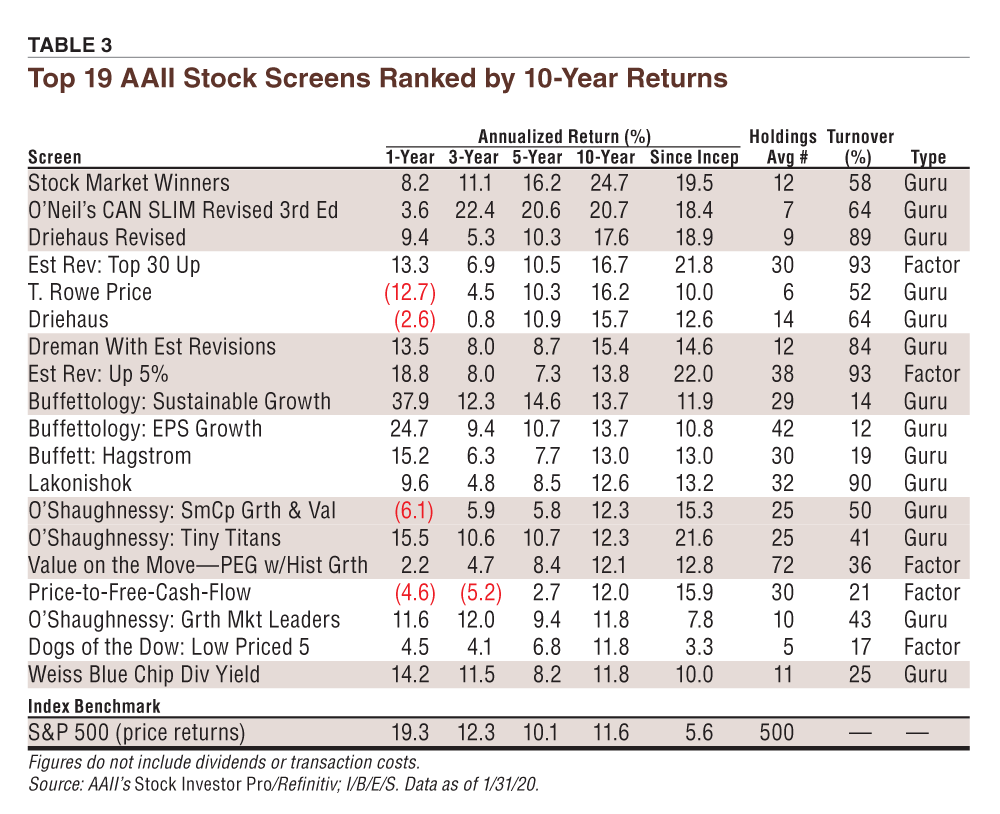
As AAII members, you have access to 19 strategies that currently have returns exceeding the S&P 500 index over the past 10 years. Seven of them are factor strategies, including the earnings estimate strategies previously shared, while the other 13 are guru strategies. Table 3 lists all 19 of the top strategies in order of their 10-year performance.
Once you have a strategy in place that you want to follow, then all you have to do is check it once a month. The strategy I’ve long used with stock screens is to first sell any stocks that are no longer on the screen and then buy the new ones appearing on the screen.
Yes, it really is that simple. Those who want to be more active can increase the frequency to every two to three weeks. Those who think this is still too much effort can adjust their portfolios every other month or once per quarter. But in the end, it is as simple as running the screen, selling those that are now gone and adding the new ones to make sure you are in the healthiest fundamental stocks with the best odds to outperform.
This is one of those articles where there are many other additional points I could make about the virtues of a more active investing style—like how other impediments to this approach have been removed. For example, the cost of commissions has been driven down to zero at the largest online brokers.
Another topic is the false fear that comes from higher taxes from short-term capital gains. The easiest solution is to employ the more active investing style in IRAs and other tax-advantaged accounts.
For those of you with middle to higher incomes, it only takes a modest improvement in annual returns to overcome the higher capital gains tax rate. I believe the tax speed bump is lower than many people realize and think it should not discourage them from selling stocks when better opportunities exist elsewhere—even if that means taking on the short-term capital gains tax.
Hopefully, you get the main point. A more active investing style can lead to a higher rate of annual return. Further, it can be done by following a method requiring just 10 minutes a month.
AAII Stock Ideas

Investing Gurus

AAII Stock Ideas

Henry Catherino from Michigan posted over 6 years ago:
Ken Langtry from TX posted over 6 years ago:
You need to log in as a registered AAII user before commenting.
Log InCreate an account