



Related

Investor Professor
Opportunity for an investor arises when reported earnings veer from expectations, or analysts revise their estimates. AAII provides the screens and data you need to identify stocks with earnings surprises or revisions.
by John Bajkowski | March 2020

We are taught that the stock market is a very efficient pricing system. Stock prices generally reflect the market’s consensus of a full array of company, industry, regulatory and economic forces in play at any time. However, the market is also in a constant state of flux and may not always react rationally and instantly to new information. Benjamin Graham understood the challenge investors face and put forth that for an investor to beat the market they first must have a sound theory, then have opinions and projections that are not only correct but also different from those of the market.
Stock prices are established through expectations and adjust as those expectations change or are proven wrong. A slight change in projections can have a major impact on stock prices, especially if the multiple or price-earnings (P/E) ratio investors are willing to pay for a given level of earnings also expands or contracts. Stocks with high price-earnings ratios not only have high expectations, they also possess a higher anticipated certainty of realizing their growth. Lower multiples reflect lower perceived prospects as well as greater risk and uncertainty of achieving results.
Consensus estimates are the average of the estimated earnings and sales levels made by analysts who are following specific companies. Widely followed firms such as Amazon.com Inc. (AMZN) have over 40 analysts providing estimates, while smaller firms have just a few analysts following them. Over 460 companies have just one analyst projection. Just over 3,750 companies currently have earnings estimates from the universe of 4,641 exchange-listed companies tracked by I/B/E/S, a reporting service used by AAII.
When using earnings estimates, the first rule to consider is that the current price generally already reflects the consensus estimate. There is nothing to gain by simply looking for companies with high levels of expected earnings growth. Studies show that over the long run, stocks with high expected earnings growth tend to underperform stocks with lower growth projections. It is difficult to continually meet and exceed high expectations over an extended period of time—commonly referred to as reversion to the mean. The most profitable earnings estimate strategies focus on surprises and revisions.
Stock prices of firms that significantly exceed analyst expectations (positive earnings surprise) tend to outperform the market, while those with negative surprises tend to underperform.
The impact of the earnings surprise is longer lasting than most would think. The greatest effect of the surprise can be seen immediately, but the impact of the surprise can be felt for as long as a year. The impact tends to be longer lasting for negative earnings surprises. It simply takes time for the market to recognize that a fundamental shift is taking place. This means that it does not generally make sense to be a bargain hunter and buy a stock after the initial price decline on a negative earnings surprise. There is a good chance that the stock will continue to underperform the market for some time. Separately, it may not be too late to buy into an attractive stock after a better-than-expected earnings report is released, provided the fundamentals are still valid.
Not surprisingly, large firms tend to adjust to surprises faster than small firms. Larger firms are followed by more investors, analysts and portfolio managers acting on the information more quickly and thoroughly.
Firms with a significant quarterly earnings surprise also often have earnings surprises in subsequent quarters. This is sometimes referred to as the “cockroach effect”—like cockroaches, you rarely see just one earnings surprise.
Studies of earnings estimates by David Dreman found that stocks with lower valuations reacted more strongly to positive earnings surprises than did highly valued stocks. A positive earnings surprise for stocks with a high valuation (as measured by factors such as the price-earnings ratio) is not truly a surprise. It is a reinforcing event that does not change the perception about a company. However, positive earnings surprises for out-of-favor stocks are event triggers that initiate a perceptual change among investors. Dreman’s work notes that the opposite happens with negative surprises. Out-of-favor stocks often barely flinch, while highly favored stocks generally have significant declines after a negative surprise.
The chance of an earnings surprise is greater if the range of estimates for a company is wide; however, the price move can be more dramatic if an earnings surprise occurs for a firm with a very tight range of estimates and the actual earnings are well outside that consensus.
Changes in estimates reflect changes in analyst expectations of future performance and lead to price adjustments similar to earnings surprises. When earnings estimates are revised significantly upward—by 5% or more—stocks tend to show above-average performance. Stock prices of firms with downward revisions show below-market performance.
Changes in analyst estimates are more meaningful when individual estimates move away from the average, rather than toward the consensus.
We have a number of screens incorporating estimate revisions and surprises that members can access online as part of their membership. You can access these screens in the Stocks area of AAII.com. Notable screens include:
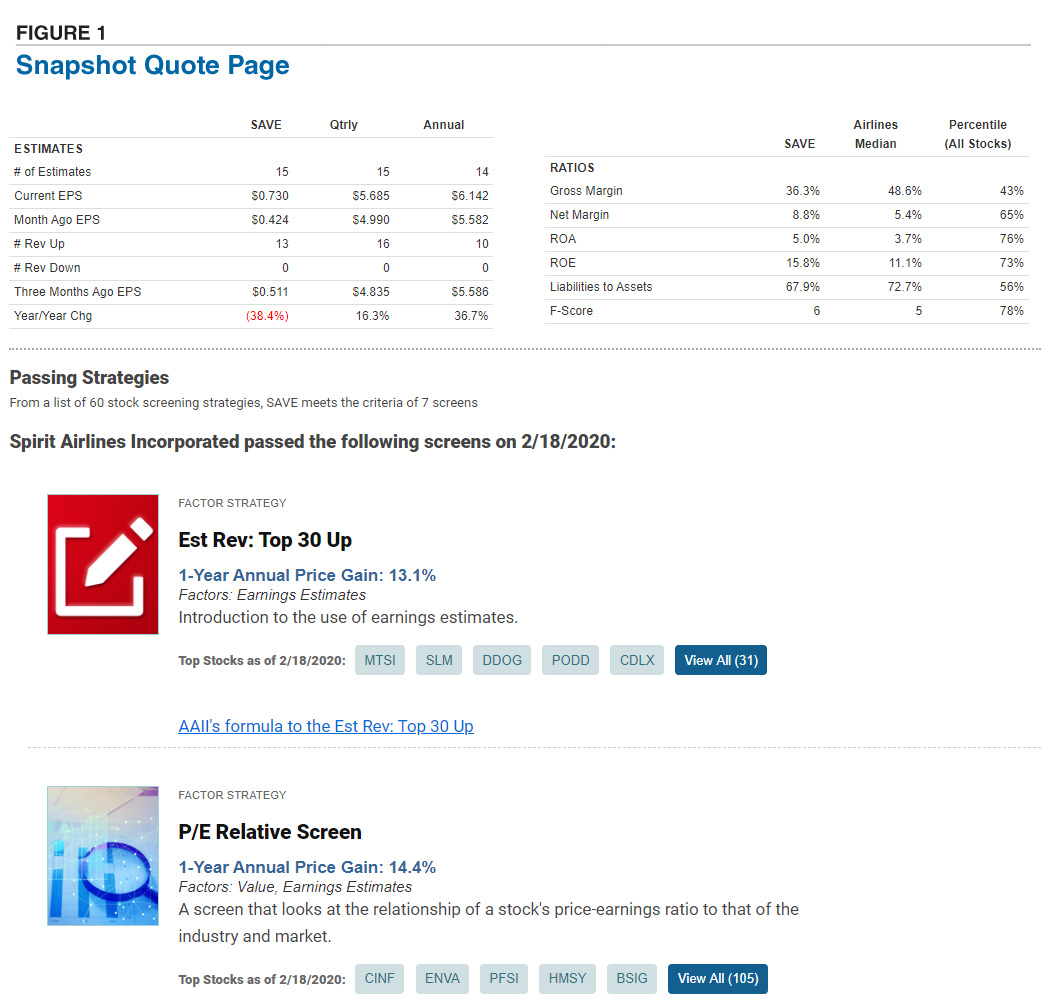
Members can see the latest earnings estimates for a given company and see if it has had any upward or downward earnings revisions. These estimates are provided on the snapshot tab of the stock quote page on AAII.com. The bottom of the snapshot page also indicates if the company currently passes any of the screens tracked by AAII (Figure 1).
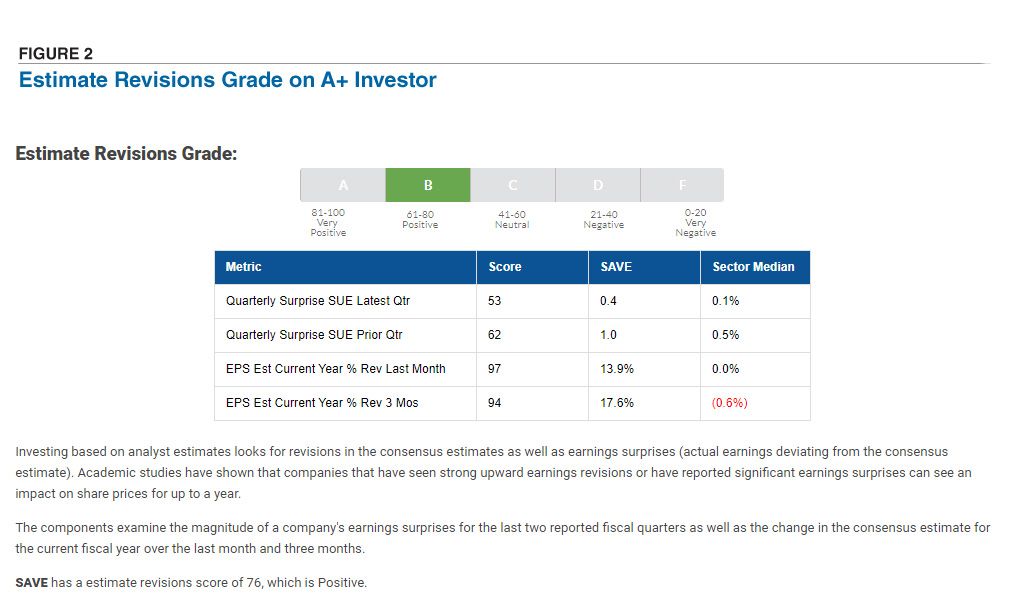
We have recently introduced Stock Grades for factors such as value, growth, momentum, quality and estimate revisions as part of our new A+ Investor service. The estimate revisions grade ranks companies by the strength of their recent quarterly earnings surprises and earnings revisions for the upcoming fiscal quarter and year (Figure 2).
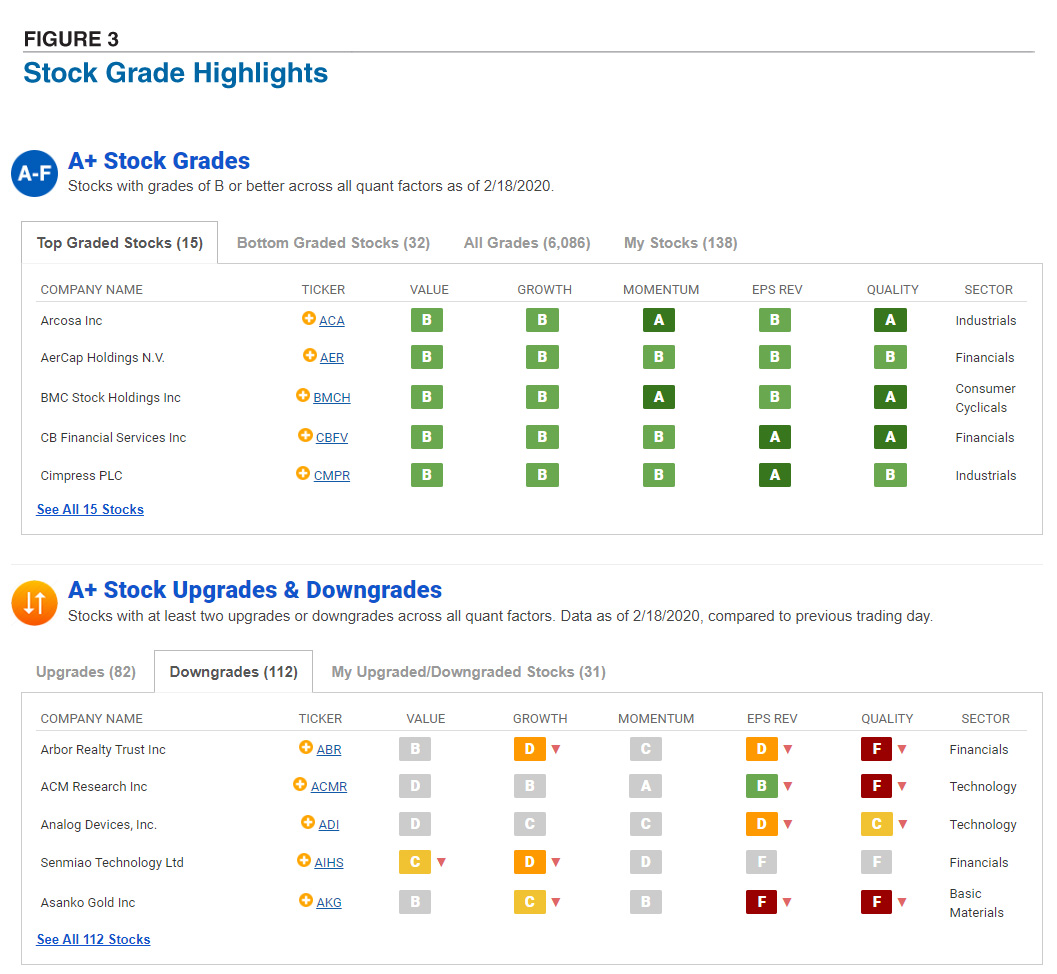
Available to all AAII members, the Stocks page of AAII.com notes if any stocks have consistently high or low grades across the many factors and separately reveals significant changes in their grades (Figure 3).
Earnings estimates are an important element to consider as investors look for stock ideas and manage their holdings. ▪
Investor Professor

Computerized Investing

AAII Stock Ideas

BARRY J from TX posted over 4 years ago:
You need to log in as a registered AAII user before commenting.
Log InCreate an account