Switching to a robo-adviser tends to result in a reduction of portfolio holdings in money market funds, individual stocks and U.S. and international active mutual funds in favor of bond holdings and low-cost index mutual funds. These changes also reduce idiosyncratic risk and home bias (favoring domestic companies over foreign companies) across all investor types.
The findings were based on an analysis of Vanguard’s Personal Advisor Service (PAS). This is viewed as being representative of the hybrid model many robo-advisers now operate under: combining a highly automated investment and planning process with human contact. Looking at 80,000 previously self-directed investors who signed up for professional financial advice from January 2015–December 2017, the study’s authors found that robo-advice on average increased allocation in index mutual funds from 47% to 83%, international mutual funds from 10% to 32% and lowered portfolio fees, halving average expense ratios from 19 to 9 basis points. Additionally, the study found that robo-advice also increased bond holdings from 24% to 40% and equity holdings on average from 54% to 59% and decreased cash and money market mutual fund holdings from 22% to 1%.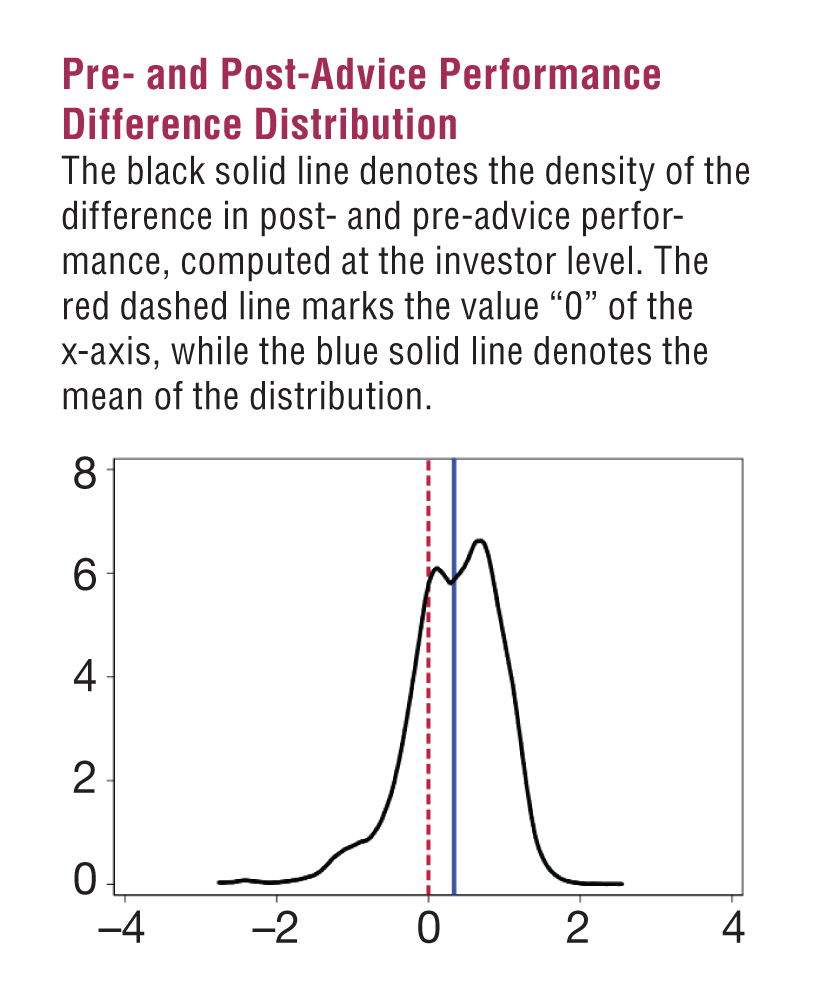
The study also discovered that the investors who benefited the most performance-wise from robo-advice were those who traded heavily, held most of their wealth in cash, had a higher allocation to stocks and possessed little investment experience. Investors who opted for this type of service also lowered the effort needed to manage their portfolios, though they did tend to login more frequently to get information about their portfolio.
The authors noted that one of the limitations of their study involved measuring investment performance for these portfolios pre- and post-robo advice, since the analysis only used nine months of daily estimated data. They noted that it was “possible that certain stocks or portfolios will deliver very low or large returns for idiosyncratic reasons.”
The study’s results also revealed that those who benefited the most from robo-advice are the most likely to stay signed up for the service, suggesting that the hybrid approach featuring human advisers and automated investment planning increased the likelihood these investors would sign up initially.
Source: “Who Benefits From Robo-Advising? Evidence From Machine Learning,” by Alberto G. Rossi and Stephen Utkus; SSRN, March 2020.







Gerard from MA posted over 6 years ago:
You need to log in as a registered AAII user before commenting.
Log InCreate an account