

A Big Penalty for Being Out of Stocks at the Wrong Time

Even missing just a few key days can cause investors to forfeit a considerable amount of wealth.

Charles Rotblut leads a class in AAII's new Essential Investing Video Course. Go to https://www.aaii.com/ves for more information and to subscribe.

We regularly encourage investors to stay invested for the long term and not try to time the market. Even missing just a few key days can cause investors to forfeit a considerable amount of wealth. 

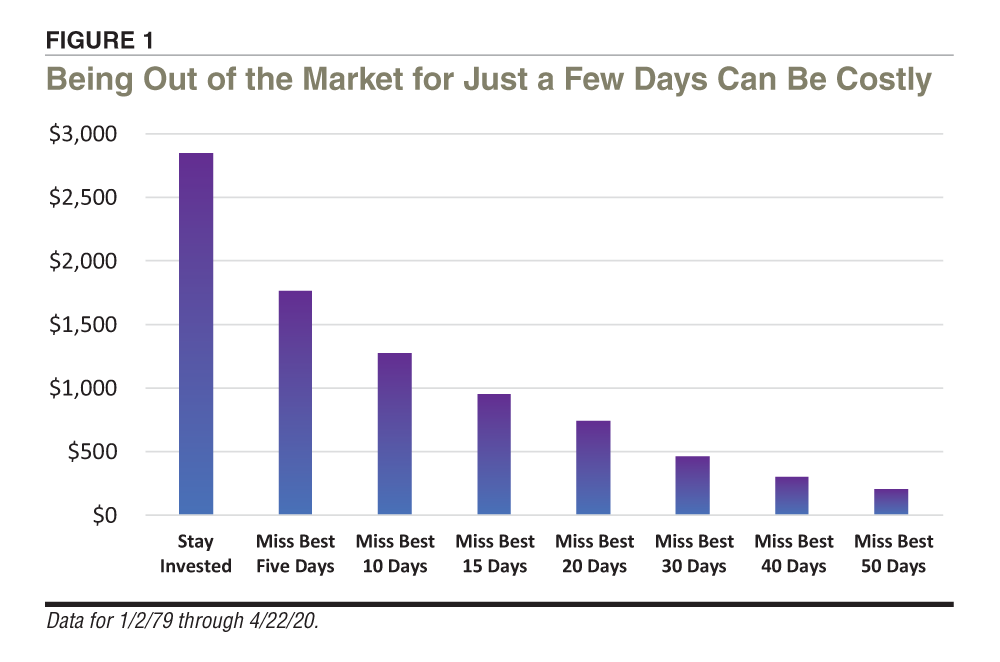
To demonstrate this, we sorted the daily returns for the S&P 500 index using data from Yahoo Finance for the period of January 1979 through April 22, 2020, to identify the days with the big price moves. The time span chosen represents all of the years the AAII Journal has been published and encompasses several bull and bear markets, along with economic expansions and recessions. 

Our goal was to see how big the penalty was if an investor was out of the market on the days when the market experienced its daily changes. All amounts assumed a starting balance of $100. As you can see in Figure 1, even just missing the best days reduced the portfolio’s value by a significant amount.

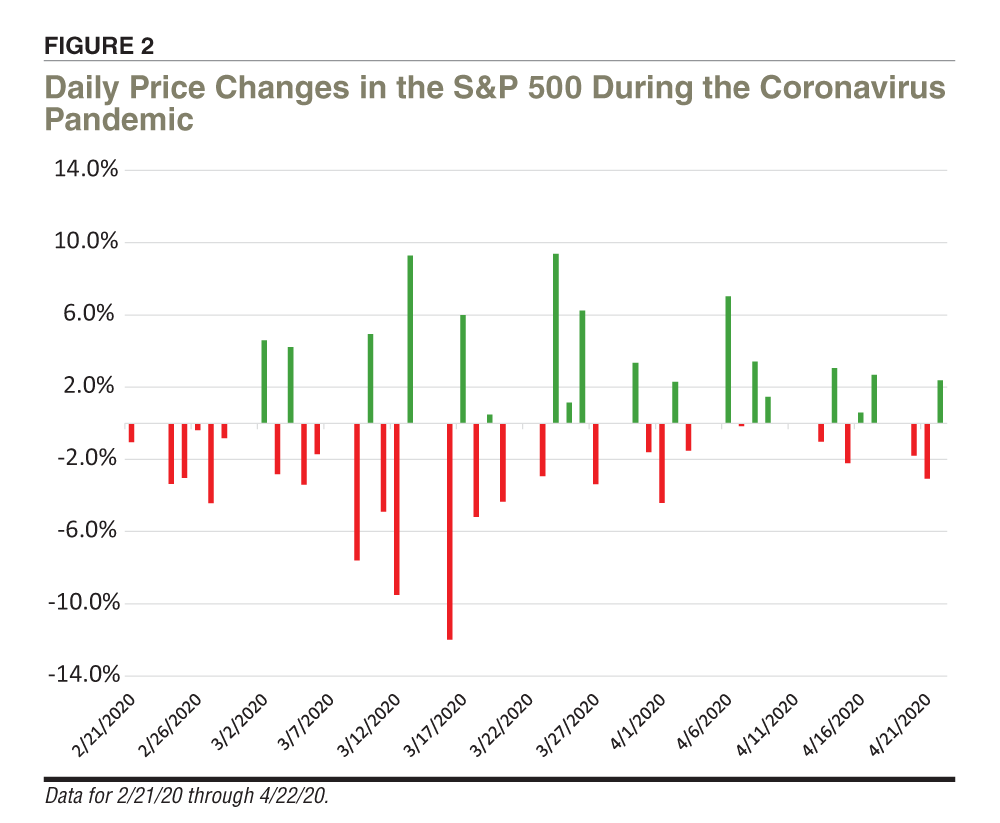
The biggest daily jumps in stock prices often occur during bear markets. We saw such a pattern occur during the first part of 2020 as the financial markets reacted to the coronavirus pandemic and shelter-in-place orders (Figure 2). While investors frequently focus on the downside moves, it’s important to realize that volatility works in both directions with big up days often occurring close to big down days. ▪

Discussion

Charles from WA - Washington posted over 6 years ago:

You need to discuss the results of being out of the best & worst days. Maybe 10-50 of each over a 10 or 20 year period. The day I missed was 5% returns for SPY on 12/26/18, but prior to that I missed over 20% in losses. Admittedly I needed a system to tell me when to be in or out. If you identified these best & worst days then perhaps people could develop the means to avoid the worst while capturing a portion of the best. After three years of active investing it's getting harder to accept that AAII does not work to balance their buy & hold against workable alternatives. I have a system and in the last 12 months (5/1/19 to 4/30/20) gained 25% trading SPY with market orders. Average 3 trades per month. I work full time and cannot trade when market is open. Buy & hold of SPY is slightly negative over that span. I think an excellent idea is a methods contest. A good size prize awarded to the best three methods. 'Best' includes usability, risk, return etc. They could be owned & operated by AAII; their property. Or for the lifetime membership fee maybe break off $20 per member to purchase outstanding ideas to share with the membership. I have something to share, the benefits are evident and I am eager to see it put to the test (although it passed a test where I threw away the first four bullish months of 2019).


Bob from Arizona posted over 6 years ago:

It appears that being out of the market on the worst days could be a very winning strategy. But just as one is not likely to get back in the market to enjoy the up days, it is equally likely that an investor the misses the best up days also misses some of the worst losses. I doubt that many readers in this audience make daily 100% in and out moves based on their expectations. On the other hand, there may be those that get out for a few months, and then get back in when the water seems safe. They have missed both up and down days. So, while I understand the point being made here, it is misleading if one doesn't accept that a person that missed any of the big green spikes more than likely missed many of the big red losses. Annuity salesmen use the same pitch claiming a career of saving could be wiped out in just a few days in a bear market. They're only correct if one sells at the bottom and never gets back in. Hopefully the investor only sells enough holdings to manage current bills, and lets the rest ride for better days.


Ron from CA posted over 6 years ago:

If you look at Dual Momentum strategies that have been backtested, you will find that they reduce the drawdowns dramatically and therefore are able to generate higher compounded returns over time. The mathematics of percentages makes it so that losses are more difficult to make up . You lose 50% and you have to double your money to get back to even. This is a progression. So this idea of missing the best days is half baked. I see it over and over. Lower volatility of returns leads to higher compounded returns. Efforts to reduce downside risk and volatility can lead to higher returns over time even missing some of the biggest up days. If you look at this year and had mitigated the downdraft and were only down a quarter to half of the downdraft, then you are probably today still ahead of the market having missed some huge up days. Percentage gains off of lower numbers are not nearly as beneficial as percentage losses off of higher numbers when coming down.


You need to log in as a registered AAII user before commenting.
Create an account

Log In

Get your free copy of our special report analyzing the tech stocks most likely to outperform the market.

Download the FREE Report Here: