


Charles Rotblut leads a class in AAII's new Essential Investing Video Course. Go to https://www.aaii.com/ves for more information and to subscribe.
To convert or not to convert is a tough question for many. Don’t worry, I’m not talking about trying for the two-point conversion instead of going for the extra point. Although it is now football season …
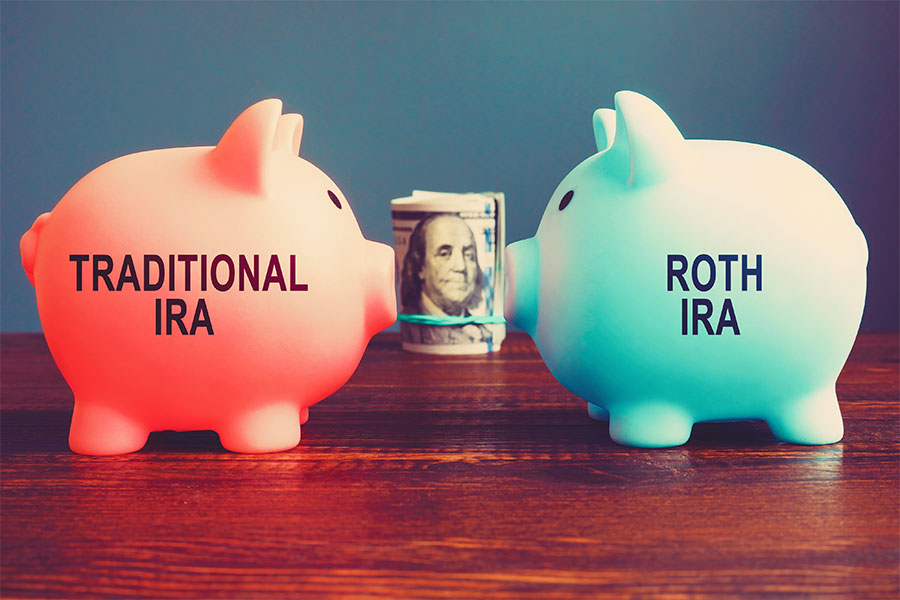
Rather, I’m talking about retirement accounts. Should you move your savings from a traditional individual retirement account (IRA) to a Roth IRA?
It’s a question we’ve addressed before and we’re addressing once again. Many investors struggle with the answer. Several factors can lead to conversion being the right decision or the wrong one.
The base decision is whether to pay taxes now or later. Roth IRA conversions involve relocating savings held in a tax-deferred retirement account to a retirement account funded with aftertax dollars.
If you know for certain what your future tax rates will be relative to your current rate, the decision is straightforward. Convert if the future savings will be large enough to offset what you will spend on taxes now to do the conversion. Don’t convert if your taxes will be significantly lower.
Of course, life is never so simple. There are a variety of other considerations. How will the conversion impact the taxes you pay on Social Security benefits now and what your Medicare Part B premiums will be two years from now? Do you plan to move to a different state in the future? If so, how does it tax retirement withdrawals? Are you planning on passing along your retirement accounts to your heirs? Where will the money come from to pay the taxes on the conversion? Do you have the cash available, or will you need to sell investments currently held in a taxable account?
Often the answers to such questions come down to assumptions. This is why many of us in the financial field think tax diversification can make sense. Hold some retirement savings in accounts funded with tax-deferred savings and hold other savings in accounts funded with aftertax dollars. Your future withdrawals won’t be optimized from a tax standpoint, but you won’t be precisely wrong either.
My wife and I hold both types of accounts. My 403(b) is funded with pretax dollars. At some point in the future, we will pay taxes on those withdrawals. Our Roth IRAs are funded with a combination of aftertax dollars and some conversions.
There is not a set percentage balance we are trying to strike between our traditional and our Roth retirement accounts. With a bit of spreadsheet work and some assumptions, it’s possible to determine what appears to be the optimum percentage of savings to hold in each type of account. But having that level of preciseness is far less important than getting the big things right.
If funding your retirement is your primary goal, save early and often. Keep investment expenses low. Diversify. Follow a well-thought-out, disciplined approach. Invest based on your goals, not someone’s market forecast. Periodically rebalance to keep your allocation from going too far astray. Ignore your account balance while focusing on getting your savings rate a bit higher each year.
Focus on these things first. They will have a far greater impact on your long-term wealth than choosing whether to convert to a Roth IRA or not. Roth IRA conversions can put a proverbial cherry on top, but goal number one should be to ensure there is a nice sundae to place the cherry on.
For those contemplating a Roth IRA conversion, Roger Young of T. Rowe Price goes over some of the considerations. As far as building that great sundae is concerned, Paul Merriman’s article gives ideas.
Roth IRA conversions aren’t the only way investors can reduce future taxes. Asset location is another. It involves putting investments in the right type of account for their tax treatment.
Municipal bonds, for instance, should almost never be held in a retirement account. Their coupons (interest payments) are exempt from federal, state and local taxes. To get the full benefit of their favorable tax-equivalent yield, munis should be held in taxable accounts. Conversely, corporate bonds are better tucked away in retirement accounts. Their coupons are taxed at ordinary income rates. For more on selecting bonds and bond funds, see my latest PRISM Wealth-Building Process article.
Investors should take reasonable steps to manage their tax exposure, while being cognizant not to let the tax tail wag the portfolio dog. Paying taxes is always less painful than incurring a financial shortfall.
Wishing you prosperity and good health,

Related

PRISM Wealth-Building Process
Guidelines for Selecting Bonds and Cash-Like Instruments
Related

Portfolio Strategies
How to Score a Retirement Home Run
Discussion
FREE REPORT

Get your free copy of our special
report analyzing the tech stocks
most likely to outperform the
market.
JOHN L from NJ posted over 5 years ago:
You need to log in as a registered AAII user before commenting.
Log InCreate an account