Rolling over an employer-sponsored 401(k) retirement account into an IRA that offers the same mutual funds often leads to lower overall returns. This is attributed to different annual fees charged to institutional investors compared to individual investors.
Mutual funds offered within an employer-sponsored 401(k) plan are often institutional versions—different share classes that charge different fees than the retail versions available for individual investors in an IRA.
Employer-sponsored retirement plans have an advantage over individual investors of being able to buy in bulk. These plans often leverage their buying power to get lower fee shares.
When analyzing the fees of the same mutual fund in an IRA versus an employer-sponsored 401(k) plan, researchers found that the annual expenses for median retail shares were 0.34 percentage points higher than institutional shares. This represents a 37% difference in fees.
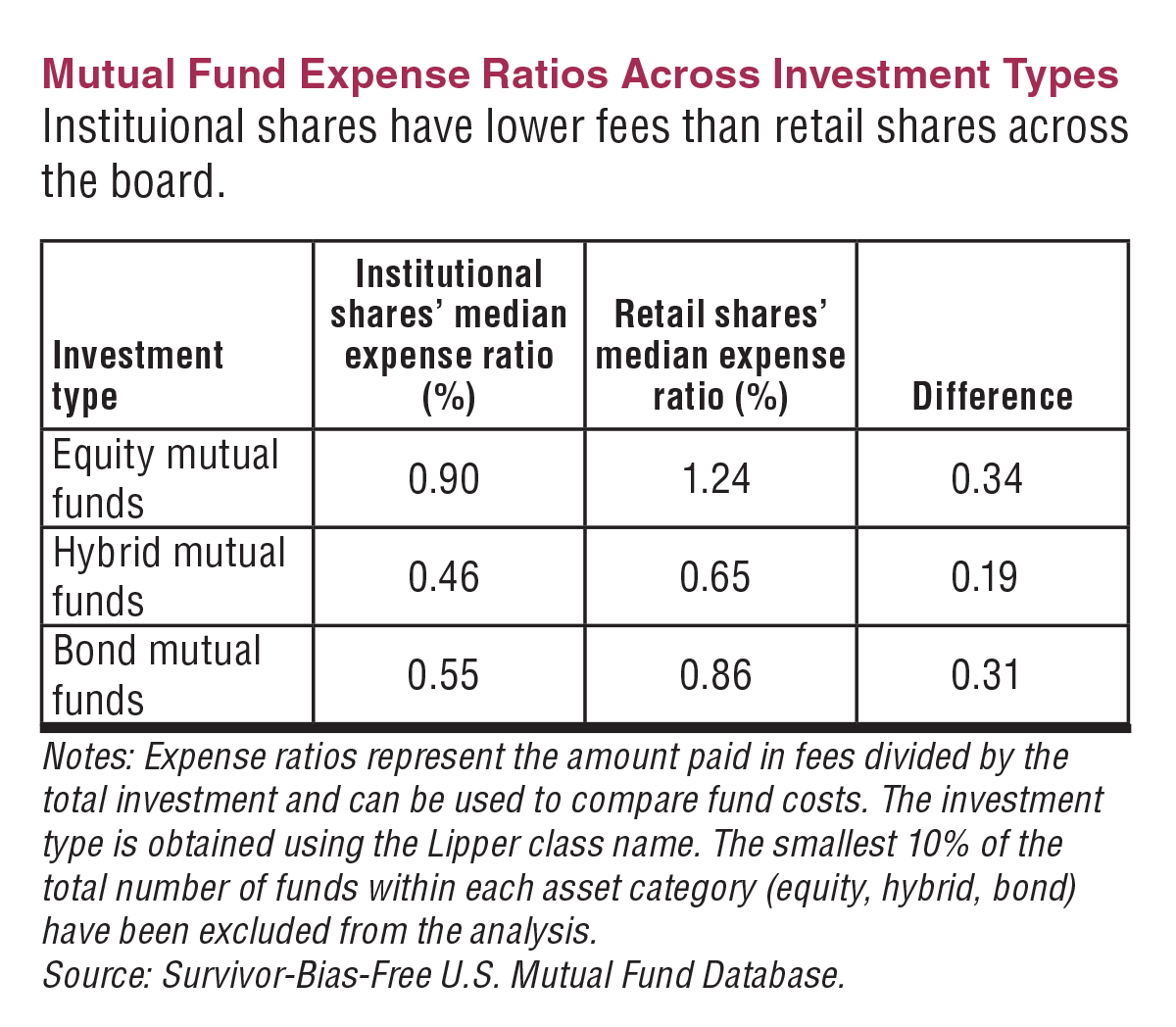
When planning for retirement income, these fees can make or break your portfolio. The study looked at an example spanning 25 years. What the researchers found was that $250,000 in a mutual fund in a 401(k) plan with a 5% annualized return and an annual fee of 0.09% saw fees of $5,725, whereas the same mutual fund in an IRA had an annual fee of 1.44%, with fees totaling $70,545. In this example, rolling over savings into an IRA that offered the same mutual fund would have resulted in $137,630 less in the investor’s portfolio at the end of the 25 years because the higher fees eroded gains.
Investors who want to roll their plan assets over into an IRA when retiring or changing jobs must diligently seek investments that have equivalent or lower expenses than the funds they are contributing to in their 401(k) account. Alternatively, investors might ask if they can keep their assets in their plan when they leave their employer, or find out if they can roll their plan assets over into a new retirement plan.
Source: “Small Differences in Mutual Fund Fees Can Cut Billions From Americans’ Retirement Savings,” by Justin Paget, June 2022.







ROBERT A from NC posted over 4 years ago:
You need to log in as a registered AAII user before commenting.
Log InCreate an account