While altering loan repayment behaviors, employer 401(k) matches for student debt payments are not predicted to materially change retirement payouts.
A provision of the SECURE 2.0 Act allows workers with student loan debt to receive employer matching contributions in their retirement plans for qualified loan repayments. The aim of this voluntary program is to facilitate faster loan repayment while still building retirement savings.
Researchers at the TIAA Institute examined the potential effects of this reform on key financial variables over the employee’s life cycle with a model simulating the decision-making processes regarding consumption and investment in assets like risky stocks, bonds and 401(k) plans. They studied the repayment behavior of student loans, contributions to and asset accumulations in defined-contribution retirement plans, other financial assets held outside of workplace plans and consumer spending patterns. They then compared these variables before and after institution of the reform for a simulated population of 10,000 workers making optimal decisions over their lifetimes.
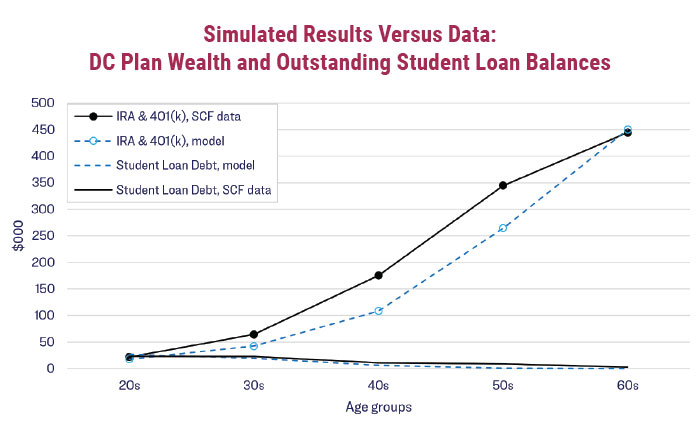
The researchers found that the SECURE 2.0 Act reform significantly altered repayment behaviors and retirement savings patterns among borrowers. Before the reform, only a small fraction of individuals consistently made loan repayments in their early years, but afterward the rate of regular repayments soared.
Post-reform simulations showed lower employee contributions in 401(k) plans until age 50, but total retirement balances by age 65 that were similar or even slightly higher than pre-reform simulations. This was attributed to the increased employer contributions that included matches on loan repayments. The strategic shift enabled borrowers to manage their loans more consistently while still securing their retirement finances.
The study projections suggest that encouraging workers to discharge their student loans as soon as possible may not be optimal under the SECURE 2.0 Act provision when their employers match their loan repayments in company-sponsored retirement saving plans.
Source: “Employer 401(k) matches for student debt repayment: Killing two birds with one stone?,” by Vanya Horneff, Raimond Maurer and Olivia S. Mitchell; TIAA Institute Research Dialogue, Issue No. 211, April 2024.







No comments have been added yet. Add your thoughts to the discussion!
You need to log in as a registered AAII user before commenting.
Log InCreate an account