



Related

Computerized Investing
by AAII Staff | May 2018

One of the long-standing anomalies in investing theory is the small-company premium. This is the long-term outperformance of small-company stocks over large-company stocks. Though the small-company stocks do not always beat their larger counterparts every calendar year, over time their return premium is significant.
The outperformance is the strongest and most apparent among the smallest companies. Stocks of companies whose market capitalizations rank in the lowest 20% of all exchange-listed stocks have outperformed the largest companies—those included in the S&P 500 index—by more than six percentage points on an annualized basis.
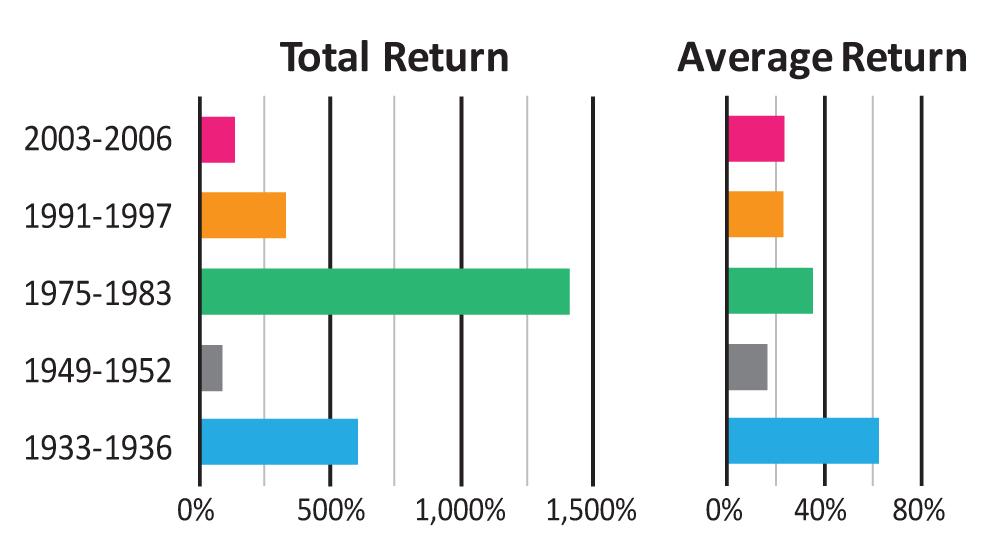
Capturing this premium requires patience, a long-term perspective and commitment. It is not uncommon for micro-cap stocks to realize annual gains or losses over periods of two or more consecutive years. During the 91-year period ended in 2016, Perritt Capital found many such consecutive-year gains and losses. In fact, the table below shows micro-cap stocks are more likely to post similar gains on at least back-to-back calendar years than they are to rise in one year and fall in the next.
Perritt says this is due to serial correlation. Serial correlation, in this case, describes the extent to which the return in one period is related to the return in the next period. The firm attributes this to what they describe as a “likely trend” of the small-company risk premium existing in their white paper, “Déjà Vu All Over Again: Serial Correlation and Micro-Cap Equities.”
When micro-cap stocks are showing signs of being on a winning streak, it can make sense to stick with them. There have been 17 periods since 1926 when micro-cap stocks have realized gains for periods of at least two consecutive years. When the winning streak has reached or exceeded four consecutive years, the gains have been very large, as the table below shows.
For more on the advantages of investing in micro-cap stocks, see our interview with Perritt Capital Management’s CEO and CIO, Michael Corbett, in the June 2016 AAII Journal (“Micro-Cap Stocks Are Less Widely Followed, Offer Benefits”). AAII’s Model Shadow Stock Portfolio requires potential additions to have market capitalizations ranking in the approximate smallest 10% of all stocks and will sell a portfolio holding when its market capitalization rises out of the micro-cap range. See this month’s Model Shadow Stock Portfolio article for more information about the portfolio.
Computerized Investing

Stock Strategies

Portfolio Strategies

No comments have been added yet. Add your thoughts to the discussion!
You need to log in as a registered AAII user before commenting.
Log InCreate an account