


If economics is the dismal science, then investing is the abysmal art—or so, at least, you would guess if you tried reading just about any book on investing or applied finance.
First in 1999, when I took a quick stab at it, and then again beginning in 2014, I wondered why so few writers had tried to highlight the humor in the financial markets. Inspired by the great American writer Ambrose Bierce’s masterpiece “The Devil’s Dictionary,” I quickly had a satirical glossary of hundreds of terms on my hands.
As is the case with jargon in so many professions, financial terms often mean the opposite of what they appear to signify. A mutual fund with the word “plus” in its name is likely to subtract from returns; forecasters invoke the word “clearly” to describe outcomes that are very unclear; a “potential conflict of interest” isn’t the least bit hypothetical; and a “sophisticated investor” is often a person who has a surplus of money and a shortage of brains.
In writing “The Devil’s Financial Dictionary” (PublicAffairs, 2015), I came to believe that one of the best ways to understand a concept is to make fun of it. When someone presents you with an apparently serious idea, trying to recast it in a ludicrous light can help you expose hidden weaknesses or lurking risks that you might not otherwise notice. And laughing is surely one of the best aids to learning.
Pithy Definitions That Are Easy to Understand
Here are definitions of investment terminology you, the individual investor, might find to be particularly useful to keep in mind as you manage your own portfolio.
Baru, n. In ancient Mesopotamia, a priest who specialized in predicting the future by studying the contours of a liver or lung taken from a freshly sacrificed sheep.

The baru worked from an intricate template, often rendered as a clay map that charted dozens of variations on the surface of the sheep’s organ.
We may safely presume that when the baru’s predictions didn’t come true, he blamed it on the dead sheep. The modern version of a Mesopotamian baru is known as a Technical Analyst.
Big Producer, n. A stockbroker or insurance agent who produces big commissions. The term is erroneous, however: The broker or agent doesn’t produce the commissions. It is his clients who produce them. He just collects them.
Day Trader, n. See Idiot.
Fee, n. A tiny word with a teeny sound, which nevertheless is the single biggest determinant of success or failure for most investors.

Investors who keep fees as low as possible will, on average, earn the highest possible returns. The opposite may be true for their financial advisers, although that is still not widely understood.
As the popular financial journalist M.T. Head recently wrote:
“We think 1% a year is a very reasonable fee, given how hard we work for our clients,” said wealth manager Bill Muchmore of Adenauer Doe & Co. Asked why the sound of waves breaking on a beachfront seemed to be audible in the background during our conversation, Mr. Muchmore hastened to explain that he was walking back to his office from lunch and several city buses had just passed by him.
Financial Adviser, n. Often, someone who cares deeply about being prudent, diligent, competent and honest, in which case his or her services will be priceless; sometimes, someone who cares only about being a Big Producer, in which case you are in for big trouble.
Idiot, n. See Day Trader.
Individual Investor, n. Someone who, without wise advice, is likely to ruin a small portfolio, generally $1 million or less. See also Institutional Investor; Retail Investor.
Institutional Investor, n. Someone who, without wise advice, is likely to ruin a large portfolio, generally $10 million or more. See Individual Investor.
Invest, v. To wrap oneself in a financial asset and hold it close; from the Latin vestire, to dress, clothe, wrap in robes, surround or envelop. Investiture, the conferring of the dignity of a formal office, usually by clothing the officer in honorary robes, has the same Latin root. There is nothing dignified about the frenzied trading of many people who call themselves “investors,” however.
“We’re unapologetically long-term investors,” said Hugo Chernus, a portfolio manager at Trott, Gallup & Rush, adviser to the Discretion Funds. “Unlike those high-frequency traders, we hold stocks for weeks—sometimes even months—at a time.”

Irrational, adj. A word you use to describe any investor other than yourself.
Long-Term, adj. On Wall Street, a phrase used to describe a period that begins approximately thirty seconds from now and ends, at most, a few weeks from now.
“Google was a long-term holding for us,” said Hugo Bailyn, a portfolio manager at Grimm, Rieper, Knight & Harkness, an investment-management firm in Opa-Locka, Florida, in an interview on June 13. “We bought it in May.”
Market Strategist, n. A direct intellectual descendant of the ancient Roman official known as a haruspex, who was practiced in the Etruscan art of divining the future by inspecting the livers of sacrificial sheep and chickens. See also Baru. The typical market strategist uses methods similar to those of a haruspex (a diviner in ancient Rome), but less accurate. However, the modern market strategist has much higher social status and earns vastly greater income than a haruspex, even after adjusting for more than 2,000 years of inflation.
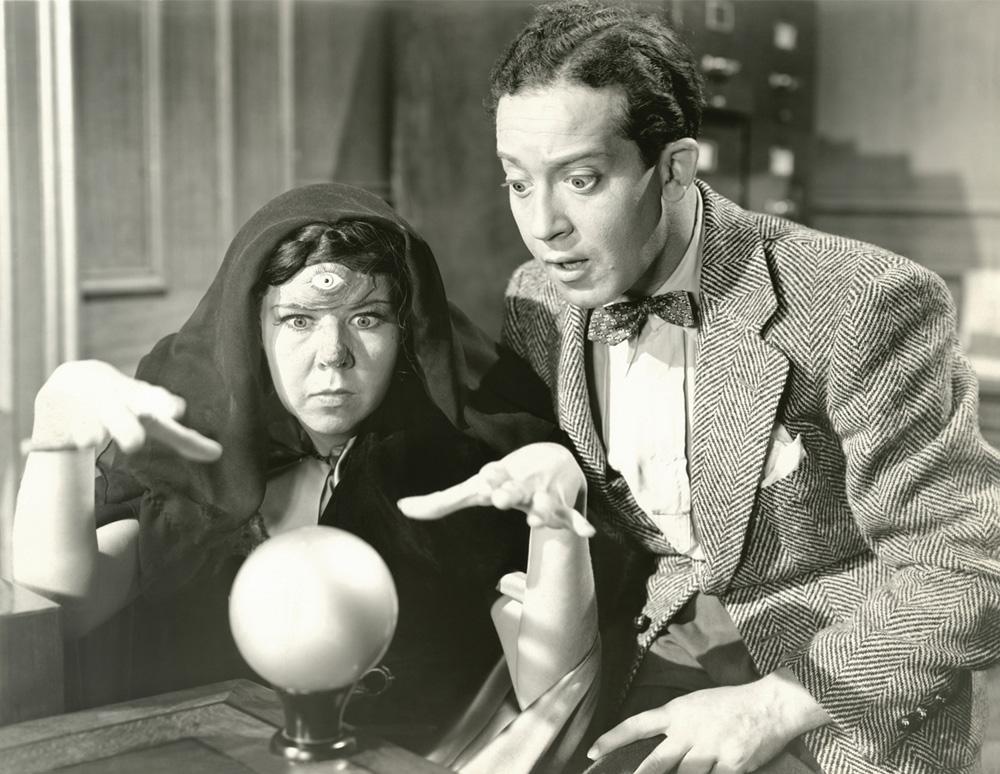
“We’re advising investors to overweight financial stocks,” said Shirley Hugh-Geste, chief market strategist for Kahn, Mann, Crooke & Banditto, the Wall Street investment bank. “We think 2008 will be a record year for earnings in the financial sector as the housing sector regains its momentum.”
Portfolio Manager, n. A highly trained and even more highly compensated professional who seeks to beat the market by buying the best securities and avoiding the worst ones, without venturing into the kind of originality that might jeopardize his or her paycheck. With tens of thousands of portfolio managers all picking over the identical stocks and bonds with the same timid approach, outperformance is all but impossible, especially after the managers collect their fees. Portfolio managers are people who “pretend to do something they can’t do and like something they don’t,” the great investor Charles T. Munger once said. “It’s a terrible way to spend your life, but it’s very well paid.” Related: Active; Career Risk; Herding; Relative Performance.
Potential Conflict of Interest, n. An actual conflict of interest.
Retail Investor, n. Anyone who invests relatively small sums of money without earning fees or other revenue to do so; many hold their investments steadfastly through market crashes and for years or decades on end. Naturally, retail investors are derided as foolish and underperforming by the Smart Money and Portfolio Managers who rake in rich fees for delivering poor results. See also Individual Investor.
Risk, n. The chance that you don’t know what you are doing when you think you do; the prerequisite for losing more money in a shorter period of time than you could ever have imagined possible. Risk can be formally defined as the odds of an adverse or undesirable outcome—when the forecast is for an 80% chance of sunshine, for example, then the risk of rain is 20%—or as the extent to which extreme outcomes differ from the average. It has been philosophically defined by finance professor Elroy Dimson of London Business School this way: “Risk means more things can happen than will happen.” In the end, risk is the gap between what investors think they know and what they end up learning—about their investments, about the financial markets, and about themselves. Related: Downside Risk; Safe.
Sheep, n. See Portfolio Manager.
Short-Term, adj. On Wall Street, thirty seconds or less—as opposed to Long-Term, which is thirty seconds or more.
Smart Money, n. Those investors who know which stocks to buy, when to sell them, every tidbit of information that can influence the price, what the companies’ executives are thinking, how geopolitical events will affect every market, and so on—as in “the smart money isn’t buying yet” or “the smart money is dumping emerging-market stocks now.”
No one talking about “the smart money” ever does—or could—identify exactly who these people are, however. Nor do the people who cite “the smart money” like being asked questions like these:
- If the smart money is so smart, why did it tell you what it’s doing?
- If you’re smart enough to know what the smart money thinks, then why aren’t you keeping it a secret so you can cash in on it all by yourself?
“The smart money” is, in fact, an imaginary being, something like the many-headed hydra of Greek mythology. Cut off one of its heads and two will grow back, although both will be empty, as “the smart money” is nothing but an illusion fabricated by people who enjoy picking others’ pockets.
Thus, as Peter Lynch wrote in his book “One Up on Wall Street” (Simon & Schuster, 2000), “Dumb money is only dumb when it listens to the smart money.”
See also They.
Sophisticated Investor, n. One of Wall Street’s favorite oxymorons, the financial equivalent of jumbo shrimp, military intelligence, or United Nations. The term is typically used to describe a High-Net-Worth Investor or Institutional Investor who often deploys millions of dollars at a time. But people are not more sophisticated merely because they have more money. Often, quite the opposite is true, as their own behavior will attest. Related: Due Diligence; Hedge Funds.

Structured Products, n. Investment products structured to be profitable to the firms that sell them and incomprehensible to the clients who buy them.
“This structured product couldn’t be simpler,” said Monty Bank, head of institutional sales at Hooke, Lyon & Singer, the global investment firm based in London. “The yield varies inversely with the magnitude of the gap between the value of Swedish krona in U.S. dollars and the square root of the modified adjusted duration of the on-the-run 20-year Brazilian government bond. If that goes negative, then you get LIBOR plus the yield on Apple stock divided by the value of pi. That’s why we call them EZ-PIEs.”
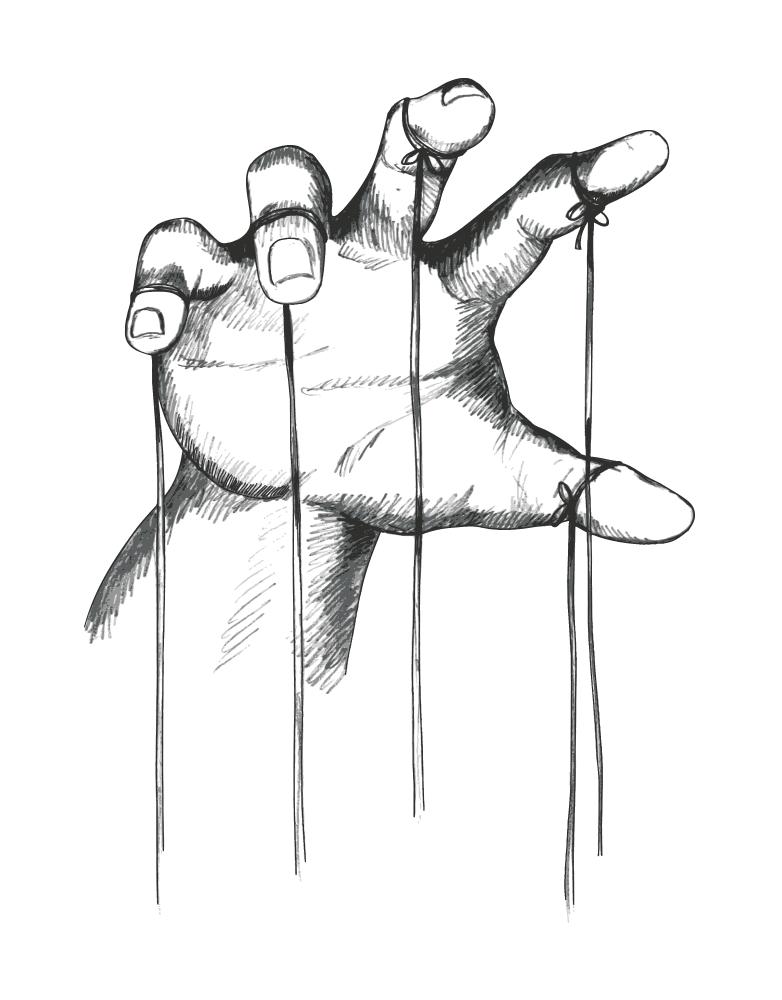
THEY and THEM, pron. The invisible powers, always referred to in a conspiratorial whisper, who supposedly move the markets. According to the people who talk about “them,” they are omnipresent, omniscient, and omnipotent. Much like the three Fates of ancient Greek mythology, “they” know what will happen before it occurs and hold every investor’s destiny in their hands. Yet “they” have no names, are nowhere to be found, and have no verifiable track record. Nevertheless, we are told, we should heed—and even fear—them.
As Fred Schwed Jr. wrote in his book “Where Are the Customers’ Yachts?” in 1940 (reprinted, John Wiley & Sons, 2006):
Who are “they”? They are either the great speculators and manipulators, or the daemons of the nether world, or both. A generation or so ago, it seems probable that “they” had a tangible existence. . . . Then the markets were small, and “they” were big; they played their fantastic games with the price of gold or the stock of the Erie Railroad . . . and they made and broke their followers and each other. . . .
For the last 10 years there haven’t been any great speculators or manipulators at all. But the use of the pronoun “they” continues unabated. It must be the daemons these days, exclusively.
Or, as ‘Adam Smith’ wrote in his book “The Money Game” (Random House, 1968):
Who are They? Well, They are the people who move stocks. They get the information first, maybe They even create the information, and They are about to put the stock up or down. They are mysterious, anonymous, powerful, and They know everything. Nothing fazes Them. They are the powers of the marketplace.
Is there really a They?
The short answer: No, They isn’t.
See also Smart Money; Sophisticated Investor; Related: Insider.
Beware Compound Terms
One of the common themes that ran through many of the entries in my book: The denser the jargon, and the more polysyllabic the terminology, the more likely someone is hiding something from you. Words like algorithm and proprietary and quantitative are meant to lull listeners into a kind of befuddled surrender. (Throw them together to get proprietary quantitative algorithm and you have a phrase that you can launch at the brain of a novice investor like a barrage of heavy artillery.)
The way to a man’s heart may be through his stomach, but the way to pick an investor’s pocket is through the ear.
The definitions are from “The Devil’s Financial Dictionary” by Jason Zweig (PublicAffairs, 2015). Reprinted with permission from PublicAffairs. Images added by AAII.
Terrence Trivett from CA posted over 10 years ago:
Dave Gilmer from WA posted over 10 years ago:
Clay Daniels from Texas posted over 10 years ago:
Alan Palmer from DE posted over 10 years ago:
Oscar from California posted over 10 years ago:
Clay Daniels from Texas posted over 10 years ago:
James Leath from TN posted over 8 years ago:
Harry Shainian from CA posted over 7 years ago:
You need to log in as a registered AAII user before commenting.
Log InCreate an account