


“The January effect?” a skeptical reader might question. “I know what the January effect is all about, and besides, it happens in January, not October, so why write about it now?”
While most investors are aware of a January effect, what is not always as well known is that the true January effect is a low-price stock phenomenon. A typically bullish January for the S&P 500 index attests that most stocks benefit to an extent from a January effect—for instance, due to new monies entering the market after the beginning of the year. However, the S&P Low-Priced Stock index’s January gain of four times the S&P 500 index gain attests that the January effect is indeed most pronounced among stocks that are lowest-priced, and usually the most depressed, since the stocks that have sold off the most via tax-selling have the greatest potential for rebound.
While there have been a number of studies that have validated the fact that the January effect is primarily a low-priced, depressed stock effect (and not, incidentally, a small-cap effect), it also makes common sense.
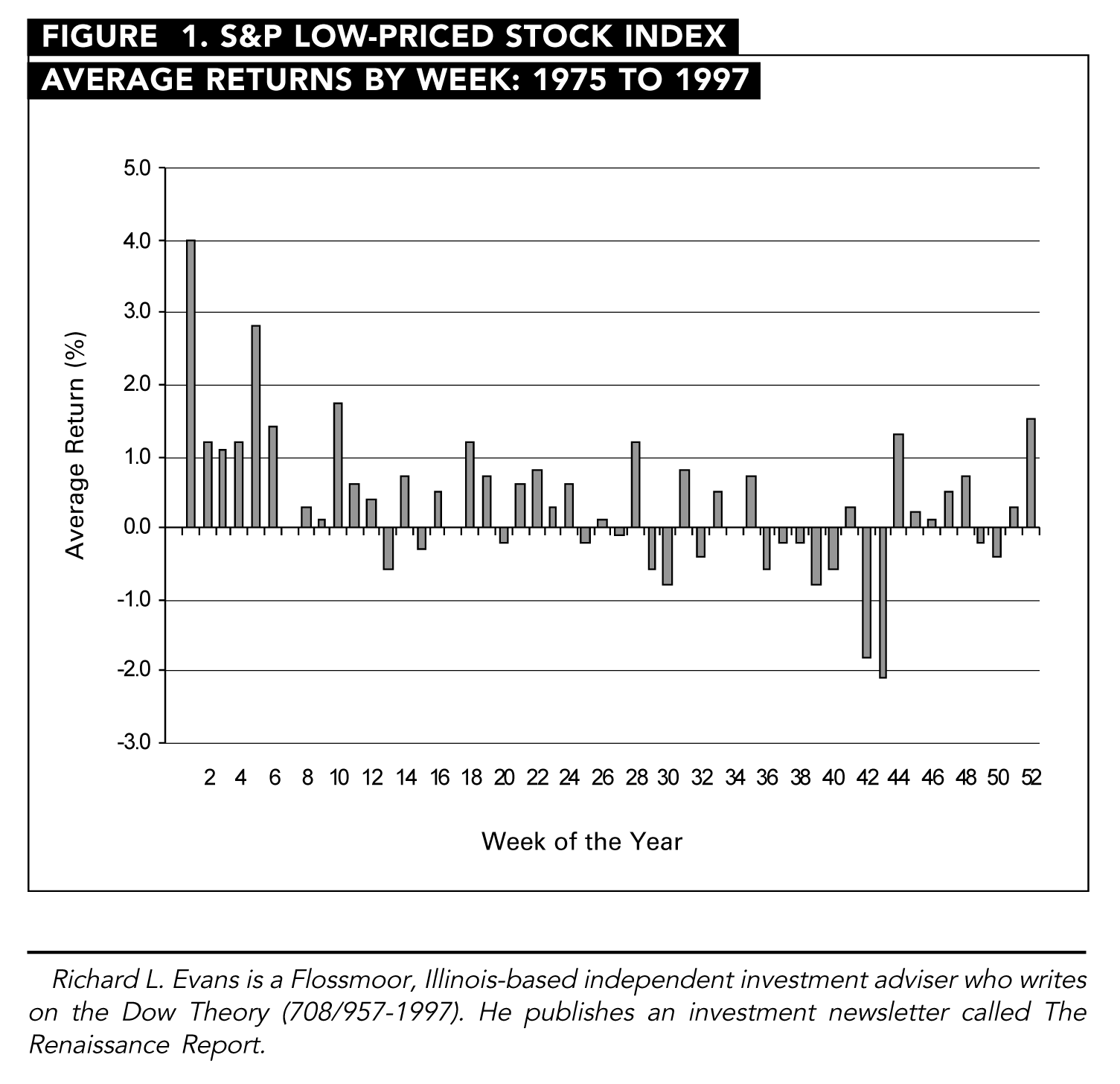
Another important point is that, although most of the upside action does happen in January, the time to get positioned for the January effect is in October.
Indeed, the seasonal tendencies in the S&P Low-Priced Stock index (see Figure 1) imply selling in week 28 and then buying in week 44. By Halloween investors want to have their shopping completed.
A third point to keep in mind is that the best opportunities arise during times of an extended market correction. When stocks have been in a strong bull market, there are just not that many opportunities. When stocks have been declining and there are more tax-selling candidates, and thus more lower-priced and more-depressed issues, common sense again dictates that more opportunities will be available. Hence, 1998 will likely be one of the more productive years since 1994 and perhaps 1990.
Of course, the devil is in the details, and that is where technical analysis comes into the picture. Just buying any low-priced stocks will not lead to a subsequent January effect. One has to position oneself in a stock that is low-priced and depressed but is beginning to trend ever so slightly higher.

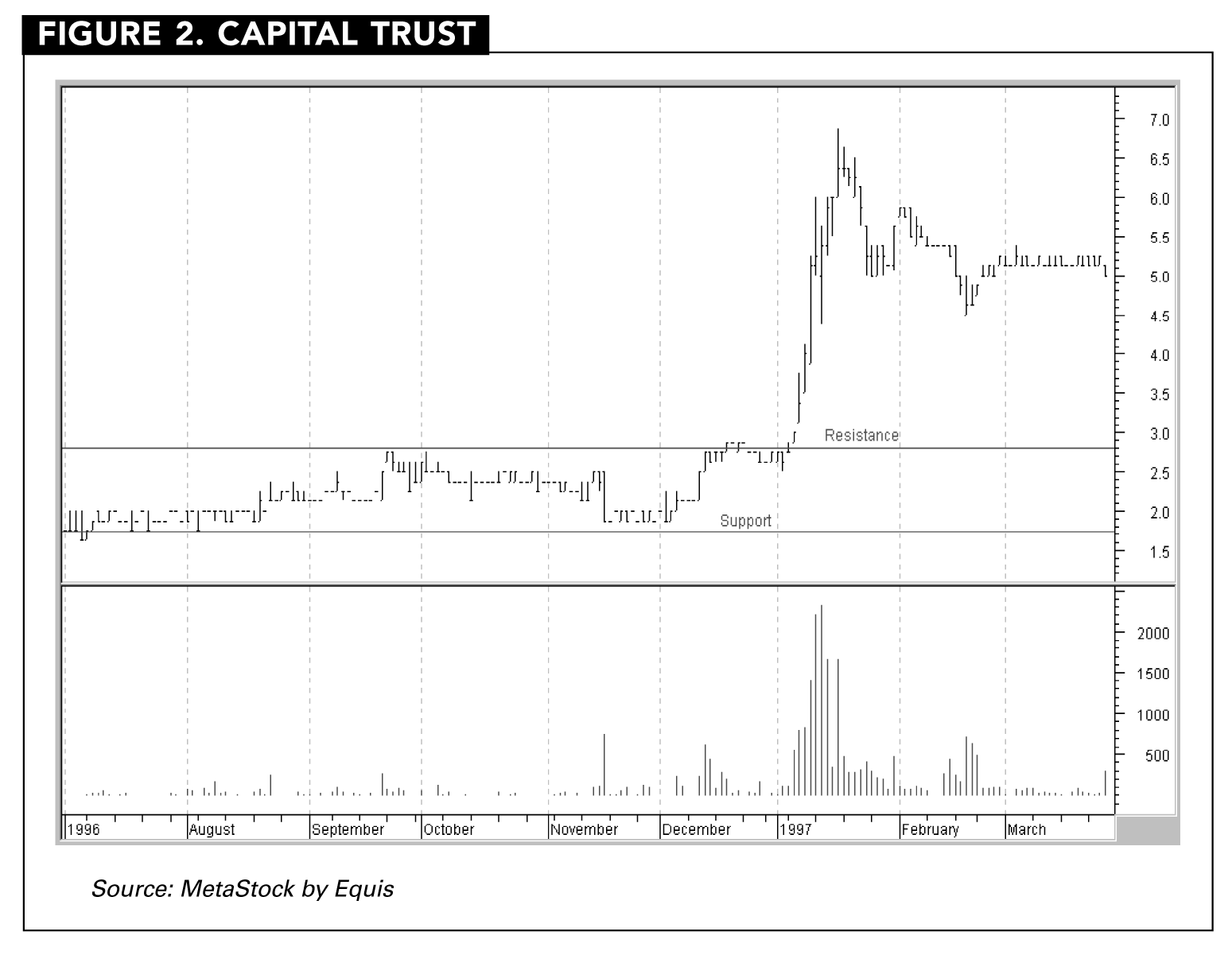
Two examples of stocks that benefited from this phenomenon in 1997 are Capital Trust and NS Group.
Capital Trust was the 1997 top NYSE winner with a gain of 309.1%. At the end of November in 1996, Capital Trust was selling at the bottom of its range, right at support, at 17/8. In mid-December the stock moved back up to the top of its range, at resistance, at 2¾. On January 7 Capital Trust rose 1/4 to close at 3, a new high, and the surge was on.
NS Group was the second best 1997 NYSE gainer, at +283.3%. Throughout the fall of 1996, the stock traded between 3 and 31/4. At the end of November the range moved a little higher, as the stock on November 26 advanced 3/8 to close at 35/8. After the typical dull pullback, the stock moved up on December 9 another 3/8 to 37/8, a new high. NS Group had broken out. The January effect was the afterburner.
Conclusion
The time to start thinking about the January effect is close at hand. Just remember, while the best gains are from low-priced and depressed stocks, not just any low-priced stock will do.
One has to separate the wheat from the chaff by making sure to size up a stock’s trend.
David E from WA posted over 13 years ago:
Robert Haft from FL posted over 13 years ago:
Winthrop Harewood from IL posted over 13 years ago:
James G from TX posted over 13 years ago:
You need to log in as a registered AAII user before commenting.
Log InCreate an account