

Related

Portfolio Strategies
Rebalancing Update: First Signal in Six Years to Adjust Allocations Issued

Financial Planning
Attitudes toward retiring and benefits in retirement differ depending on whether you are an employer or an employee, according to two surveys.
by Anine Sus | April 2020

Attitudes toward retiring and benefits in retirement differ depending on whether you are an employer or an employee, according to two surveys.
In the last 10 years, the concept of retirement has become more fluid. Some of those who retire will continue to work or will only partially retire. Others continue working past retirement age because retirement is unattainable to them. The question has become “not when they will retire but if they can.” The employer survey looked at adults age 18+ employed full time, who work for a company with 1,000 or more employees, are a manager or higher, have some influence in benefit selection and whose company has a defined-contribution plan for its employees. The employee/retiree survey focused on adults age 33 to 75 employed full time or retired, who have the option of a defined-benefit or defined-contribution plan from their current/previous employer.
Of those who do not expect to retire, 60% do not believe they will be able to afford it. The other 40% preferred not to retire in order to continue socializing with coworkers and maintain the mental stimulation of working. Three in four employers believe that their employees want to delay retirement because they want to keep their medical insurance coverage until they qualify for Medicare, or that they cannot afford to retire. However, only 25% of workers who are delaying their retirement are doing it because they want to maintain their medical insurance until Medicare qualification. Sixty percent of employers think their workers delay retirement in order to continue growing their retirement savings. This is one of the most common reasons that older workers have delayed retirement.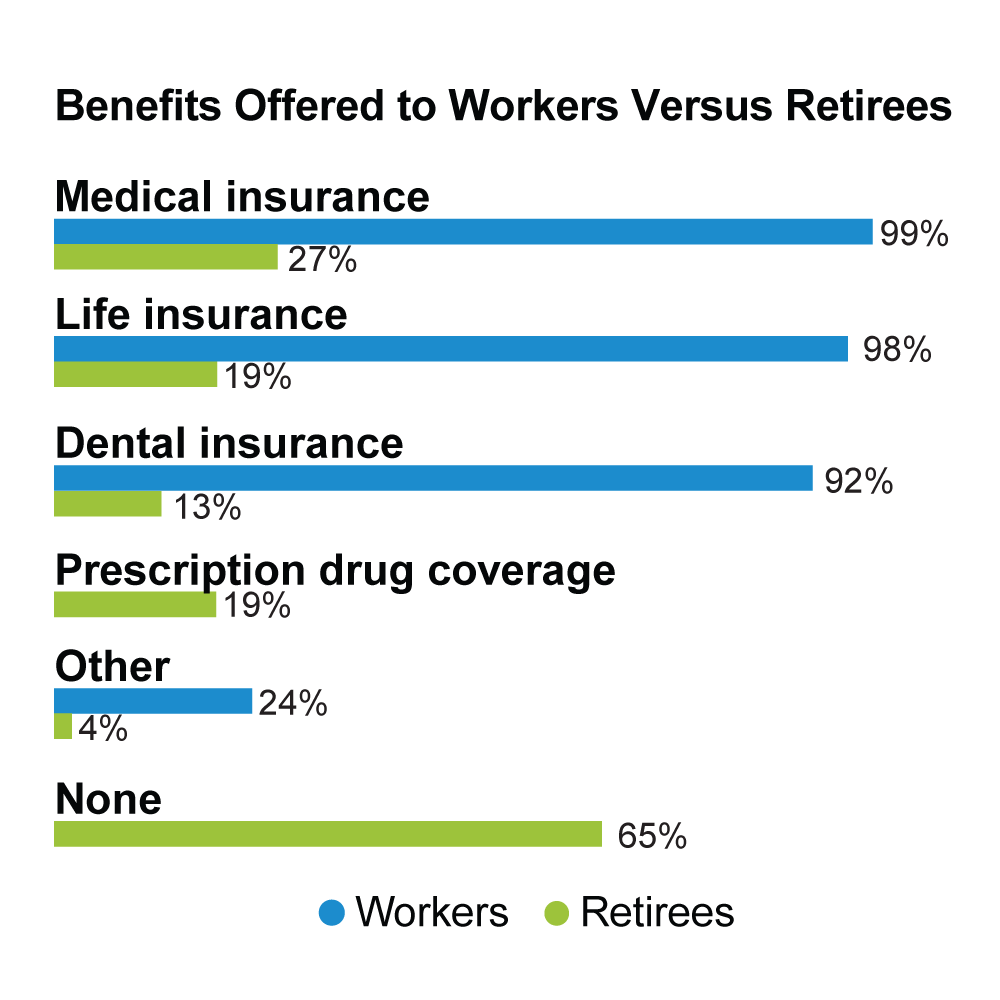
Many employees are concerned about their employer not providing benefits in retirement, “such as medical (88%), prescription drug coverage (85%), dental (79%) and life insurance (66%). Unfortunately, less than three in 10 employers do so for retirees (27% medical, 19% life, 19% prescription drugs, 13% dental).” Less than half (47%) of retirees surveyed can access medical insurance from their former employer.
Almost eight in 10 workers (79%) are interested in the possibility of a phased retirement program as they near retirement. A phased retirement plan would provide employees the ability to reduce their working hours instead of completely retiring. However, 67% of employers say that their employees never expressed an interest in a phased retirement program as an option. Many employers noted that there were “regulatory barriers” keeping them from implementing these programs.
Source: “Evolving Retirement Model Study”; MetLife, 2020.
Portfolio Strategies
Financial Planning


No comments have been added yet. Add your thoughts to the discussion!
You need to log in as a registered AAII user before commenting.
Log InCreate an account