



Related
Investing Gurus
Teach someone else what you have learned about investing. Give them the gift of time to experience the power of saving and the magic of compounding.
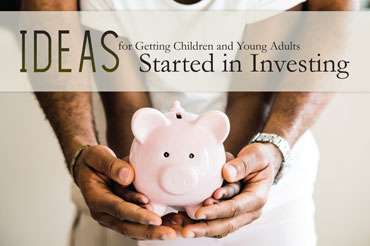
You can lead a horse to water …
You know how that ends. We can’t force our kids and grandkids to be excited about investing. But we can provide information and motivation. This article hopes to provide both. If you feel it does, share it with them.
Perhaps the most important aspect of investing is time. While it’s important to focus on appropriate investments, if we start investing too late, we simply won’t achieve what could have been accomplished.
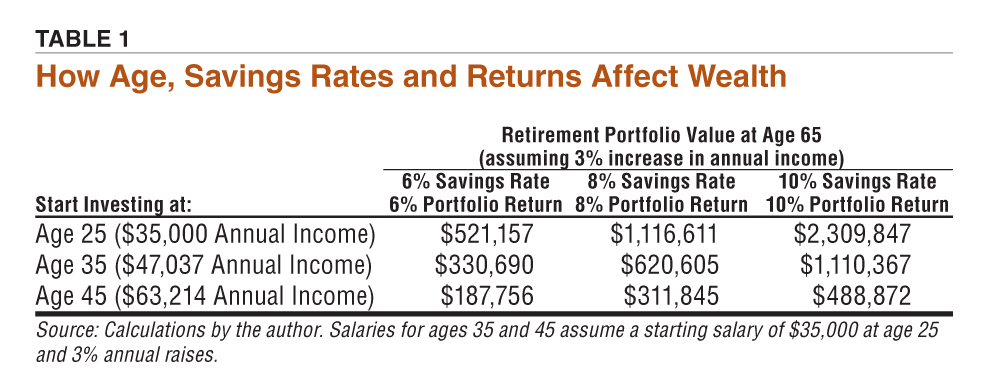
This issue is quite straightforward. Starting to invest sooner is far better than starting later—particularly if we’re talking about saving for retirement. There’s a bunch of fancy math that proves all this, but I think Table 1 pretty much nails it.
If you start saving (i.e., investing) 6% of your annual income each year beginning at the age of 25 (assuming you are earning $35,000 and that your income increases by 3% each year), you’ll have a bit over half a million dollars in your retirement investment portfolio when you reach the age of 65 (assuming you earned a 6% investment return each year—on average). That is a great achievement. But even if you can only save 3% of your income right now, great! Simply do your best at every age.
If you’re able to invest 10% of your income starting at age 25 in a portfolio that earns an average annual return of 10%, you could have over $2.3 million 40 years later. But, if you wait until you’re 45 (and after you’ve had 20 years of 3% annual raises), you’ll have less than $500,000 in your portfolio. Pretty clear, isn’t it? Start now and invest as much as you feasibly can.
You may have noticed something very interesting in the table. If your annual savings rate goes from 8% to 10%, that is a 25% increase. Likewise, if your investment portfolio return goes from 8% to 10%, that’s also a 25% increase. But, your account value at age 65 goes up by more than 100% (from $1,116,611 to $2,309,847), assuming you started investing at age 25. Pretty cool, huh? That’s the power of saving more money combined with the magic of compounding at higher rates of return.
Even if you start your investment portfolio later in life, there is still a great benefit from investing more each year. In fact, if you’re already over the age of 45, your annual investments (the amount you contribute to your investment account each year) can have a greater impact on your ending portfolio balance than attempting to earn a higher portfolio return. So, rather than increasing the risk of your portfolio in hopes of getting a higher return, simply invest more money into your portfolio if possible. Do more of the heavy lifting yourself and don’t expect the portfolio to be the hero, as I explained in the May 2018 AAII Journal (“The Impact of Saving Versus Return on Wealth”). You can be a hero, too.
Some fund companies allow surprisingly small investments to be made if you agree to make them on a regular, scheduled basis. For example, if you are able to commit at least $5 per month, you can invest in a mutual fund at Homestead Funds. Among the options available to you is the Homestead Value Fund (HOVLX). You will need to use the automatic investing program (AIP) at Homestead Funds—otherwise, the minimum initial investment is $500. You can do this online at Homestead Funds’ website. If you have questions, the number for Homestead Funds is 800-258-3030.
If you have $1,000 to invest, there are more options. They include, but are not limited to, opening an account at Vanguard. Vanguard’s STAR mutual fund (VGSTX) is a fund of funds that invests in 11 other Vanguard mutual funds—meaning that it provides broad diversification inside of just one fund. More information is available on Vanguard’s website. You can also call at 877-320-3099. Just tell them you want to open an account and give the name of the fund you are interested in. A representative will guide you through the process.
To find information about similar options at other fund companies, simply do an online search for the fund family’s name and the words “automatic investing program.” If you decide to invest in mutual funds, make a commitment to invest additional money each month. If you choose the AIP at Homestead, that will already be happening. If you decide to invest in the Vanguard STAR fund, in a different Vanguard fund or with a different fund family, you will also want to establish an automatic monthly investment with the mutual fund firm.
Of course, there are web-based investment advisory services (aka, robo-advisers), such as Wealthfront and Betterment that will choose investments for you. If web-based investing is more your style, go for it.
After you start investing, don’t expect overnight success. Investing is like a crockpot, not a microwave. It takes time—as in, 15 to 20 years. Don’t be a helicopter investor (you know, the one that hovers over their portfolio, freaking out over every hiccup). Investing is a long-run experience that isn’t helped by over-managing your portfolio.
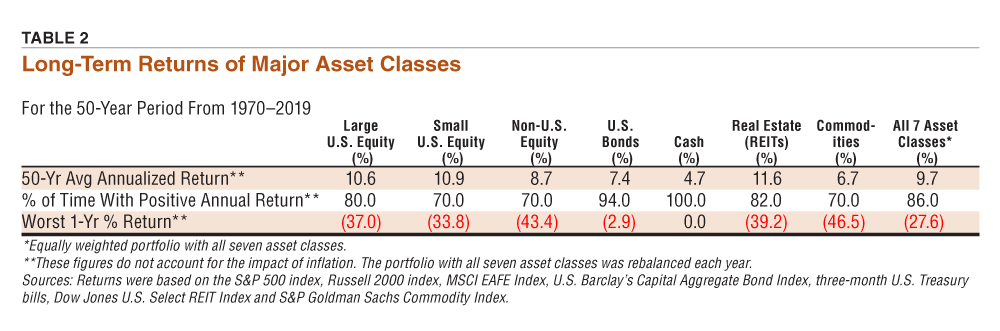
So, what type of returns should we expect over the long run? Table 2 provides a summary of the performance of seven core investments (or asset classes) over the past 50 years from 1970 to 2019.
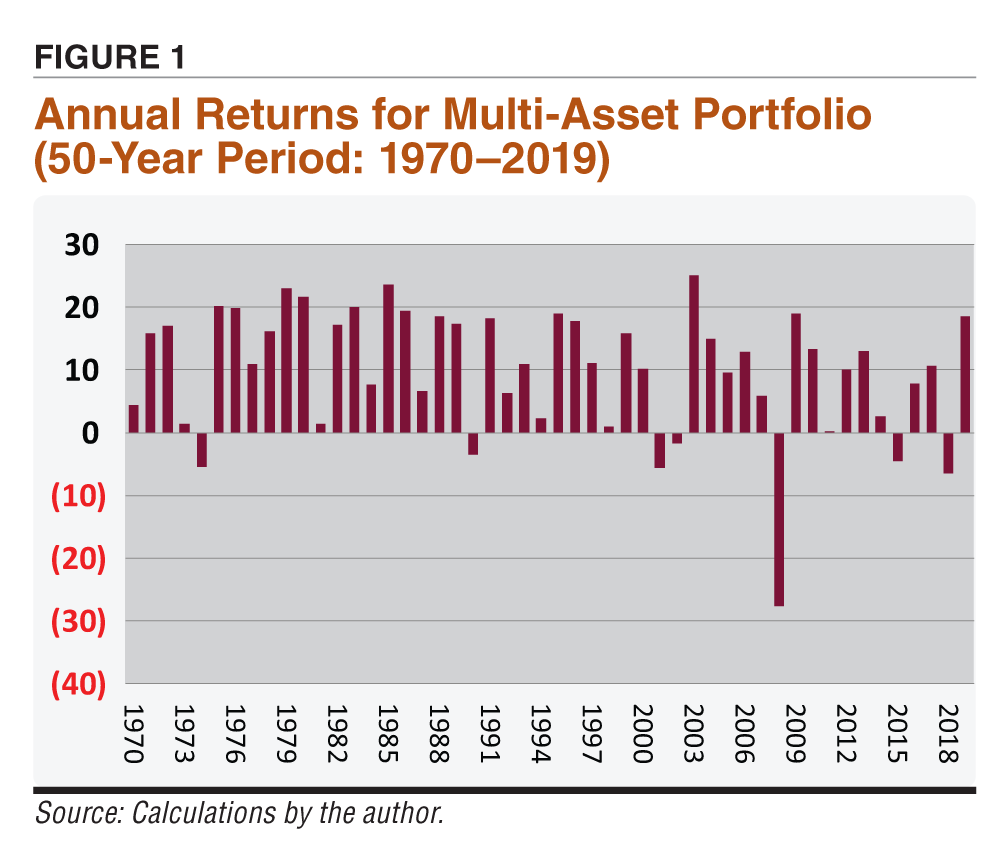
Over the past 50 years, an investment in a diversified investment portfolio with all seven asset classes (using a variety of mutual funds) produced an average return of 9.7%. Of course, there was quite a bit of variation in the year-to-year returns, as shown by Figure 1. The cool part is that a diversified portfolio had a positive annual return 86% of the time. The bad return in 2008 is pretty easy to see in the graph. The important realization is that the meltdown in 2008 is the odd duck experience over the past 50 years—certainly not the norm.
Here is the important thing to remember: The longer you invest, the more likely you are to experience a positive return. Stay in the saddle for at least 10 years and you’ll very likely have a positive experience—particularly if you build a diversified investment portfolio with a variety of types of mutual funds or exchange-traded funds (ETFs).
To build a diversified investment portfolio, you can invest in a mutual fund or ETF that focuses on large U.S. stocks, another fund that targets small U.S. stocks, another that invests in non-U.S. stocks, a mutual fund that invests in bonds, one that focuses on real estate investments and another that invests in natural resources and commodities. Finally, you will want to keep some of your investment dollars “liquid”—and that’s where the “cash” asset class comes in. Cash is a fancy term for a savings account or money market account.
When you retire, if you only withdraw 4% of your portfolio’s account balance, your money will likely last for at least 40 more years.
While this article has focused on how to and why you should start investing, I would encourage you to also think about the “why” of investing:
After you have chosen your mutual fund(s) and have initiated the automatic investing program, turn your attention to other important parts of your life. Care for the physical, emotional, social and spiritual needs of yourself and those around you. Focus outward. Money is a means to achieve goals, not an end in itself. Use financial resources to facilitate life experiences with others as well as meaningful service opportunities. Memories last far longer than things. Remember that money is a magnifier—of our virtues and vices. Seek to have your money magnify your virtues.
Finally: Teach someone else what you have learned about investing. One way is to give this article to your kids and grandkids! ▪
Investing Gurus
AAII InvestoGraphic

Beginning Investor

Chris from TX posted over 6 years ago:
Craig Israelsen from Utah posted over 6 years ago:
Nick from United Kingdom posted over 6 years ago:
rw from FL posted over 6 years ago:
Ed from Calif posted over 6 years ago:
Tony Hausner from MD posted over 6 years ago:
Tony Hausner from MD posted over 6 years ago:
Rob from UT posted over 6 years ago:
Paul from Thompson posted over 6 years ago:
You need to log in as a registered AAII user before commenting.
Log InCreate an account