Stocks that were moved from the large-cap S&P 500 index to the S&P MidCap 400 index outperformed those that were moved from the S&P MidCap 400 to the S&P 500. During a three-year period from 2016–2019, the average excess returns for stocks moving to the S&P MidCap 400 was +1.21%, while those moving to the S&P 500 was –2.31%.
Previous studies suggested that stocks had positive returns when they were added to the S&P 500 and negative returns when they were deleted. This pattern occurred regardless of whether they came from indexes with smaller-capitalization stocks or were moved down to an index with smaller-cap stocks. Stocks are moved from the S&P MidCap 400 to the S&P 500 typically when an increase in a stock’s price would cause the company’s market value to go from a range of $2 billion to $10 billion (mid-cap) to more than $10 billion (large-cap). When a reverse pattern occurs, meaning a reduction in market cap, stocks would be moved from the S&P 500 to the S&P MidCap 400. The expected trend for returns did occur for the minority of stocks that were added to or deleted from the S&P 500 index but were not previously included in the S&P MidCap 400 index.
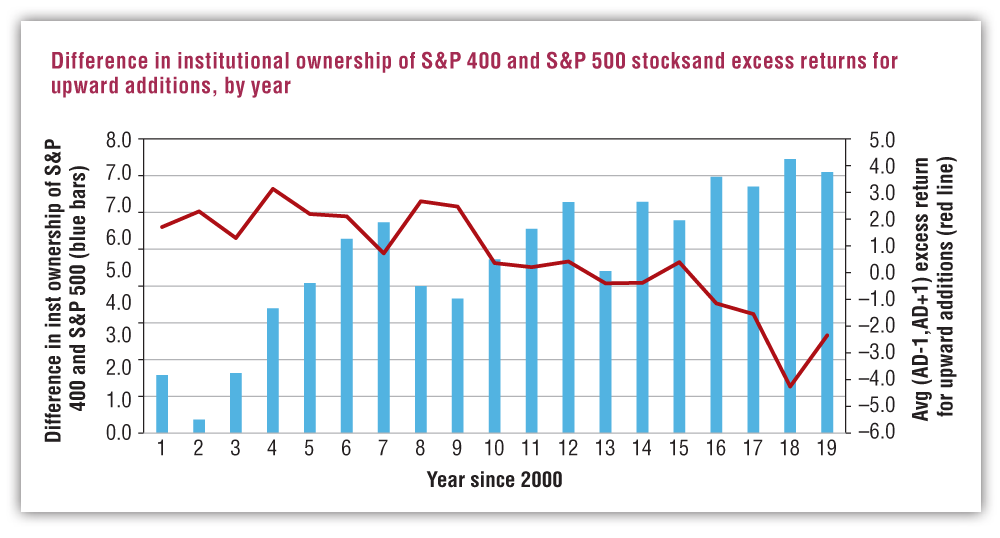
The researchers believe that the evidence points to the S&P MidCap 400’s attractiveness over the large-cap S&P 500’s over time. Furthermore, the increasing ownership of S&P MidCap 400 stocks by institutional investors, the majority of whom are active fund managers, caused market reactions to fluctuate accordingly.
The authors admit that there could be other reasons for this shift in market reaction to S&P 500 additions and deletions, though they need to be studied further.
Source: “Negative Returns on Addition to S&P 500 Index and Positive Returns on Deletion? New Evidence on Attractiveness of S&P 500 vs. S&P 400 Indexes,” by Anand M. Vijh and Jiawei (Brooke) Wang; SSRN, October 2020.







No comments have been added yet. Add your thoughts to the discussion!
You need to log in as a registered AAII user before commenting.
Log InCreate an account