Stocks with the least-similar positive language in their annual 10-K and quarterly 10-Q filings performed better than those that had the most-similar language. The monthly performance advantage was 0.41% for companies with the least-similar positive language. These returns are not dependent on the change of investor sentiment, which would be what one might expect.
The catalyst for the study was the increasing number of companies that insert non-numerical text into their SEC filings in an attempt to try to paint their performance in a positive light as much as possible within regulatory guidelines.
The 10-K and 10-Q reports are periodic regulatory filings made by publicly traded companies that consist of relevant information about the firm’s financial performance. They also occasionally include projections for large gains or losses with supportive data. Using machine learning to analyze these reports with a dataset of several language metrics around financial sentiment, percentage of words belonging to finance, and differences between last filings or similarity of language between the most recent report and the previous one, the researcher confirmed a previously studied phenomenon dubbed “the Lazy prices.” Lazy prices theory holds that firms that change the language in these filings outperform those that don’t.
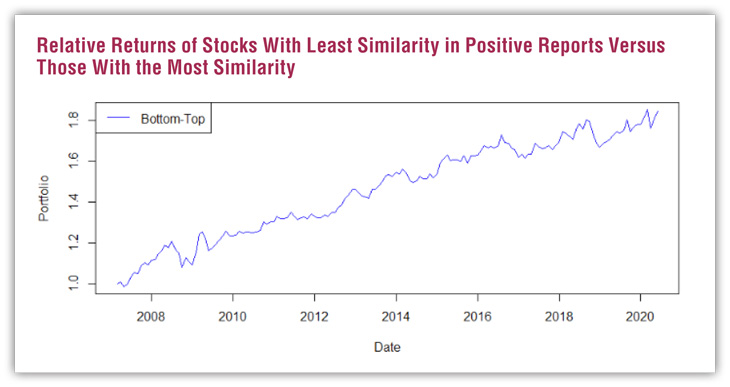
The author notes this may be an anomaly because portfolios that use this strategy have low correlation with the commonly known equity risk factors of value, size, momentum, investments or profitability, and it is uncorrelated to market factor. The study’s conclusion is that incorporating textual analysis can work for portfolios, but that asset pricing models cannot explain exactly why this strategy works or what the exact mechanism driving this dissimilar effect is. The working hypothesis is that companies have more motive to change the filings if new language would influence investor sentiment positively, but more research is needed.
Source: “The Positive Similarity of Company Fillings and the Cross-Section of Stock Returns,” by Matúš Padyšák, Quantpedia.com; SSRN, October 2020.







No comments have been added yet. Add your thoughts to the discussion!
You need to log in as a registered AAII user before commenting.
Log InCreate an account