

Related

AAII Stock Ideas
Behaving differently and focusing on a simple idea with strict discipline are common threads that define investors who’ve become famous for their success.
by William Green | May 2021

William Green has written for many publications including The New Yorker, Time, Fortune and Barron’s. He is also the author of the new book “Richer, Wiser, Happier: How the World’s Greatest Investors Win in Markets and Life” (Scribner, 2021). We discussed the observations he’s made and the lessons he’s learned from interviewing these investors.
—Charles Rotblut, CFA
You’ve been fortunate to sit down with many successful investors. Are there any commonalities that you’ve noticed?
One of the most striking things I’ve seen is what I describe as a willingness to be lonely. If you’re going to be an extraordinary investor, you have to be willing to diverge from the crowd. Doing so requires a certain type of courage, strangeness and idiosyncrasy. So, these people tend to be extraordinary, literally, in their ability to perceive what other people don’t perceive. They’re outthinking the crowd. But they also have a temperamental ability to go against consensus.
Among the investors I interviewed was Giverny’s François Rochon. He told me that most people have what he calls a tribal gene—they tend to follow the crowd, particularly in extreme moments like times of fear, but also during times of extreme exuberance. There’s a tribal desire to stay within the herd, to seek comfort in numbers, which is very natural in evolutionary terms. One of the things that’s fascinating to me about the great investors is that they lack this tribal gene.
Davis Advisors’ Christopher Davis—who comes from a family of great investors, including his father and grandfather—said to me, one of the attributes of the best investors is that they’re often emotionally lacking in some way. You can’t beat the market unless you’re diverging from the market and this means you have to be somehow immune to the pressure to conform. He believes that one of the best ways to have that immunity is if you are not really aware of other people’s emotions.
Chris’ father, Shelby Davis, was a legendary investor who led a relatively isolated life, where it was mostly just him and a stack of annual reports and quarterly reports and a phone. He was just constantly calling, constantly reading, constantly researching and trying to give himself an informational edge.
As I point out in the book, it’s dangerous for someone like me, as a journalist, to make amateur diagnoses of famous investors that are overgeneralized. But I do think it’s true that a lot of the greatest investors are emotionally different than most of us, and it’s certainly true that they’re all non-tribal.
Oaktree Capital Management co-founder Howard Marks said to me that he’s extremely unemotional. When I asked him, “How did you cope with the financial crisis? Do you remember it being very intense?” He said, “No, I don’t remember it being very difficult at all.”
I think one of the takeaways for your members is simply to ask, “How am I wired? Am I unemotional? Am I able to think for myself? Am I dispassionate and analytical? Am I inclined to panic when the market’s tumbling? Am I inclined to get overexcited or chase into fads when things are going fantastically?”
You need to be honest with yourself in answering those questions. Because if you’re not wired in a way that allows you to be a market-beating investor, the last thing you want to do is play a game you’re not equipped to win. So, you need to adapt your approach and play a different game. For me, one of the most valuable realizations is that I’m never going to have the patience, interest or skills to value companies, so that’s not a game that I ought to play. There’s no shame in that, but I need to recognize my limitations and either own index funds or hire someone who’s better suited to picking stocks.
Since we’re on the subject of personalities, it seemed like, in your book, that there’s a sense of these great investors being contrarians. It appears both in terms of exhibiting restraint during bullish times and really getting greedy during bearish times. Is that a fair assessment of what you saw?
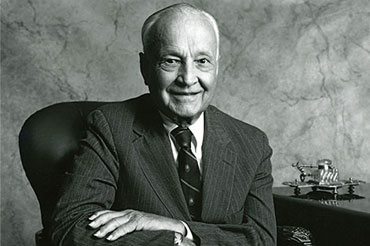
Absolutely. One of the most striking examples of this was Sir John Templeton, who ran the Templeton Growth Fund. I spent the day with him when he was about 85. He had this extraordinary record where he’d averaged 14.5% over 38 years. Which, if you do the math, means that you turn $100,000 into something like $17 million.
When I asked him for advice on what investors should do, the first thing he said was to avoid getting led astray by your emotions, including the tendency to become overly optimistic in good times or pessimistic in bad times. The second was to avoid buying investments that you don’t truly understand.
The emphasis on safety and disaster avoidance came first, but then what was really striking was his ability to exploit uncertainty. It wasn’t just that he was guarding against his own wayward emotions and the wayward emotions of his clients, it was that he was exploiting the wayward emotions of the crowd.
One exquisite example was his bet during World War II, which I regard as the boldest and most prescient bet of the 20th century. Around the time when Poland and France had been invaded, Templeton looked through The Wall Street Journal and picked out 104 stocks that were all trading at less than $1 a share. His rationale was that the war would boost spending and revive the economy, so these businesses would suddenly come back from the dead. It took about five years, but he quintupled his money.
Sir John Templeton shared the following six guiding principles with William Green. Templeton believed these principles would help any investor.
Source: “Richer, Wiser, Happier: How the World’s Greatest Investors Win in Markets and Life,” by William Green (Scribner, 2021).
Templeton coined this beautiful phrase, which was that you want to invest at the “point of maximum pessimism.” Because, as he put it, there’s nothing that’s going to give you bargains as much as other people desperately and urgently selling.
One of the key pieces of advice he gave me was to position yourself to exploit these periods of extreme uncertainty, when other people’s emotions are not under control and when mispricings suddenly become available. It’s a common theme that I’ve seen again and again with the best investors. There’s this extraordinary combination of extreme patience that enables them to sit on their hands and do nothing when there are no opportunities and then this remarkable ability to leap into action—with what Berkshire Hathaway vice chairman Charlie Munger would call gumption—at the moments where there’s real opportunity.
Munger says you should be like a fisherman standing by the stream with your spear, ready to throw it at a succulent salmon. Once you get the salmon, you wait again. Six months may pass before another salmon comes along.
So, what we’re talking about is something very different from what most investors do. Mohnish Pabrai, a hugely successful hedge fund manager who runs Pabrai Investment Funds, thinks most money managers own way too many stocks, trade them way too often and buy them when they’re much too expensive. There are times when Pabrai doesn’t own a single U.S. stock because he’s waiting patiently for that one irresistible salmon to swim in his direction.
Another theme I noticed was a favoritism toward simplicity. Gotham Funds’ Joel Greenblatt has his Magic Formula, and Vanguard founder Jack Bogle was a big proponent of buying and holding index funds. It seemed that many famous investors sought out simplicity.
Simplicity, I think, is a master principle in investing and many other areas of life. You see it in science with Occam’s razor, which says that usually the simple solution is best.
Greenblatt has an extraordinary ability to distill this extremely complex and nuanced game of investing to its essence. What he came down to, eventually, was: value an asset and buy it for much less than it’s worth. How beautiful is that? The pure essence of investing is simply to know how to value assets, buy them at a discount and then wait.
The concept itself is simplicity to the extreme, but the execution of it is difficult. You need the analytical skill to value a business. You need the courage to buy when it’s cheap, which means it’s probably something that everyone else hates. Then you need the patience and equanimity to wait for the gap to close between your estimate of the intrinsic value and the market’s belief that it’s worth much less.
Greenblatt says if you understand that simple framework—that you want to value an asset and buy it for less than it’s worth—it clarifies everything and helps you realize that 99% of what other investors are focusing on is nonsense.
When I spoke to Greenblatt, the Greek sovereign debt crisis was occurring, and everyone was panicked about the global financial system melting down. He told me, “If I own a supermarket in the Midwest that’s really cheap, why do I care what’s going on in Greece?” So, there’s just something enormously clarifying about this simple understanding of the basic rules of investing.
The most basic rule that came through in my interviews with so many of these great investors is the concept of the margin of safety: Simply buying at a discount to intrinsic value, and then having the patience to wait for the market to recognize that the asset was undervalued. Warren
Buffett tells us this. So do Munger, Greenblatt, Marks and Pabrai. Yet people still try to do all of this other fancy stuff that gets them in tremendous trouble.
There’s a tremendous advantage to be gained by investors who actually are prepared, as Munger would say, to take a simple idea and take it seriously. That’s another of the attributes that I see with all of the great investors: They’ll take a few profound truths and go big on them.
The ability to focus on a simple idea requires discipline. A lot of the investors in your book follow a disciplined approach. Did any share ideas about how to stay disciplined?
It’s one of the absolute defining characteristics of the great investors. There’s this almost fanatical discipline. When they find something that works, a strategy that works, a personal habit that helps them, they’re fanatically disciplined in applying it, not just over a few weeks or months, but decades.
One of my favorite examples of this is Tom Gayner, who’s the co-CEO of Markel Corp. I wrote a chapter about high-performance habits, where I use the metaphor of Tom’s approach to diet and exercise. It sounds almost silly and lighthearted, but it’s a beautiful metaphor for how he’s built such a formidable investment record. Tom’s approach is to be a little better, each day, than you were the last day. After seeing himself drift up to over 200 pounds, he decided to lose one pound a year over the next 10 years. While it sounds hopelessly unambitious, Gayner understood the tremendous benefit of the compounding of small marginal incremental advantages.
The same thing happened with him as an investor. Tom took four key principles about how to invest, and he applied that filter to every single company that he analyzed. And he’s done that now for 30 years. And so, if you have that consistency, if you have a few core principles that make sense—investing in companies with a high return on capital was one of them, making sure that you’re investing with people who have an equal measure of talent and honesty was another—you apply them again and again with fanatical discipline and the benefits compound over decades. That type of steady and consistent rationality, practiced over many decades, is incredibly hard to beat.
Makes sense. You mentioned Mohnish Pabrai before. I know he’s well known for having studied Warren Buffett’s model. A lot of individual investors are looking at some of these famous investors and are wondering how they model their personal approaches after them. Do you have any suggestions?
Well, Mohnish is fascinating. He decided that he was going to replicate what Buffett and Munger did and launch this 30-year game where he was going to turn $1 million into $1 billion by compounding at 26% a year.
He describes himself as a shameless cloner. His word for replicating other people’s best practices is “cloning.” What’s beautiful about the idea is that it turns out that you don’t actually have to be that original in order to succeed. You don’t need to reinvent the wheel. What you need is to understand the fundamental rules of the game and then apply those rules with relentless discipline.
In studying Buffett, Mohnish figured out that there are three core rules of investing. The first one is to understand that when you’re investing in a stock, you’re actually buying a portion of a business with an underlying value. The second is that the market is a voting machine, not a weighing machine, which means that prices don’t always reflect the true value of the business you’re investing in. The third core rule is to buy stocks at a discount to their intrinsic value, which gives you that margin of safety between the value and the stock price.
There are a few other rules that Mohnish figured out along the way that are also all stolen from Buffett and Munger. He’s perfectly happy to admit it. For example, Mohnish insists on staying within his circle of competence. He concentrates very heavily on a few stocks that are massively mispriced with minimal downside risk and huge upside potential. He also avoids anything too hard.
As Mohnish sees it, his advantage is that he’s mostly playing against people who don’t know the rules of the game. So, if you think about this as a takeaway for your readers, it’s simply to become aware of these inviolable rules that have served the greatest investors well again and again, and then not violate them.
One thing that I hope readers of my book will do is identify a handful of these simple ideas that are so powerful to them and resonate with them so deeply that they’ll really take them seriously, and they’ll actually live by them. Because I think that’s where the power lies. For me, the idea of cloning what the smartest people have already figured out is one of the most valuable and underappreciated ideas of all.
After speaking to many famous investors who achieved enduring success over long periods, William Green identified several fundamental lessons that he can’t afford to forget.
Source: “Richer, Wiser, Happier: How the World’s Greatest Investors Win in Markets and Life,” by William Green (Scribner, 2021).
That’s great. Is there anything I should’ve asked you that I haven’t?
One of the most important insights that struck me repeatedly in interviewing the greatest investors is the importance of consciously removing fragility from your portfolio and your life. And one of the best ways to do that is by recognizing first what not to do. As Munger said to me, many investors are so focused on reaching for the prize that they fail to concentrate on avoiding all of the things that can prevent them from getting the prize. Munger’s idea is instead of trying to be smart, try to not be a fool.
Focus first on all of the things that can trip you up. Munger suggests picturing a terrible outcome and asking what decisions are likely to lead to it. Then don’t do those things! Munger was guided in this by Carl Gustav Jacobi, a 19th century algebraist who famously said, “Invert, always invert.” So, you should ask, “If I want to be a great investor, how do I avoid being a terrible investor?” To use Munger’s phrase, you need to ask yourself: What are “the standard stupidities” that so often lead investors to disaster?
Standard stupidities are things like buying funds with excessive fees, trading too often so that taxes and expenses eat away at your returns, getting caught up in fads, betting on cyclical stocks at the top of the cycle and investing in companies you don’t understand.
Fidelity’s Joel Tillinghast, who is one of the great investors, said to me that he’s never going to invest in developmental-stage biotech companies because he can’t come up with a valid estimate of what their earnings will be and because they’re so volatile that it would be hard to keep his emotions under control.
Fred Martin, who founded Disciplined Growth Investors, avoids making outsize bets because, as he puts it, he has to be able to recover from his mistakes. His ironclad rule is that he’ll never invest more than 3% of his portfolio in any new idea. He admits that he might have achieved higher returns if he’d concentrated more, but he’s still managed to beat the market massively while owning 45 to 50 stocks. And, most important, he’s survived while so many other money managers blew themselves up.
And so, I think this question of how to remove fragility from your portfolio and your life by concentrating on what not to do and by asking yourself where you’re vulnerable is so powerful.
I have a basic default rule with the funds that I own and the tiny number of individual stocks I own, that I won’t sell them for five years. I’ve owned two index funds for more than 20 years, and I’ve owned Guy Spier’s Aquamarine Fund for more than 20 years. I’ve told Guy that I regard this as a 40-year investment. Knowing that I want to do fewer stupid things moves me toward making fewer decisions, because I know that the more hyperactive I am, the more opportunity I have to be wrong. For me, at least, it’s best to approach investing as a very long game in which patience tends to be richly rewarded.
If I were to suggest a first step for any investor, I think it would be to make a list of the core principles that you really believe in and also to list what you’re not going to do. Then—particularly in times of emotional intensity, when the market’s either surging or plummeting—look at that set of simple rules and beliefs to remind yourself of what you firmly believe to be true over the long term, or at least approximately true. It will become your mission statement, your true north.
Investors need a set of core principles that they really believe in and the self-awareness to decide what game they are suited to play. Then they need the discipline to keep plugging away calmly and patiently until they reach that desirable destination.
More at AAII.com: AAII Stock Screens based on Templeton, Greenblatt, Buffett and others, www.aaii.com/stockideas/gurus
We think you’d like this related webinar! Individual Investor Show: How the Famous Think, Members’ Mistakes and Investing Preferences
AAII Stock Ideas
AAII Stock Ideas

Portfolio Strategies

GERALD F from FL posted over 5 years ago:
VAIDY B from CAN posted over 5 years ago:
STEPHEN P from CO posted over 5 years ago:
JAMES R from OH posted over 5 years ago:
THOMAS M from IL posted over 5 years ago:
MITCHELL M from HI posted over 5 years ago:
Lawrence I from NY posted over 5 years ago:
BARRY J from TX posted over 5 years ago:
Ralph T from MD posted over 5 years ago:
ROBERT A from NC posted over 4 years ago:
You need to log in as a registered AAII user before commenting.
Log InCreate an account