


Related
Alternative Investments
Cryptocurrencies are exciting and the interest in them is not abating. However, what’s important to the individual investor is understanding the basics of the technology.
Cryptocurrency is a form of digital money. Specifically, it is a virtual currency that you may use to purchase goods and services or hold as a speculative investment. It is often referred to as decentralized, which means the currency is uncontrolled by a third party or an authority, such as a government.
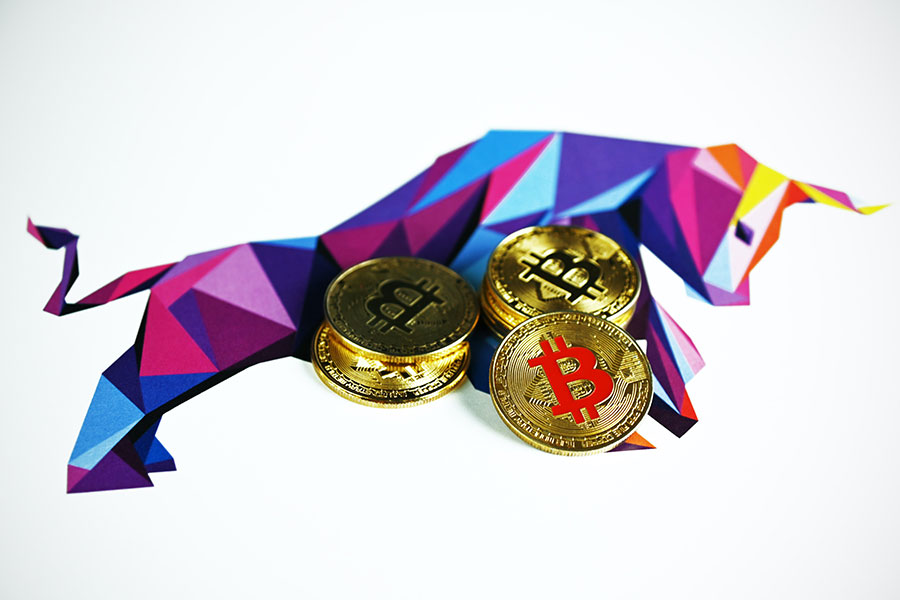
The most popular and most valued cryptocurrency is bitcoin. This was the first cryptocurrency, created in 2009. Bitcoin is based on blockchain technology, theoretically outlined by computer scientists and cryptographers a couple of decades before its first practical use with bitcoin.
Blockchain technology allows bitcoin to be sent peer to peer in a decentralized network. Blockchains are specialized databases that act as transparent ledgers of all bitcoin transactions. Every transaction is recorded in the ledger with a time stamp. When a predetermined number of transactions has been recorded within the blockchain, those transactions are grouped together in a “block,” which is then “chained” to the previous block. A time stamp permanently marks the occasion.
This record is acknowledged across all the computers monitoring the blockchain, confirming the veracity of the ledger. The network of computers monitoring the blockchain ledger allows for the currency’s decentralization and virtuality. Because each computer contains a record of the blockchain, errors or frauds are easy to find and block.
Developed independently of Bitcoin, blockchain technology as a ledger has many potential uses outside of currency authorization. The technology uses cryptography to secure its record. Because its record is permanently secured through cryptography, blockchains are being explored for use in managing elections and inventory and to speed up traditional transactions. Banks and financial institutions will benefit from the speed at which blockchains can verify transactions as they implement the technology.
There are thousands of cryptocurrencies available to consumers. While the jargon and concepts take some understanding, blockchain technology is simpler to implement in a basic usage than it appears to those unfamiliar with the technology. This is why there are so many cryptocurrencies.
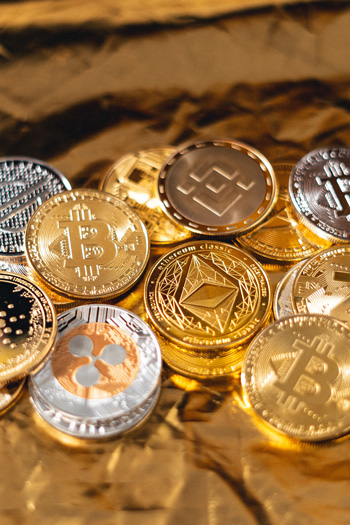
Bitcoin dominates the cryptocurrency market as the original. According to Investopedia, the total value of this digital currency accounts for about 60% of the $1.5 trillion total value of all cryptocurrencies. The second-largest cryptocurrency by market capitalization is ethereum, with a total of about half that of bitcoin. There isn’t much of a practical reason at this point in time for individual investors to look into any cryptocurrencies beyond those with the top market capitalizations.
Many of the cryptocurrencies created after bitcoin—called altcoins—are valued for their ability to be exchanged for bitcoin because there are only two ways to get bitcoin: to trade for it or to “mine” it. Mining bitcoin involves using computers for two activities: to verify a minimum number of blockchain transactions and to solve complex math problems, a costly and potentially unrewarding endeavor conceptualized as “proof of work.” This proof of work is what makes bitcoin mining worthwhile for those who have the computing power to do so. Not everyone has the material ability to mine for bitcoin, so those who can are rewarded.
Mining becomes more difficult as bitcoin approaches its predetermined limit to the number of units in circulation; this scarcity also contributes to bitcoin’s value. Every four years, the rewarded bitcoin from a successful mining operation is halved. At this elliptical rate, bitcoin will be totally mined around the year 2150.
For individual investors, cryptocurrencies such as bitcoin or ethereum should be viewed as alternative assets within portfolios. The target allocation will depend on your risk profile, age and objectives.
However, the difficulty with bitcoin and similar alternative cryptocurrencies as investments is their basis in speculation as currencies. Unlike shares of stock issued by a company, cryptocurrencies aren’t tied to any business growth or cash flow produced from operations.
In addition to the dissonance between holding an investment in a company and holding an investment in a currency, cryptocurrencies are noted for their volatility. Bitcoin’s price has dropped dramatically at several points of apparent total reversal in the decade since its creation.
Although bitcoin has recovered each time, its liquidity and subjugation to investors’ fast, news-driven emotions can leave you holding the investment at the wrong time, at the wrong valuation, for your investing timeline.
Bitcoin’s price volatility also hurts its conception as a currency. People are less likely to spend bitcoin and keep up its circulation in the economy if they believe it will vastly increase in price in the near future.
It should also be noted that there are some cryptocurrencies predicated on stability, such as the USD coin, of which one unit is always redeemable for one U.S. dollar. The basic strength of blockchain technology allows many permutations of cryptocurrency applications.
To directly own a cryptocurrency, you need a digital wallet. This element is where the cryptography of the blockchain is highlighted. The prefix crypto- comes from Ancient Greek meaning concealed, and the suffix -graph comes from Ancient Greek meaning writing or marking. Cryptography—the art of concealed writing—is what grants blockchain and bitcoin their security from third parties. (This is also why it is used in illegal activities.)
The blockchain ledger records every bitcoin transaction. Each transaction is recorded and given an algorithm-generated number sequence called a private key that identifies the transaction. A public key is derived from the private key, which is used as a public address for the destination of the transaction. At each step the keys are concealed by complex algorithms, rendering the transactions anonymous.
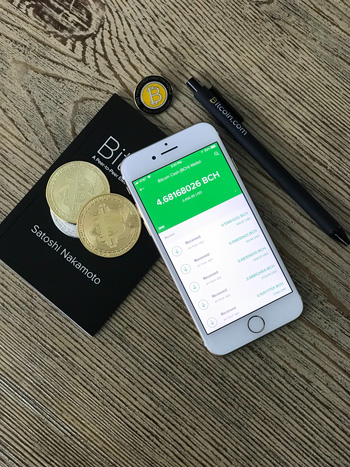
The digital wallet is where your private key is stored. Your private key, a systemic verification of your bitcoin transaction, allows you to access your cryptocurrency. If you lose the private key, you will not be able to recover your bitcoin.
Losing access to a private key is where bitcoin scams occur. Because of the blockchain’s security, the exploitable weakness in the cryptocurrency system for hackers and scammers is the human element. Social engineering cons or password hacking are the common ways bitcoin is stolen. If you are going to invest in cryptocurrencies through an exchange, find one that focuses on security. In at least one infamous case, an exchange was hacked, resulting in the loss of millions of dollars in bitcoin.
Coinbase is a popular cryptocurrency trading exchange for bitcoin and altcoins. The exchange will provide a digital wallet for your cryptocurrencies. A growing number of online brokers are also beginning to offer cryptocurrencies, including TradeStation and SoFi Active Investing. Exchanges charge transaction fees, but mobile broker Robinhood offers cryptocurrency trading for free in U.S. states that allow it.
Unfortunately, bitcoin exchange-traded funds (ETFs) have yet to take off as a mainstream investment vehicle. The Grayscale Bitcoin Trust  (GBTC) is alone for now. Many proposed cryptocurrency ETFs have not been able to gain approval from the U.S. Securities and Exchange Commission (SEC).
Cryptocurrencies are exciting and the interest in them is not showing signs of abating. Bitcoin’s fluctuations add dramatic intrigue to the asset’s news coverage. What’s important is understanding the basics of the technology.
Cryptocurrencies are still nascent. Blockchain, the technology underwriting cryptocurrencies, will continue to show up in new applications. Therefore, cryptocurrencies and blockchain technology are not expected to go away any time soon.
For now, cryptocurrencies offer an alternative asset for your portfolio, but there are plenty of ways to invest in alternative assets that are less risky and less speculative.
Alternative Investments

Investor Professor
Computerized Investing

Ruth B from WI posted over 5 years ago:
JOE M from MO posted over 5 years ago:
CARLOS G from FL posted over 5 years ago:
DONALD M from AZ posted over 5 years ago:
JOE C from CA posted over 5 years ago:
Robert M from TX posted over 4 years ago:
You need to log in as a registered AAII user before commenting.
Log InCreate an account