

Related

Beginning Investor
Starting on the Road to Investing


AAII InvestoGraphic
Extreme weather events have negative implications on income and retirement savings, particularly among younger individuals.
by Eunice Kim | January 2024

Extreme weather events have negative implications on income and retirement savings, particularly among younger individuals.
Using a life-cycle investment model, researchers looked at the impact of negative savings shocks related to natural disasters on long-term consumption, especially for younger investors. The study’s model analyzed how extreme weather-related shocks affect lifetime consumption, including extra spending on disaster damages or managing negative income shocks from lost wages and employment.
The results indicate that climate shocks lead to noticeable reductions in both consumption and wealth. Despite the potential decrease in an investor’s risk-taking capacity with climate shocks, a compensatory effect arises from lower wealth accumulation that results in a higher equity allocation.
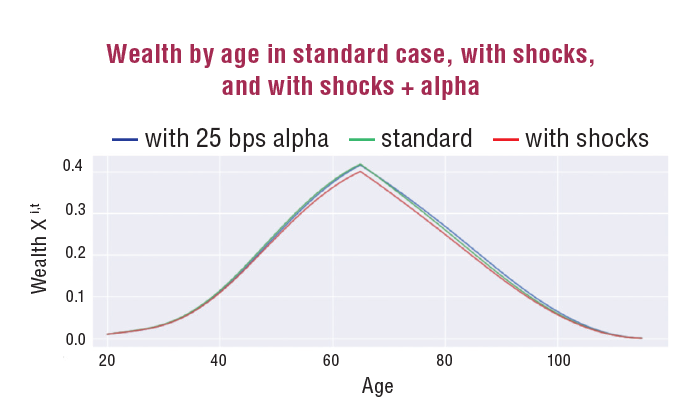
The data suggests that younger individuals, with more years susceptible to potential climate shocks and an increasing likelihood of such events, bear a higher average number of climate shocks compared to those in retirement. These shocks compound over time, leading to reduced savings capacity during accumulation years and ultimately resulting in lower savings during decumulation years for younger investors.
Researchers sought to identify the extra return (alpha) required to fully offset consumption and wealth gaps from climate shocks. They found that incorporating 25 basis points (bps) of alpha achieved comparable wealth accumulation and retirement consumption levels to the standard case.
Lastly, a significant drop in employer contributions to pensions in counties experiencing more natural disasters was observed. Policy-related options to address retirement savings shortfalls resulting from extreme weather events include disaster income insurance, portfolio hedging, adding portfolio alpha and improving homeowner transparency.
Source: “Extreme Weather and Retirement Savings,” by Ted Daverman, Joshua Kazdin, Michael Pensky and Fiona Sloof; November 2023.
Beginning Investor
AAII InvestoGraphic

ROBERT A from NC posted over 2 years ago:
JOHN L from NJ posted over 2 years ago:
VICTOR T from NV posted over 2 years ago:
WAYNE M from VA posted over 2 years ago:
You need to log in as a registered AAII user before commenting.
Log InCreate an account