

Related


Portfolio Strategies
Using Reverse Mortgages to Mitigate Periods of Poor Returns

Financial Planning
Having better access to borrowing against home equity significantly improves recoveries after health shocks. The ability to utilize home equity decreases the probability of a health shock being “uncontrolled.”
by Charles Griswold | May 2022

Having better access to borrowing against home equity significantly improves recoveries after health shocks. The ability to utilize home equity decreases the probability of a health shock being “uncontrolled.”
Most adults (80%) who are age 62 and older are homeowners. Approximately 35% of older adults are diagnosed with a major disease by age 65. Since home equity is the primary component of wealth for many of these adults, medical and economic researchers from The Ohio State University looked into what role tapping home equity plays in health shock outcomes.
The researchers relied on data from the 1998 to 2016 waves of the Health and Retirement Study (HRS). This study collects comprehensive survey information every two years from adults aged 50 and older on topics such as wealth and income, housing tenure, health status and detailed socio-demographic characteristics. They analyzed the data by comparing home equity levels before and after a health shock. Health shocks were defined as the onset of diabetes, heart disease, lung disease or cancer. Researchers also looked at the use of mortgage borrowing after a health shock as well as accessing home equity through the sale of a home following the onset of a new disease.
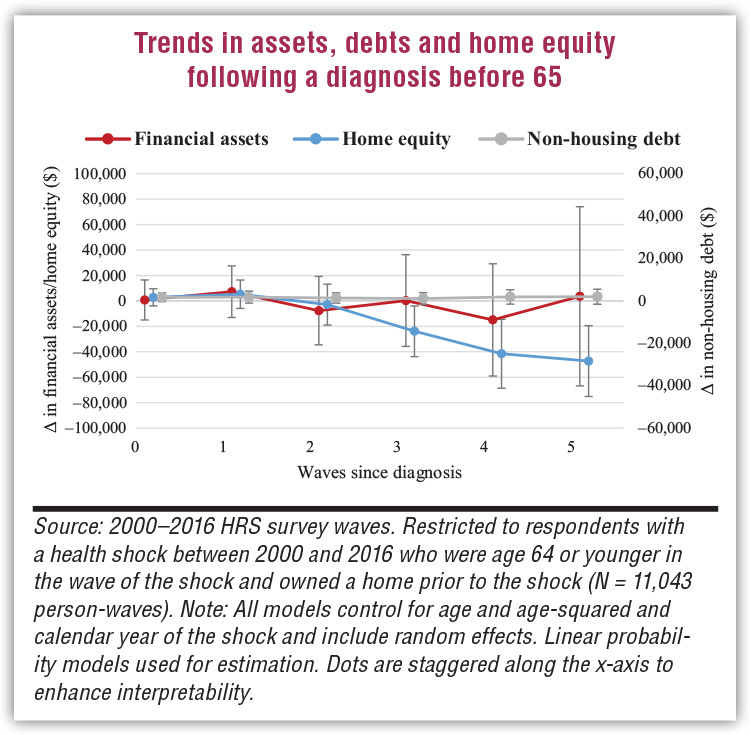
They found “that there is a substantial effect of accessing home equity through mortgage borrowing on the likelihood of controlling disease following a health shock.” The study’s authors estimated that for each $10,000 borrowed after diagnosis, the probability of the disease being uncontrolled is reduced by 33%.
The researchers also found a direct relationship between home equity levels and the likelihood of living longer. Notably, when a self-rated health index was used, the relationship between home equity levels prior to diagnosis and post-onset self-reported health was “very small” though still positive.
Source: “Economic Security in Retirement: Does Borrowing from Home Equity After a Health Shock Affect Health Outcomes?,” by Donald Haurin, Joshua Joseph, Cäzilia Loibl and Stephanie Moulton; University of Wisconsin-Madison, 2021.
Portfolio Strategies
Financial Planning

No comments have been added yet. Add your thoughts to the discussion!
You need to log in as a registered AAII user before commenting.
Log InCreate an account