


Charles Rotblut leads a class in AAII's new Essential Investing Video Course. Go to https://www.aaii.com/ves for more information and to subscribe.
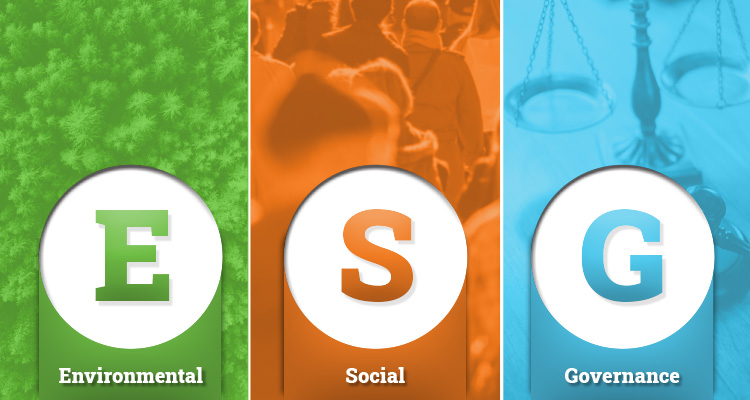
The concept of socially responsible investing (SRI), which encompasses environmental, social and governance (ESG) and other values-based investing strategies, seems straightforward on the surface: Align your portfolio with your conscience and your desires to make the world a better place.
There certainly has been growth in this space. There were 1,048 mutual funds and 225 exchange-traded funds (ETFs) classified as socially responsible by Morningstar available in the U.S. as of the end of the first quarter of 2022. Assets under management (AUM) are approximately $790 billion among socially responsible mutual funds and $122 million among socially responsible ETFs.
Most offerings are far smaller than these averages. The median assets managed are $138.0 million for mutual funds and $39.5 million for ETFs. Part of this is due to the young age of many funds. Nearly 40% of all current socially responsible mutual funds and 76% of socially responsible ETFs have been launched within the past five years.
A bigger challenge than the short histories and small AUM is ensuring that the chosen investment matches up with your desires. The ratings assigned by the main providers vary significantly. An update to the 2019 study “Aggregate Confusion: The Divergence of ESG Ratings” by Florian Berg et al found that “correlations between [ESG] ratings range from 0.38 to 0.71.”
Then there is the question of what’s “good” and what’s “evil.” Alcohol has traditionally been classified among “sin” stocks. The negatives of irresponsible drinking are numerous and tragic. The plastic rings holding six-packs of beer cans are not environmentally friendly. Yet, many breweries, distilleries and wineries operate in a sustainable manner.
Energy companies fall into the debate of what Larry Swedroe describes as green versus brown. Oil is a big contributor to pollution. But many energy companies are also investing in next-generation energy solutions. So, should they be excluded from environmentally friendly strategies? What if an energy company’s composite ESG rankings are driven up by high marks for social and governance factors? Should they be included or excluded from an ESG portfolio?
After reading Swedroe’s new book, “Your Essential Guide to Sustainable Investing” (Harriman House, 2022), and speaking to him along with our assistant editor Anine Sus, it is apparent that when it comes to socially responsible investing, one person’s devil can be another’s angel.
If you have an interest in SRI, ESG or other values-based strategies, check out our interview with Swedroe in this issue. We talked about the challenges and benefits that come with such strategies. Among Swedroe’s suggestions for incorporating an SRI approach was to use Morningstar’s ratings. We include Morningstar’s socially responsible designation on our mutual fund and ETF evaluator pages as well as in our mutual fund and ETF guides.
A Change Is Coming to the Print Edition of the AAII Journal
I cautioned earlier this year that we may need to change the paper used in the print edition of this magazine. Well, “may” is now “will.” The paper we have been using is being discontinued by the paper mill. The paper we are likely to first use as a replacement is expected to be discontinued by the end of this year, leading to a second change.
Here’s what our printer told us: “In general, mills are moving away from less profitable or ‘specialty’ stocks … to producing packaging goods as they are easier and less expensive to produce and more profitable for them. Paper supply has never been tighter.”
The first paper change will likely occur with the July 2022 issue. The second change will be later this year or early next year.
In the background of all this, an overall 6.5% postal rate hike will go into effect in July. Though, as a nonprofit organization serving individual investors we try to keep the cost of basic and life membership low, we are not immune to cost increases and supply chain issues.
Joining the many AAII members who read the AAII Journal digitally is a win-win. You’ll be able to access each issue sooner, save your favorite articles to your personal digital library and access related video content. Plus, switching will allow us to continue to provide great content and tools without increasing the cost of membership.
To switch from print to digital delivery, contact Member Services at members@aaii.com or 312-676-4307. Alternatively, go to My Account, scroll down to My Subscriptions and click “Opt Out” by AAII Journal.
Wishing you prosperity and good health,

Related
AAII How-To
Finding ESG Mutual Funds and ETFs
Related

AAII Community
Join the Sustainable Investing Boom
Discussion
FREE REPORT

Get your free copy of our special
report analyzing the tech stocks
most likely to outperform the
market.
JOHN D from NJ posted over 4 years ago:
You need to log in as a registered AAII user before commenting.
Log InCreate an account