



Featured Tickers:
Environmental, social and governance (ESG) investing has caught fire, to use a pertinent metaphor. What’s stoking the fire is investors’ interest in an alternative system for determining value.
The principles behind ESG investing are generally traceable to any sustainable practice putting emphasis on long-term concerns. Previously, the small level of interest allowed niche use of terminology for sustainable investing, but mass popularity now highlights a diverse set of applied names.
Words and conceits fly across the wires, and individual investors are lost in the marketing crisscross. In “Your Essential Guide to Sustainable Investing” (Harriman House, 2022), Larry Swedroe and Samuel C. Adams define sustainable investing as encompassing conventional values-based strategies (e.g., avoiding sin stocks), ESG, socially responsible investing (SRI), impact investing and philanthropy.
These names refer to real investing practices. Investors deeply engaged with the emerging sustainable investing products are those who have learned to match the real practice to its name and understand which sustainable investing strategies they have access to.
Public Sustainable Investing
Individual investors are mostly locked into widely available products for sustainable investing. These encompass SRI and ESG mutual funds and exchange-traded funds (ETFs). Stocks of companies rated high on socially responsible and ESG metrics also fall into this realm.
SRI is commonly believed to have its basis in the Quakers’ refusal to invest in businesses profiting from slavery. Investors still aim to achieve a maximal relationship between risk and return; however, they first establish rules to avoid certain businesses, typically based on ethical and personal preferences.
However, SRI strategies are not just focused on negative screening of potential investments. Some strategies look to invest in companies that are providing solutions to present problems—including those tied to ESG concerns, which are determined by the political and social climate of the time. Currently, this involves tackling problems such as curbing carbon footprints, reducing poverty and expanding gender equality.
SRI fund managers consider assets that meet certain ESG standards—or other criteria, including those tied to religious values—and are likely to realize higher returns, while reducing the portfolio’s risk. The ideal is to invest in well-managed companies with robust corporate governance policies that are aligned with the shareholder’s values and desires. Such companies can also incorporate responsible business practices designed to minimize potential regulatory, litigation and reputational risks to generate greater long-term value.
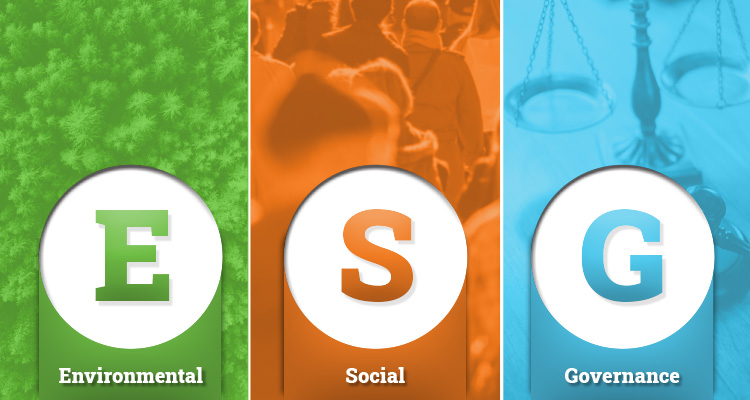
ESG investing is the broadest way to refer to the various capacities of sustainable investing. What makes this so is the growing adoption of environmental, social and governance characteristics as a basis for deriving ratings systems.
ESG data is most often categorized as non-accounting or intangible information because it is incorporated into valuation considerations. The perceived reduction of business risk reduces the cost of capital used for determining the present value of a company’s future cash flows.
BlackRock Inc.’s  (BLK) iShares is the market leader of ESG strategies, with some of the largest ESG ETFs. Fund managers at BlackRock are also incorporating ESG information into their investment decisions to help enhance risk-adjusted returns, regardless of whether a strategy has a sustainability mandate.
AAII members can find mutual funds and ETFs designated as being socially responsible in our mutual fund guide and our ETF guide. Socially responsible investments are also designated as such on our mutual fund and ETF evaluator pages. See this issue’s AAII How-To column for more on AAII’s resources for finding ESG funds and ETFs.
Private Sustainable Investing
Impact investing has a closer relationship with philanthropy than SRI and ESG types of sustainable investing.
At its core, impact investing is slightly different from other sustainable investing strategies in aligning the investment strategy at hand with the investor’s personal values that address long-term concerns.
The main difference is the vehicle for impact investing. Mostly, these are private equity portfolios, available only to institutions, foundations and high-net-worth individual investors. Impact investing puts capital directly into companies, organizations and funds that will grow over time to expand both profit and the reach of their solution to a particular ESG-related problem.
Impact investing occurs across asset classes, but often equity investments are made in private companies, which means that information is limited. Most individual investors will face the same challenges to investing in private equity as they will when seeking impact investing outlets.
Private equity investments are less liquid, and pricing information is more opaque; therefore, they are subject to questionable valuation assessments.
Certain individual investors can access private equity directly. These individuals are considered accredited investors or qualified clients. The designated sophistication authorizes the purchase of securities that are not registered with regulatory authorities like the U.S. Securities and Exchange Commission (SEC).
These investors are considered to have greater financial security and knowledge to deal with the characteristics of investing in private equity and should be in a better position to deal with the risk of any significant loss in their investment.
Online Exclusive: The Difference Between Sustainable Investing and Impact Investing Video
We think you’d like this related webinar! Individual Investor Show: The ESG Playbook for the Socially Conscious
Related
AAII How-To
Finding ESG Mutual Funds and ETFs
Related

First Cut ETFs
Socially Responsible ETFs
Discussion
FREE REPORT

Get your free copy of our special
report analyzing the tech stocks
most likely to outperform the
market.
No comments have been added yet. Add your thoughts to the discussion!
You need to log in as a registered AAII user before commenting.
Log InCreate an account