

Related

Financial Planning
The Benefits and Costs of Long-Term Care Insurance


Financial Planning
When examining elder care in the U.S., informal care is often more significant than formal care.

When examining elder care in the U.S., informal care is often more significant than formal care.
Two researchers studied the state of the long-term care system in the U.S. by analyzing 2018 data for those age 65 or older from the Health and Retirement Study (HRS). The key measures of health used in the analysis are based on reported functional limitations, such as dressing, bathing and eating.
With an aging U.S. population, a prominent issue is the cost of long-term care for the elderly who cannot care for themselves. Thirty percent of those 65 or older, and 60% of those age 85 or older, report some limitation to their ability to perform daily activities.
The study noted that the median price of formal care in a nursing home is greater than the total wealth of almost one-third of the elderly, and two years in a nursing home would empty the wealth of almost one-half of this population.
With the absence of a national long-term care insurance program, the public is the primary payer for formal long-term care. The two main public programs that cover this care are Medicare and Medicaid. Together, these two programs pay for 63% of formal long-term care, while 19% of costs are paid by individuals and only 10% are paid by private insurance companies, as reported in the study.
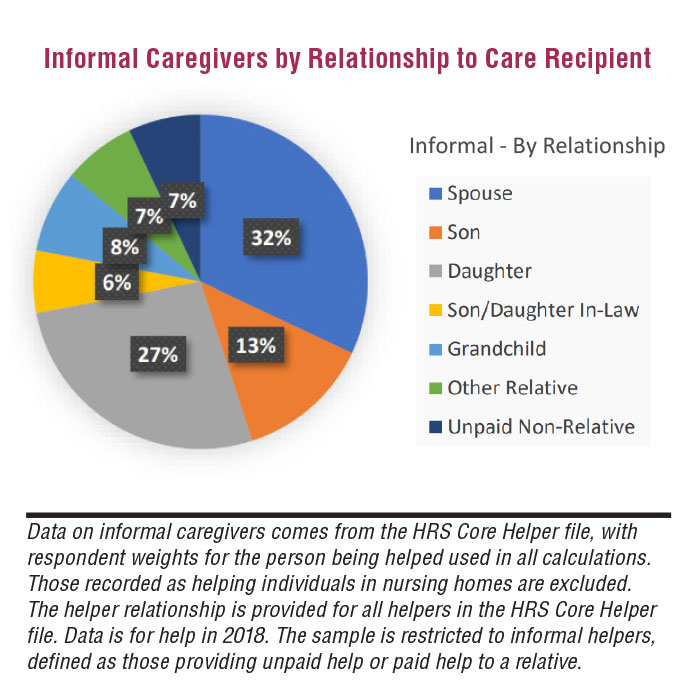
Long-term care for the elderly in the U.S., including the estimated cost of informal care, makes up almost 2% of U.S. gross domestic product (GDP). Informal care by family members amounts to 27% to 40% of this total cost and is privately financed. The study concludes that the importance of this informal care for those who lack sufficient resources for long-term care is often overlooked. Spouses, daughters and sons deliver the majority of informal care.
Source: “Long-Term Care in the United States,” by Jonathan Gruber and Kathleen M. McGarry; National Bureau of Economic Research, November 2023.
Financial Planning
Financial Planning

ROBERT A from NC posted over 2 years ago:
Jean S from USA posted over 2 years ago:
Don P from USA posted over 2 years ago:
JOHN L from NJ posted over 2 years ago:
JEFF D from OH posted over 2 years ago:
You need to log in as a registered AAII user before commenting.
Log InCreate an account