

Related

PRISM Wealth-Building Process
A One-Page Plan for Maximizing Long-Term Wealth


AAII InvestoGraphic
Higher financial awareness levels lead to increased savings, lower credit card delinquency and improved retirement planning.
by Omar Beirat | March 2025

Higher financial awareness levels lead to increased savings, lower credit card delinquency and improved retirement planning.
Researchers developed a financial awareness index by analyzing Google search trends related to 529 savings plans, credit card delinquency and individual retirement account (IRA) savings. They tracked how often people searched for these topics over time and compared trends across states and for the U.S. from 2004 to 2022.
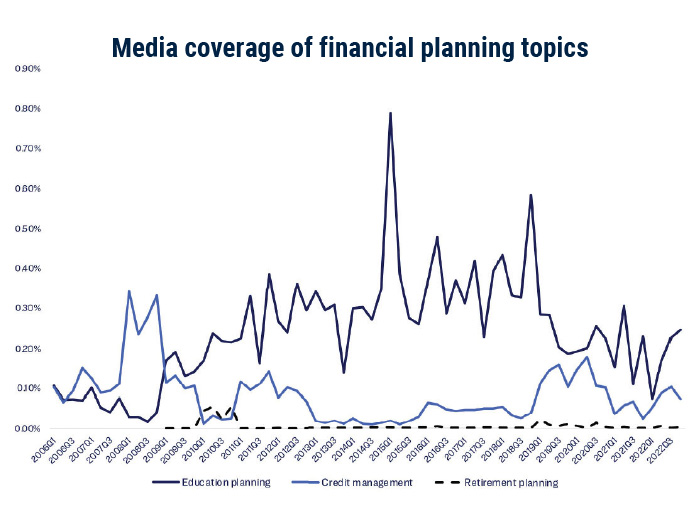
The study found a strong link between financial awareness and improved financial outcomes. Individuals with higher financial awareness save more for education, manage credit more effectively and invest more in retirement accounts. A one-unit increase in financial awareness is associated with a 9.89% to 10.99% increase in 529 savings balances, a 1.09% to 1.35% reduction in credit card delinquency rates and a slight but statistically significant increase in IRA savings as a share of total financial assets.
The researchers conclude that staying up to date on savings options, credit management strategies and investing opportunities can result in more strategic choices that strengthen financial security and support wealth accumulation. Actively engaging with financial resources, tracking economic trends and utilizing educational tools can help individuals navigate financial complexities with greater confidence and efficiency.
Source: “Financial Awareness and Its Role in Financial Behavior,” by Ning Tang; TIAA Institute Research Dialogue, September 2024.
PRISM Wealth-Building Process
AAII InvestoGraphic

BARRY J from TX posted over 1 year ago:
ROBERT A from NC posted over 1 year ago:
You need to log in as a registered AAII user before commenting.
Log InCreate an account