



 KO
KO
Dividends have long served as an enticement for investors to get their investment in the hands of the issuing corporation. From their first use, dividends have at least partially satisfied an investor’s desire to share in a company’s profit. Dividends provide a realized return to the investor without the need to sell off the investment. Once the dividend has been handed out to investors, though, a greater question arises: What should you do with the extra cash?
A disciplined solution to this question is to reinvest that money back into some kind of security, so that even more return is accrued and compounded from your initial investment. Corporations and investors alike love the idea of reinvesting distributed capital, which is why systems have formed to expedite the reinvestment process for investors.
Many public companies offer their shareholders dividend reinvestment programs or plans (DRIPs), which automatically reinvest the dividends paid. Instead receiving the quarterly cash dividend, investors receive more underlying shares in a company. What the investor receives in shares varies based on the company’s policy, the share price, and the dividend amount. If a dividend does not cover the entire price of a whole share of common stock, the DRIP allows the purchase of a fractional share.
DRIPs make a lot of sense for individual investors seeking returns from long-term investments. If you know you want to be invested in a company’s stock for a number of years—depending on your investment strategy—reinvesting dividends is an effective route to maintain your long-term interest in a company’s growth.
An additional benefit of holding a company’s shares for its DRIP is the dollar cost averaging aspect. When a fixed amount is invested at a regular interval, a varying number of shares is purchased as the stock price fluctuates. Over time, following the principal behind dollar cost averaging actually results in the investor spending less for a similar number of shares. A DRIP essentially functions the same way, as dividends are paid at a relatively stable and increasing rate on a regular quarterly basis.
Although there are many advantages to utilizing DRIPs, it is vital to realize that they do not offer any tax benefits. Whether an investor reinvests their dividends or accepts them in cash, that income is taxable and has to be reported to the IRS for the year that the dividend was paid out.
This article highlights ways for individual investors to access DRIPs as well as some of the popular discount brokers that handle DRIPs for shareholders, including TD Ameritrade, E*Trade, Charles Schwab and Scottrade. For more on how DRIPs work, see AAII’s Guide to Direct Purchase and Dividend Reinvestment Plans.
Accessing DRIPs
Through the Company Itself
Enrolling in a DRIP varies with each company, but there is usually a requirement to own at least one share of stock before participating. Some companies charge an initial setup fee with no cost for individual transactions; some have a setup fee and transaction costs; some are completely free. The charges that companies apply for creating a DRIP account are often quite low, perhaps $15, and the subsequent transaction costs usually range from a few cents to a couple of dollars. Overall, these fees can be small compared to the commission charged by brokers.
Some companies even encourage enrollment in DRIPs by allowing shareholders to purchase more stock at a slightly discounted price. Firms may also offer direct stock purchase plans (DSPP), which allow investors to buy their initial shares directly from the company if they invest a minimum amount, usually between $100 to $500. Note that companies can offer DSPPs without paying dividends.
Through a Transfer Agent
Even though companies offer their DRIPs individually and the plans are subject to their own policies, outside administrators facilitate the plans. These third-party agents, called stock transfer companies, maintain plan records, send account statements to participants, and handle the purchase and sales of shares.

Figure 1 shows the website of one prominent stock transfer company, American Stock Transfer & Trust, with a partial list of the DRIPs and DSPPs it administers. On websites like these, investors can see what plan companies offer, the initial share investment minimum, the initial cash investment minimum and if there is a share discount for enrollment. Most also allow you to enroll in the plan directly from the website.
There are several other major firms that serve as stock transfer companies, another prominent one being Computershare. A list of DRIP administrators and transfer agents can be found on DRIP Central, a website catering to the DRIP investor. Other websites with DRIP-related resources for individual investors are detailed in theComputerized Investing article “DRIP Investing Resources.”
Each transfer agency has their own online section dedicated to listing all companies that offer a DRIP, but a company’s investor relations page will also mention its DRIP. Look for a prospectus or plan overview and a link to the administrator’s website for enrollment.
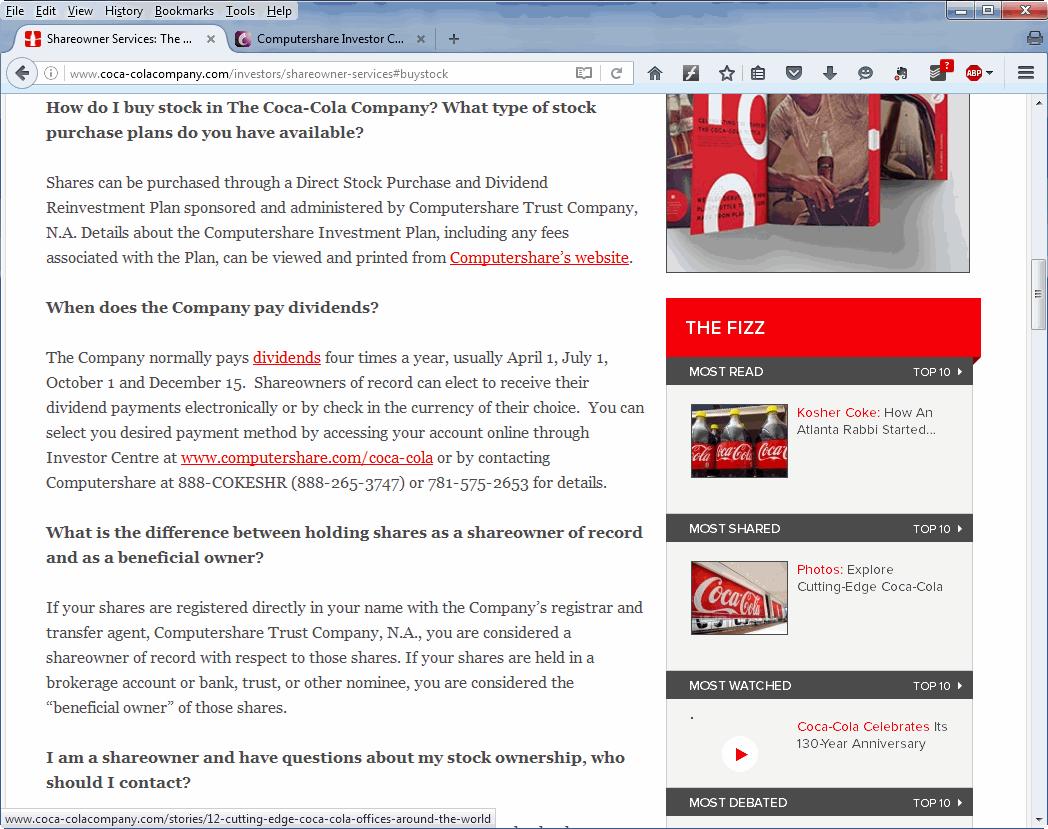
For example, Coca-Cola (KO) links directly from its dividend payment information on its shareowner services page (Figure 2) to the Coca-Cola page on Computershare’s Investor Center.
The Investor Center offers a basic overview of the company’s share information and offers a link to view the company’s DRIP and DSPP details, if they are offered.
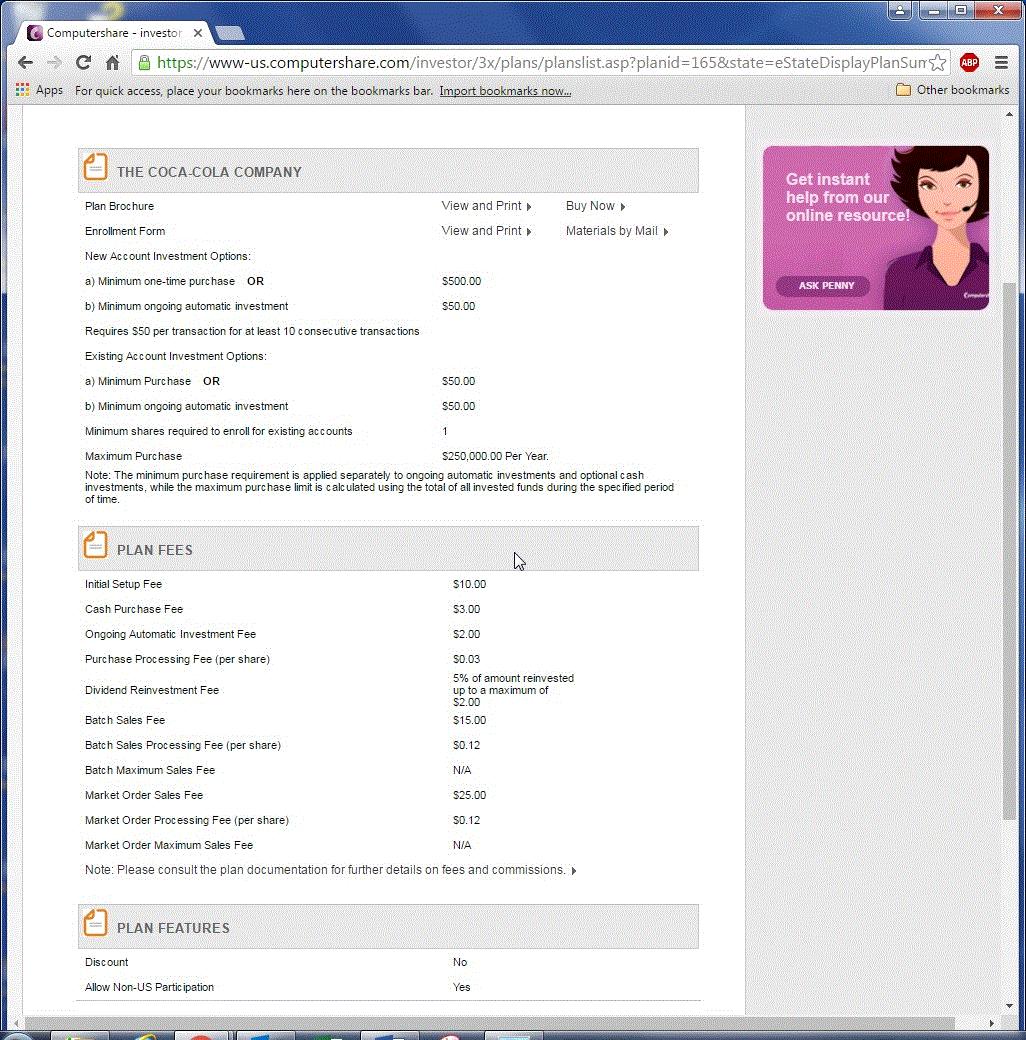
Computershare maintains a page detailing the company’s plan (Figure 3), with all terms and conditions spelled out in a plan brochure that you can view and print or request to receive by mail.
Coca-Cola is a company that operates its DRIP and DSPP through the administrative services of Computershare, as can been seen in the company’s plan brochure on the left side in Figure 4.
It is vital to read through the DRIP prospectus to know if the plan is being offered by the individual company or is a generic, broker-like DRIP.
Computershare also administers DRIPs for companies who do not offer their own plan, which means Computershare is acting more as a broker.
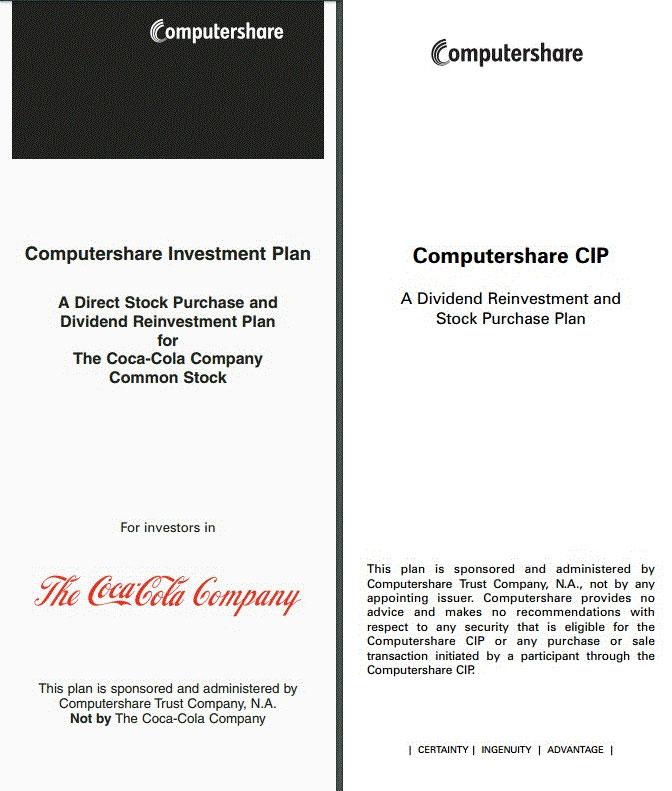
This is the case with Foot Locker (FL). The plan’s brochure (right side of Figure 4) clearly notes that the DRIP is sponsored and administered by Computershare, not Foot Locker, but this could easily be overlooked.
Through Your Brokerage Account
Years ago, DRIPs were primarily only offered directly by companies and their respective administrators. However, the rise of online discount brokers has changed the options open to investors.
Now, brokerage firms offer their own DRIPs to clients, which are completely separate from the DRIPs of issuing companies. For most investors who employ the services of an online broker, utilizing that broker’s DRIP will probably involve less hassle than working through each individual company and their respective DRIP administrators. DRIPs from brokers offer a great advantage for investors in that they usually can reinvest a cash dividend from any company, even if the issuing company does not sponsor a DRIP itself.
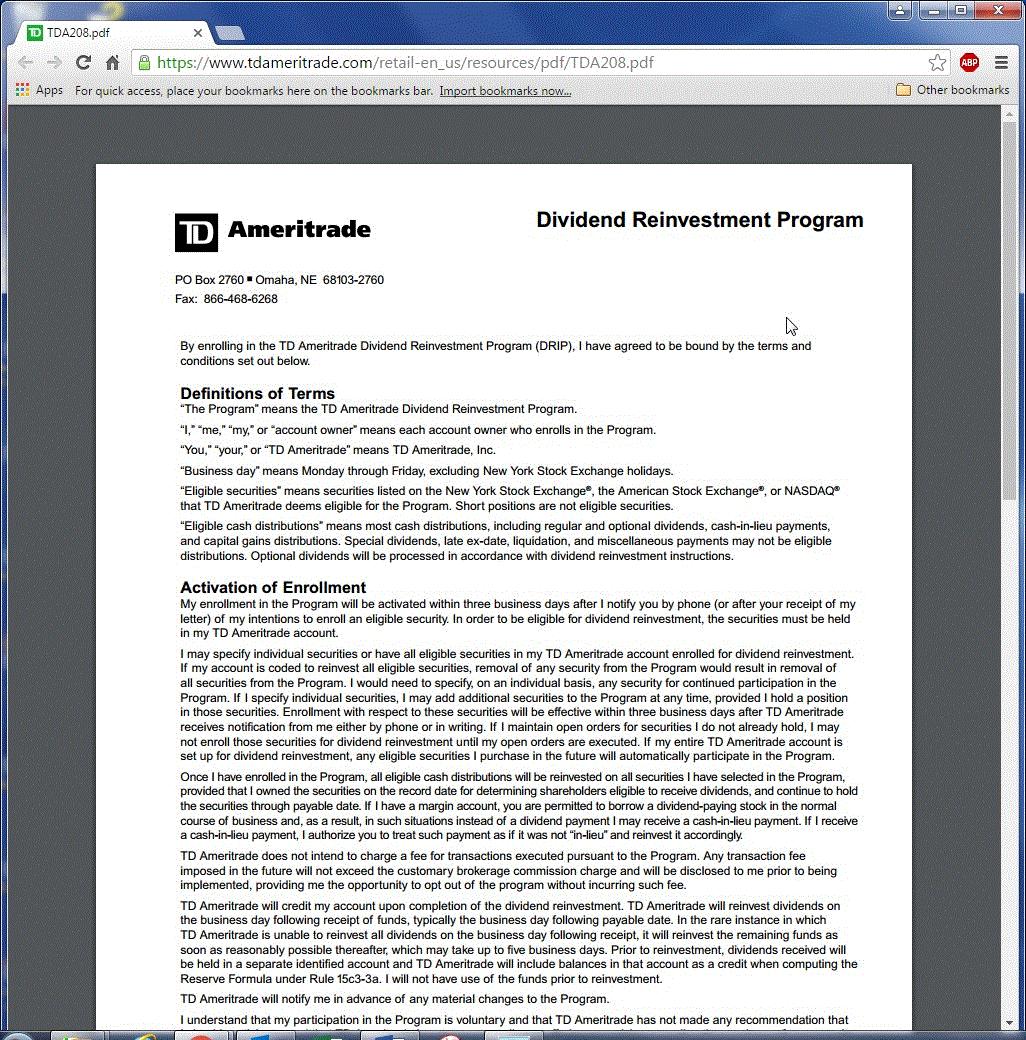
If you are considering a DRIP with your broker, note that brokerage firms do not always refer to these plans as DRIPs. More often than not, they are simply referred to as dividend reinvestment, usually found within the terms and conditions that come with each brokerage-accounts (Figure 5). The best way for an investor to confirm what their brokerage firm offers is to contact their broker, though. Not all brokerage firms maintain an easily accessible webpage or a terms and conditions document detailing their respective DRIPs.
Because brokers make their living on commissions and fees applied to financial services, an investor should be aware of any charges for dividend reinvestment. Most brokers offer dividend reinvestment as a free service, but sometimes there are limits, such as what the payout can be invested in. If you plan on utilizing DRIPs, pay close attention to the individual details of your respective broker’s terms and conditions.
Examples
A brief description of DRIPs offered by a few online brokers can serve to illustrate the general options most investors have by enrolling in a DRIP with their broker. The brokers used as examples are ones most frequently mentioned in the 2017 results from AAII’s Online Discount Broker Survey. With the focus on brokers’ DRIPs, the other important information pertaining to broker selection is not covered in this article. For a broader overview of online brokers, read through Online Broker Guide.
Since DRIPs offered by brokers are not directly affiliated with individual companies, the options as to which dividends can be reinvested varies from broker to broker. Although the focus here has been dividends paid on shares of company stock, other securities also issue dividends—such as ADRs (American depositary receipts), ETFs (exchange-traded funds) and mutual funds—and some brokers reinvest dividends from these as well. TD Ameritrade offers a DRIP that allows reinvestment for all securities that issue dividends, in contrast to E*Trade which only offers DRIPs for stocks.
Although many brokers do not charge fees for reinvestment services, there are some exceptions. For example, E*Trade only offers free reinvestment for companies whose stock is trading above $5.00 per share. TD Ameritrade and Charles Schwab are examples of prominent online brokers that offer mostly standard DRIPs without reinvestment fees.
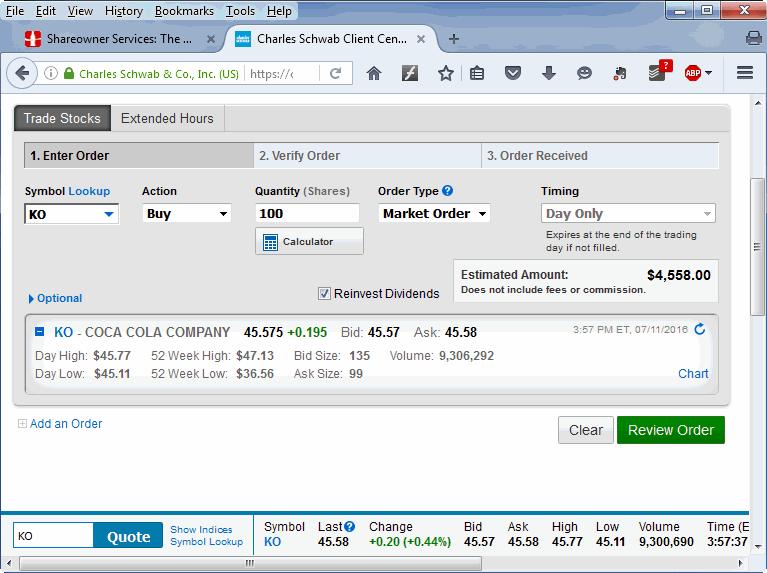
Another appealing feature of some brokers’ DRIPs is the ability to enroll an entire portfolio in a DRIP. Instead of separately managing each individual company’s DRIP, an investor can simply highlight a portfolio for automatic dividend reinvesting. This simplification greatly eases the process for investors tracking their DRIPs. Individuals can also often indicate if a cash dividend should be reinvested when buying shares (Figure 6).
Regarding taxes, brokers additionally ease the process of reporting capital gains or losses. Since investors need to track the purchase price, quantity and purchase date of each share lot that they own to determine their taxable gain or loss at the time of sale, the consolidated trading and reporting of long-term and short-term gains and losses on shares obtained through reinvestment is another advantage to using a broker.
Within the circle of broker-based DRIPs, Scottrade offers a unique reinvestment service called a Flexible Reinvestment Program (FRIP). This plan functions much the same as a DRIP, but instead of automatically reinvesting dividends, it pools all of an investor’s dividend payments into one account: the FRIP pool of dividends. Scottrade then allows you to target certain stocks for reinvestment based on your own strategies. Scottrade automatically invests in your chosen companies when enough capital has accrued in your reinvestment pool, without charging you a commission fee. It’s a great example of a broker harnessing the best features of DRIPs and fusing them into a useful product for investors.
Caveats
There are some caveats to utilizing DRIPs through individual brokers. The largest is variance of the DRIP services offered by one broker compared to another. It is always crucial to understand the terms and conditions of any DRIP when enrolling in a broker’s DRIP; the importance of this cannot be understated. Some brokers will purchase fractional shares of stock, some will not; some brokers will reinvest dividends paid by any type of security, and others will not. If you are unsure about a particular brokerage’s DRIP services, never hesitate to call and ask them directly.
Remember, there is no tax incentive for enrolling in a DRIP, even if the dividend is immediately reinvested.
Conclusion
Dividend reinvestment offers much to gain and little to lose, thanks to the mutual benefits that both investors and companies receive.
DRIPs offer many advantages to the individual investor interested in maximizing returns from long-term growth. As the unique benefits of DRIPs have risen in prominence, the multitude of options for reinvestment programs have greatly expanded. This expansion has provided many uses for DRIPs that can be aligned to almost any investment philosophy and strategy.
An investor interested in avoiding brokerage firms can utilize companies’ options to directly enroll in their DRIPs, which might garner the advantage of a DSPP also. Or, an investor might take advantage of a reinvestment plan like Scottrade’s to acquire additional stock in a company that does not even issue a dividend, let alone offer a DRIP.
Investors should not overlook the importance of dividends in their investments. Data from Ibbotson Associates shows that dividends have propelled the historical long-term return of U.S. stocks to an impressive annualized rate of 9.4% from 1926 to 2010. Removing dividends from the equation leaves long-term annualized returns at 5.0%. More recent data in the Ibbotson Yearbook shows that dividends have boosted the annualized rate to 10.1%, compared to 5.8% without dividends.
DRIPs offer an excellent approach for capturing significant long-term returns, since they are heavily influenced by reinvested dividends.
Discussion
FREE REPORT

Jack Epstein from KS posted over 10 years ago:
Bud from Nevada posted over 10 years ago:
Matthew Bajkowski from Illinois posted over 10 years ago:
Matthew Bajkowski from Illinois posted over 10 years ago:
Richard from GA posted over 6 years ago:
You need to log in as a registered AAII user before commenting.
Log InCreate an account