


Related

Portfolio Strategies
Tips from a master on how to stay current with your investing strategies as the market evolves.

Charles Rotblut leads a class in AAII's new Essential Investing Video Course. Go to https://www.aaii.com/ves for more information and to subscribe.
A strong love of stock investing is apparent within the first few minutes spent with Mario Gabelli. Since starting his mutual fund and investment firm GAMCO Investors Inc. in 1977, the famed value investor has found success by staying current with overarching market trends. Cynthia McLaughlin and Charles Rotblut, CFA, sat down with Gabelli in early June to discuss value investing and how to value stocks in today’s market.
Cynthia McLaughlin (CM): You have described yourself as a Benjamin Graham and David Dodd type of investor. What led you to become a proponent of value investing?
Mario J. Gabelli: I started buying stocks when I was in my early teens. I started buying them because I was a caddy at a golf course and people came to play golf after the stock market closed.
I had no idea which part of the market I wanted to be in until I went to graduate school. At Columbia Business School, Roger Murray succeeded Graham and Dodd in teaching security analysis. I took that course in my first semester and decided to do research on publicly traded companies.
I started on Wall Street as a sell-side analyst at an investment banking firm. I covered auto, conglomerates and farm equipment. Then I picked up coverage of broadcasters and movie companies. This raised the question of how I should value them.
When I started my firm in 1977, Warren Buffett was known for his “cigar butt” investing in the 1960s, which was searching for companies that you could liquidate for a higher value than the current price. What we did was a little different. We had to convince individuals that companies that are publicly traded can become private and to consider what they would pay for those companies if they were no longer public. This price is the private market value. That’s the way we defined value investing.
Private equity firms at the time were engaged in doing what was known as leveraged buyouts. We calculated the exit value of the asset five to seven years out. Our considerations were interest rates, leverage, cash flow prospects and the exit strategy. It’s very hard to do that now with a company like Microsoft Corp.  (MSFT). What is the sum of its parts worth? But there are companies that have thrived on splitting their divisions off. General Electric Co.’s (GE) spin-off GE Vernova Inc. (GEV) is an example.
CM: It sounds similar to intrinsic value. What else do you look for when determining this value?
I call it private market value. Private market value is what a company would be worth if I could sell the company in its entirety or break up the pieces and value the sum of the parts. That’s the background of what others may call intrinsic value.
The second question is if we think a company is worth $60 per share and it’s selling for $65 per share, do we want to own it? Is a price of $40 instead a sufficient margin of safety?
You want to find a good business and good management at a reasonable price, and you want to be in a long-term holding position. We do that 80% of the time. Sometimes we want terrible management with an okay business at a bankruptcy price.
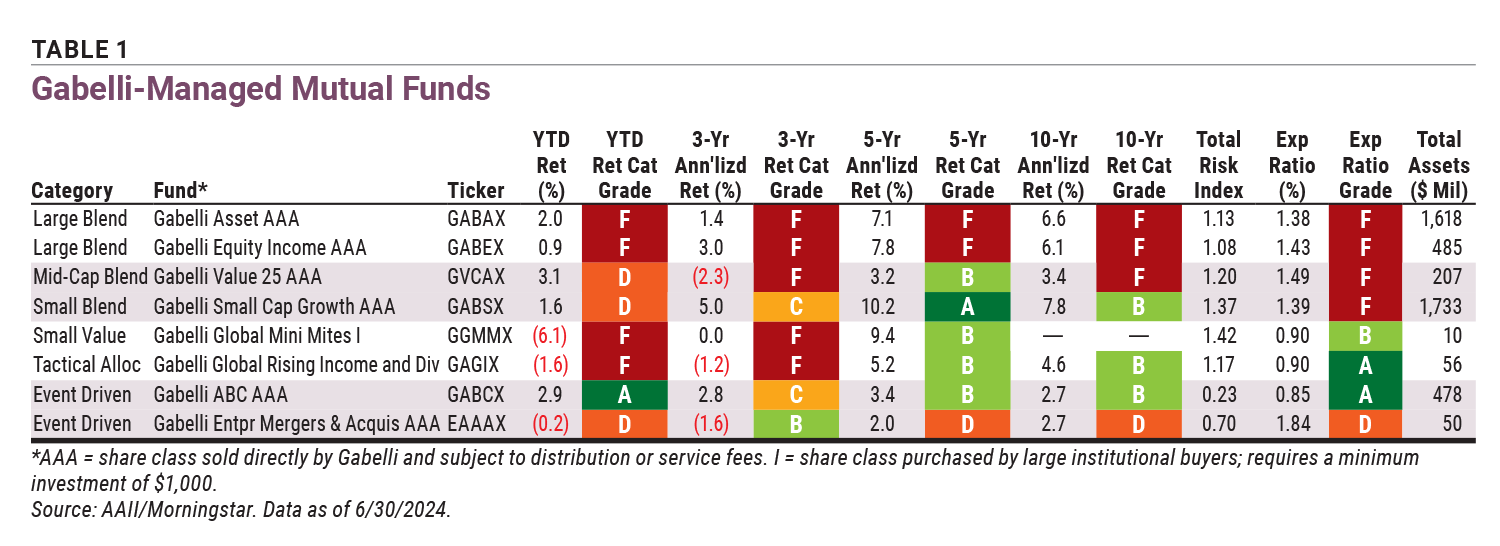
Download the Excel spreadsheet for Table 1.
Charles Rotblut (CR): If an individual investor were trying to determine the value of the sum of the parts, they’d be reliant on the level of detail provided by the company, which may not be sufficient. What do you suggest in these cases?
The companies do file a form with the regulators that “gives” details prior to spinning off a business segment. That is one way to see the data.
The second part that we learned a long time ago was ownership through an exchange-traded fund (ETF). Hertz Global Holdings Inc. (HTZ) spun off Hertz equipment rentals about seven years ago. [Editor’s note: the spin-off is Herc Holdings Inc. (HRI).] We knew that the owners of Hertz through ETFs could not own it. As a result of that, we determined what we thought was the fair value by looking at comparables.
We already covered Avis Budget Group Inc. (CAR) and United Rentals Inc. (URI) located in Stamford, Connecticut. We figured out that all the ETF owners of Hertz would have to sell their shares. The spin-off didn’t fit into the ETF. They dumped the stock at $28 and we were able to buy about 7% or 8% of the company.
It is very hard for an individual investor to determine what a spin-off is going to be worth. This is the judgment part driven from the company’s management communication.
CM: Many value stocks fail to appreciate much. Are there common signs that you’ve observed in terms of value traps?
Here is a classic example of a value trap. There is a company in Chicago called Telephone and Data Systems Inc. (TDS). I covered all the cable companies in the early 60s and 70s and all the broadcasters. Cable companies started bidding on spectrum.
Telephone and Data Systems had a very interesting business dynamic where it was bidding on spectrum. It also had rural telephone companies and developed some other businesses like towers where there was good growth and economic value. But the company made so many stubborn mistakes that the stock had dropped from $25 to $10 per share. The spin-off unit U.S. Cellular had dropped from $50 to $15. It was apparent that the company needed a catalyst. An example of a value trap.
We didn’t buy it for about 10 or 15 years. We finally convinced them to consider either merging or selling some of the assets. As a result, U.S. Cellular went from $14 to $60 per share while Telephone and Data Systems finally went up to $21 or $22 per share.
The way to get out of that is if you own enough of the company, you have enough breadth and visibility and understanding of financial engineering. You could find organizations that are willing to buy a percentage of the company and knock on their door.
A classic example is electric vehicles (EVs). We need EVs and we need charging stations to make them work. All the charging station stocks are down probably 90% from their record highs. There are traps in growth, value and new technology. The answer is to work your way out of that.
In 1972, the market had the Nifty Fifty. There was an economic recession around that time. Banks in New York said let’s find a way to buy growth stocks and hold them forever. Navistar International Harvester and AT&T Inc. (T) were part of that Nifty Fifty. You go into the boom and the bust. You always have these economic cycles. From our end, we think of the value team that we have here as marathon runners who think long-term.
The change in today’s dynamics from the past is that you have Keith Gill posting as “Roaring Kitty.” You have algorithmic quant investing. This is a different world. Those who are very good and work with the culture and intensity that they should do quite well. We believe in our style of focusing on research in the firm.
CR: Are there common signs you look for to suggest that you or your analysts are wrong on a stock?
I was following Redbox Entertainment Inc. You could go to a store and rent the movie at Blockbuster. You’ve got the movie in the theater. If you want to rent it, you could get it on Blockbuster or Redbox.
What happened is that Reed Hastings, cofounder of Netflix, came up with this idea of renting movies by subscription instead of going from point A to point B. This was possible because of the internet and speedy connections. I looked at it, and I was trying to buy Netflix Inc. (NFLX) for clients at around $75 or $80 per share. It got down to $81. I never bought any. We miss stocks that go up and become “10 baggers.”
CM: How do you incorporate quantitative versus qualitative approaches? How has the mix of those two changed over the years?
Now we think about dynamics related to algos, momos and quants [short-term trading strategies that use algorithms, momentum and other mathematical models], depending on how a company reports earnings. If it uses the right language in the press release, the stock can be up 12% even with lackluster results. If it has good results and describes them poorly, the stock could be down 10% to 12% the next day. We are aware of that dynamic.
Say we have a stock on our buy list. We take an account with $1 million and we want to eventually have a 5% position—$50,000 worth of the stock. We may start off buying 2.5% or 3.0%. We always worry about events like Black Monday on October 19, 1987. We’re not focused on what happened with the New York Stock Exchange (NYSE) two months ago when you could have bought Berkshire Hathaway Inc. down 90% due to a technical glitch. We are worried about geopolitical risk and the debt and deficit of the U.S.
I have no problem understanding the role of momentum investing and that certain stocks go in and out of an index. When they go out, they’re going to have a lot of liquidity.
The whole notion of window dressing at the end of a month, the end of a quarter and at the end of the year, from our clients’ point of view, is that they’re going to pay 23%, 40% or 50% in taxes. Half of our clients live in taxable states. If they go long-term for holding on to stocks, they’re going to pay 20% plus the net investment income (NII) tax of 3.8%, so they’re going to be paying 23.8%.
We try to think about what’s going to work two years from now. What companies have a good business with a good brand but have had short-term potholes?
As an example, in Marysville, Ohio, there’s a company called Scotts Miracle-Gro Co. (SMG). If the weather is terrible in the spring season, it’s not going to do well. It also established an infrastructure support for cannabis in its Hawthorne subsidiary. That business has collapsed.
The way we look at it is to ask how good is the business that’s ongoing? What happens two years from now to stocks? Let’s say it trades at $60 with 60 million shares outstanding. How much debt does it have? When does it have clarity with regard to the consumer coming back?
We develop what is called an earnings power. What will the multiple be beyond that earnings power, and at that time? Would the company spin off the heart of its business? And to what degree do we have conviction?
Momentum investing is probably saying sell it right now because the consumers got a little iffy. We want to buy into that momentum because two years from now, we think the stock could be $90.
The challenge is for tax-free accounts, who are half of our clients. We try to treat them a little differently. If a stock goes from $20 to $60 per share, and I thought it would take two years but it only took six months, I could trim some of the position back.
Secondly, we’re very conservative. As a result of that, as much as we love a company, if it gets to be a high percentage of a client’s portfolio, we trim it back—particularly if it’s tax-free. If you want a great garden that is a great portfolio, you have to prune it every so often.
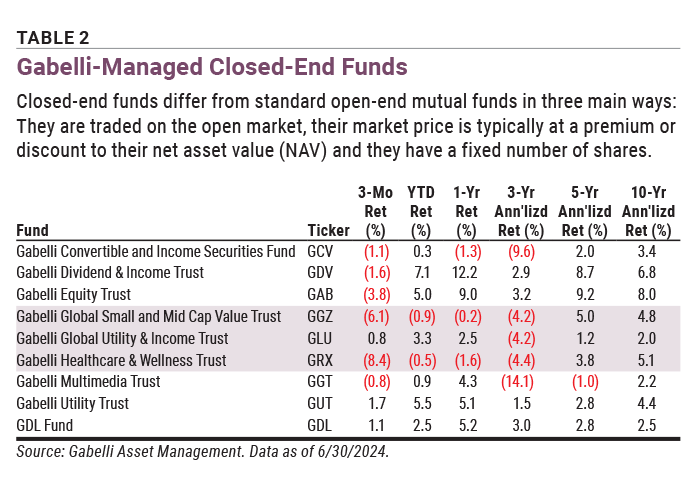
CR: Is there ever a point in your portfolios where you start trying to trim the size of positions?
When I trim a position in a certain stock, I try to do what is right for the client. We have a company out of Racine, Wisconsin, called Modine Manufacturing Co. (MOD). I started following it because the company made radiators for cars. It had a CEO who we helped retire. Modine Manufacturing then brought in another guy who did some acquisitions in South Korea and stayed in Europe. The stock was $10 or $12.
When another new CEO took over about two years ago, we started to focus on the company again. This time not on the auto parts business, but on a subsidiary it had in England. It was providing chillers for data centers before the artificial intelligence (AI) surge. There were call locations that were getting business in the U.S., and Modine Manufacturing’s earnings were going up.
What’s going to happen with this cycle is the company is going to get a multiple normally associated with cyclical companies. You want to have a lower multiple as earnings rise toward peaks. We said that the earnings multiple is going to break out, and it’s going to get a higher multiple. We did not have Nvidia Corp. (NVDA) factored into the minds of the investment community when shares of Modine Manufacturing went from $20 to $40 per share. The data center business was being discounted, and then suddenly the stock jumps to $60. Shares of Modine Manufacturing stock are now $100.
So now we are trimming some of our position back. It’s had the tailwind and the management, it’s done a very good job and it is a good business, but the valuation isn’t as cheap as it was. The stock is becoming more volatile because of the momentum traders and the quantitative traders.
That’s how we would look at a stock in the portfolio. We want to be 100% invested all the time if the market drops, but we keep a margin of safety, just to be liquid on certain holdings and/or on the company itself. The portfolio depends on the client. You always have to worry about geopolitical events. I wouldn’t have said that before the Russian invasion or the Middle East crisis.
CM: What suggestions do you have for individual investors picking active fund managers or an active fund in general?
Make sure you understand your personal cash inflows—meaning, what are you going to have as cash coming in for the next 10 or 12 years? Second, what are your cash outflows over the next 10 to 12 years? How comfortable are you with volatility in your portfolio? Look at your assets. We use a 10-year road map because I like to be a marathon runner.
Ask yourself how much time you want to spend understanding the stock market. Take an index and buy a portion of the index: small cap, large cap and global. If you plan to travel around the world and spend time outside of the U.S., you need to be concerned about the currency. If you want just cash flow, you want to have a cushion—buy Treasury bills.
Ask what the organization’s culture is. How good is it at focusing? Watch for organizations that are trying to sell you something else. Do you want to have someone to communicate with? Do you want to ask questions without paying a fee?
There are organizations that do a very good job at these things, while a lot of organizations are much better in sales and marketing than in long-term investing.
Portfolio Strategies

AAII Stock Ideas

Financial Statements

ROBERT A from NC posted over 2 years ago:
JOHN L from NJ posted over 2 years ago:
BARRY J from TX posted over 2 years ago:
SCOTT R from KY posted over 2 years ago:
JEFFREY W from NJ posted over 2 years ago:
Benedito D from NJ posted over 2 years ago:
IAN R from GBR posted over 2 years ago:
F P from MA posted over 2 years ago:
You need to log in as a registered AAII user before commenting.
Log InCreate an account