

The Berserk Financial Markets Provide Opportunities for Tax-Saving Tactics
by Charles Rotblut | March 19, 2020
We are seeing the reactions to the COVID-19 (the coronavirus) spread across the globe. Italy is on lockdown. France’s Eiffel Tower is closed. Australia is going to ban all foreign visitors.
Here in the U.S., a large number of schools and colleges have closed. Toilet paper is in short supply—words I never thought I would say. (It will be restocked.) Restaurants are either closing, limiting patrons or only offering take-out and drive-thru service. Retirement communities are going into quarantine. (Visitors are no longer allowed at either my parents’ or my mother-in-law’s independent living facilities.) Travel has ground to nearly a halt. (All four of my spring trips, including the cruise I was supposed to take starting on Sunday, have been canceled.) Downtown Chicago has turned into a ghost town. My fellow AAII staffers and I are working remotely for the time being.)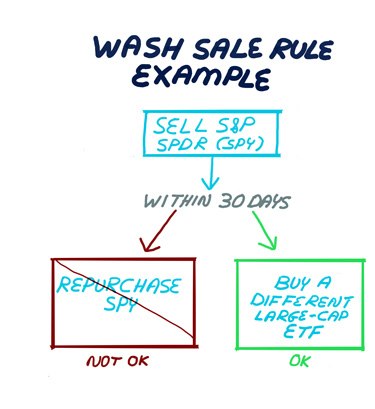
All of this is affecting the global economy and thereby the financial markets. While the stock market has received most of the attention, things aren’t dandy in the high yield (aka, junk bond) or commodities markets either. The oil spat between Saudi Arabia and Russia is ongoing. The banking system is being stressed by small and large businesses drawing on their credit lines. The economic slowdown is raising questions about the ability of corporations with weaker credit ratings to stay within their debt covenants.
Even the municipal bond market has been incurring volatility. A recent Raymond James commentary listed the yield advantage between a 10-year municipal bond over a 10-year Treasury bond as being 72 basis points (0.72%). A week prior the same spread was just 12 basis points. There are concerns about the pandemic’s impact have on state and local governments, though the default rate among muni bonds is much lower than it is among corporate bonds.
With everything going on, I’ve been focusing these weekly commentaries on actions you can take in the current market environment. You can find them in the Investor Update archives. Today, I’m going to focus on the tax side and talk about tax-loss harvesting, which was the focus of Tuesday’s Weekly Digest email. I’ll also discuss the revised deadline for paying taxes.
Tax-loss harvesting involves intentionally selling an investment at a loss in a taxable account so you can lower your tax bill. Losses offset gains, with a net loss of $3,000 allowed to be claimed on your taxes for a single year. Any net losses above this amount can be carried over to future years.
A big key to tax-loss harvesting is to be cognizant of the wash-sale rules. You cannot sell an investment and claim a loss if you buy or otherwise acquire “substantially identical stock or securities” within a 30-day period. This includes selling an investment in your taxable account and quickly rebuying it in your IRA or Roth IRA. You need to wait 30 days to do so. (If you sold at a loss and then repurchased the same security within 30 days in a taxable account, the loss from the older position would carry over to the new position’s basis.)
Notably, it is possible to sell an exchange-traded fund (ETF) at a loss, buy its near-twin from another ETF sponsor and not violate the wash-sale rule. An example would be to sell the SPDR S&P 500 ETF (SPY) and buy the iShares Core S&P 500 ETF (IVV). Doing so would expose you to the risk of a rule change and/or an unfavorable ruling by the tax court. A more prudent step would be to buy a highly correlated, but different ETF such as swapping the SPDR S&P 500 ETF for the iShares Russell 1000 ETF (IWB). Buying the Invesco S&P 500 Equal Weight ETF (RSP) would be another option. In my taxable account, I recently harvested losses in the Fidelity ZERO Extended Market Index fund (FZIPX) and used the proceeds to buy shares in the Fidelity Zero Total Market Index Fund (FZROX).
It may also be worthwhile to harvest losses now for the purposes of adjusting your tax location. Tax location involves strategically placing your investments in the right type of account. Less tax-friendly investments—corporate bonds, REITs and less tax-efficient funds—should be held in tax-preferred accounts such as traditional and Roth IRAs. The same applies for high-turnover trading strategies. Tax-friendly investments—municipal bonds, stocks paying qualified dividends, master limited partnerships (MLPs)—should be held in taxable accounts.
If you do decide to move investments around, be cognizant of the wash-sale rules. If you sell at a loss, you will have to wait 30 days. You could park the money in an ETF until the 30-day period has expired—especially since commissions are now zero at most brokerage firms—to preserve your allocations. As is the case with any tax strategy, be sure to assess your personal situation and consider meeting with a tax professional if you have questions about the potential impact.
The Deadline for Paying, but Not Filing, Has Been Extended
This week, the Internal Revenue Service extended the deadline for paying taxes. Individuals who owe no more than $1 million in taxes can postpone payment from April 15, 2020, until July 15, 2020. The extension applies to both 2019 taxes and to estimated taxes for the first quarter of 2020.
The deadline for filing 2019 tax returns has not changed. You still must file your tax return or a request for an extension by April 15, 2020.
This IRS Notice contains more information.

-
Keeping Transactions Clean From the Wash-Sale Rules – An in-depth explanation of how the wash-sale rules work, along with examples of how they apply.
-
Tax-Efficient Investing: Picking the Right Pocket for Your Assets – This 2005 AAII Journal article explains the basics of asset location and how it can be advantageous to individual investors.
The percentage of individual investors describing their six-month outlook for the stock market as "neutral" sentiment is at its 25th lowest level in the 33-year history of the AAII Sentiment Survey. At the same time, pessimism stayed above 50% for the second consecutive week.
Bullish sentiment, expectations that stock prices will rise over the next six months, rebounded by 4.6 percentage points to 34.4%. The historical average is 38.0%.
Neutral sentiment, expectations that stock prices will stay essentially unchanged over the next six months, fell by 4.5 percentage points to 14.5%. Neutral sentiment was lower on November 11, 2010. The drop keeps neutral sentiment below its historical average of 31.5% for the ninth time in 10 weeks.
Bearish sentiment, expectations that stock prices will fall over the next six months, declined by a slight 0.2 percentage points to 51.1%. Pessimism is above 50% on back-to-back weeks for the first time since February 19 through March 5, 2009. The historical average is 30.5%.
Our survey started in July 1987. Out of the more than 1,700 weekly readings we have recorded since then, this week’s neutral sentiment reading ranks as the 25th lowest. We would be cautious about drawing references from past occurrences of such low readings since 22 of the 24 lower readings all occurred during the same decade: 2000 through 2009.
Pessimism continues to be at an unusually high level (more than one standard deviation above the historical average). Historically, unusually low levels of bearish sentiment have had a weaker association with above-average returns for the S&P 500 index over the following six- and 12-month periods than unusually low levels of optimism. (Bullish sentiment remains within its typical historical range.)
The continued high level of pessimism reflects the downside volatility we’ve seen in the market, the COVID-19 (coronavirus) pandemic and, to a lesser extent, the oil price cut announced by Saudi Arabia. Many—but not all—individual investors are using the downturn to look for buying opportunities among stocks. Other factors influencing AAII members’ sentiment include the November elections, corporate earnings, economic growth and valuations.
For this week’s special question, we asked AAII members how they have altered their stock investing strategy in response to the coronavirus downturn. More than a quarter of all respondents (28%) stated that they are actively looking for/buying bargain stocks and 11% stated that they are looking for dividend-paying stocks. This compares to 23% of respondents who said that they are holding more cash and/or investing in commodities like gold or silver in response to the coronavirus downturn. Finally, 38% of respondents stated that they have made no changes to their investment strategy thus far. However, many in this group did state that they are considering rebalancing their portfolio earlier than initially planned.
Here is a sampling of the responses:
- “I have not changed my investing strategy. My portfolio was designed to weather storms. Though this one may be a larger one than I had expected. I may, however, find that this is a buying opportunity at some point. I will not be selling unless it is for rebalancing purposes.”
- “I am buying more dividend stocks while running away from the bond and money markets.”
- “This is a great buying time. I have already significantly increased my holdings and have freed up more cash to invest. This is panic selling out of fear.”
- “I am now putting my ‘rainy-day’ fund to use. But as to the investment strategy itself, no change. A Level3 investor all the way.”

Bullish: 34.4%, up 4.6 points
Neutral: 14.5%, down 4.5 points
Bearish: 51.1%, down 0.2 points
Bullish: 38.5%
Neutral: 31.0%
Bearish: 30.5%
March 12, 2020 The Barbell Strategy—A Simple Way of Being Both Aggressive and Conservative
March 5, 2020 Income Investing Suggestions for Record Low-Yield Environment
February 27, 2020 Strategies Individual Investors Can Use for Coronavirus-Related Volatility
February 20, 2020 Yield's Role as a Valuation and Risk Indicator

Discussion
Owen from Virginia posted over 6 years ago:
Charles I've enjoyed your "Berserk Markets" article 19 March ad was surprised you say a work around is to sell an ETF and buy a near-twin from another ETF sponsor. Can you tell us more? Is there a source for that? Owen
Brent from IL posted over 6 years ago:
According to irs.gov, it appears that the deadline for filing has also been extended to 7/15. At least, as of today. All things Covid-19 are fluid and ever changing.
Eric from MD posted over 6 years ago:
The deadline for filing is also 7/15 https://www.irs.gov/newsroom/payment-deadline-extended-to-july-15-2020
You need to log in as a registered AAII user before commenting.
Create an account