

Related

Investor Professor
After considering a purchase of bitcoin in 2020, I decided to remain on the sidelines. How I arrived at this decision, and why I have no regrets about it.
by Charles Rotblut | July 2021

Charles Rotblut leads a class in AAII's new Essential Investing Video Course. Go to https://www.aaii.com/ves for more information and to subscribe.
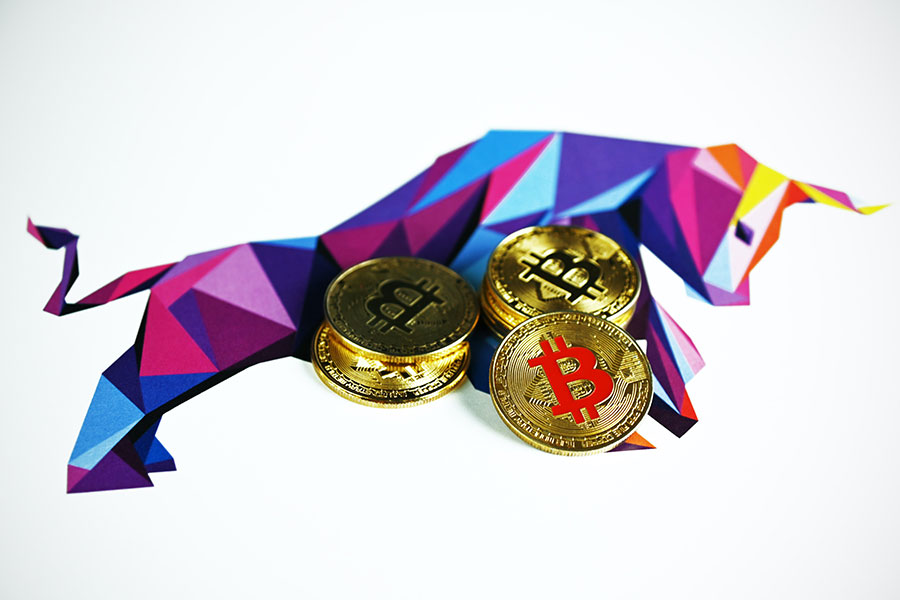
I’ll admit to considering a purchase of bitcoin last year. There were days in March 2020 when the cryptocurrency was trading below $6,000. I never acted.
This might seem like a big missed opportunity. Bitcoin is trading at around $40,000 as I write this. Bitcoin had traded even higher, reaching $64,863 in April 2021. Yet, I have no regrets about sitting on the sidelines.
There are two reasons. The first is that the absolute amount of wealth I forfeited is much smaller than you might think. Had I bought bitcoin, it would have been for a small amount of money. Granted, a 7x gain or a 10x gain would have been a very nice payday even for a small purchase, but not one I was depending on.
The second reason helps to explain the first. I didn’t know the appropriate value for bitcoin. I also didn’t know what the future of bitcoin would be. I still don’t 16 months later. More importantly, I don’t like investments where I lack the data or knowledge to make an intelligent decision about them. For me, buying bitcoin would have been pure speculation.
The less certain I feel, the less likely I am to open my wallet. And if I do open my wallet for something speculative, I limit what I take out. I’d much rather win small than lose big. This type of risk-aversion to lottery stocks and related assets (highly risky investments with a small possibility of a big upside) has and will continue to cause me to miss out on money-making opportunities. I’m completely content knowing this.
It’s very common for people to recall the fish that got away from them. It’s far less likely for them to remember all of the bad investments they left in the water. Over time, the losses avoided very likely exceed the few big winners missed out on.
There is also the aspect of selling. Lottery stocks and investments are volatile. Their tendency to experience big drops can cause investors to sell too soon. It’s even easier to miss the top and hold onto an investment for too long. Unlike what some claim in Reddit’s WallStreetBets forum, not every investment warrants the “diamond hands” emoji.
Some investors do believe bitcoin is a diamond-hands holding—meaning it deserves to be held for the long term. I am admittedly on the skeptical side. It’s very difficult to buy groceries, pay utility bills or make a down payment on a house with digital assets. Cryptocurrencies like bitcoin simply do not have the widespread acceptance traditional currencies such as the U.S. dollar, the euro and the yen have.
While bitcoin, ethereum and dogecoin are among the most familiar names, the industry is broader and has more potential for growth than many people realize. There is much technology and infrastructure. Nonfungible tokens (NFTs) can be used to certify ownership or authenticity, for example. The platforms and security underlying cryptocurrencies may evolve to support financial transactions using traditional currencies. It’s an evolving technology whose future is not yet written.
Steven Ehrlich provides an overview of the broad crypto asset landscape. Ehrlich is the editor of Forbes’ CryptoAsset & Blockchain Advisor newsletter. He not only shares what the larger players are but also explains different ways you can get exposure to crypto assets.
Moving on to more traditional investments, a change was made to the Model Shadow Stock Portfolio rules. The maximums for both the market capitalization and price-to-book (P/B) ratio were raised. These changes were made to reflect prevailing market conditions, as John Bajkowski explains.
AAII founder James Cloonan based the Model Shadow Stock Portfolio rules on research about relative valuations. Portfolios comprising stocks whose size (market cap) ranked in the smallest decile and valuation (price-to-book ratio) ranked in the cheapest decile historically enjoyed the highest returns.
Relative measures like these adjust to ever-changing market conditions. Over time, we would expect the maximum market cap to rise because of inflation, rising earnings and larger book values. Though the increase in the market cap cutoff hasn’t been in a straight line—as one would expect given market volatility—it has risen considerably from the $60 million cap used in 1993 to $500 million now.
Notably, the maximum price-to-book ratio has risen by a smaller magnitude: from 0.61 to 1.10. One reason may be the ongoing inability of large investors to invest in micro-cap companies. This constraint continues to provide an advantage to being an individual investor. You have the ability to invest in areas of the market more likely to contain mispriced stocks. It’s a great advantage to have.
Wishing you prosperity and good health,

Investor Professor
Alternative Investments
Investor Professor

No comments have been added yet. Add your thoughts to the discussion!
You need to log in as a registered AAII user before commenting.
Log InCreate an account